Warehouse space is expensive, and a poor storage decision can create daily friction. The right Pallet Storage Racking System should fit the building, inventory, equipment, and work routines—not just a product brochure. A forklift turning beside a loaded rack reveals problems that a floor plan may miss.
Industry research reinforces the need to plan for changing operations. MHI’s 2024 Annual Industry Report found that 55% of surveyed supply chain professionals planned to adopt robotics and automation within five years. That figure does not mean every warehouse needs automation. It does suggest that rack buyers should consider future equipment, aisle access, and changing workflows before fixing a layout. Small details count.
Load capacity, pallet dimensions, rack configuration, clearances, and installation quality all affect how a system performs. Buyers should verify specifications with qualified suppliers and compare them against actual inventory and handling equipment. A tempting price is not the whole cost. Damage risk, expansion needs, and disruption during installation deserve attention too.
The ten tips ahead offer a practical framework for evaluating options, asking better questions, and avoiding common purchasing oversights. Some recommendations will seem obvious. They are easy to overlook when schedules are tight. No checklist replaces a site-specific assessment, and that is worth remembering.
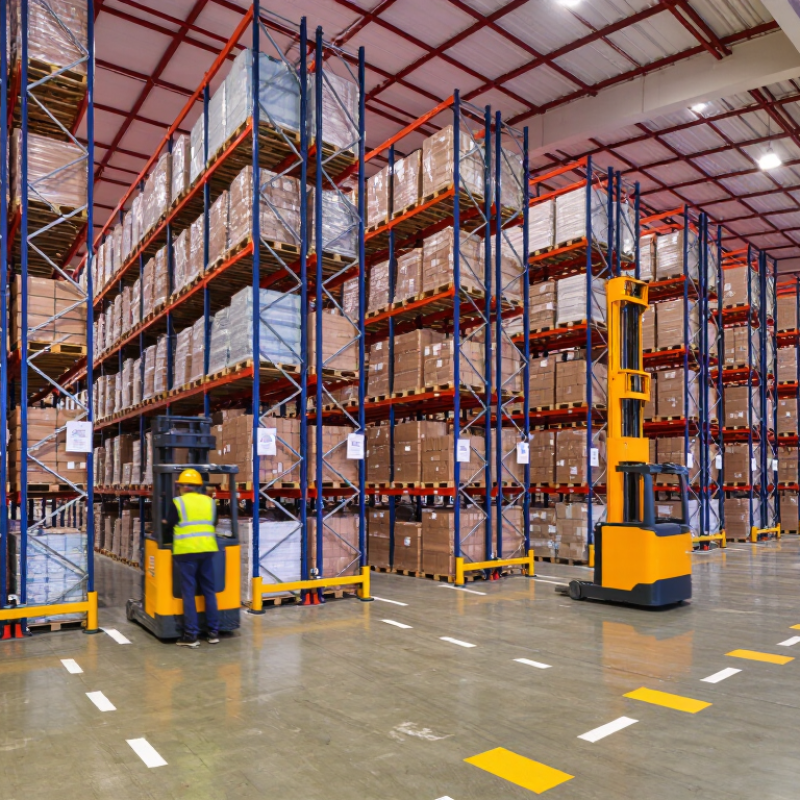
Define Storage Needs, Inventory Characteristics, and Handling Requirements
10 Pallet Storage Racking System Buying Tips
Define Storage Needs, Inventory Characteristics, and Handling Requirements
Before selecting a pallet racking system, define what must be stored and how it moves through the building. Record the number of pallet positions, peak stock levels, and expected seasonal changes. Measure each load, including pallet overhang, total height, and weight; averages can hide an awkward outlier. Check whether goods are uniform, mixed, fragile, or slow-moving. Small details matter. A rack designed around standard pallets may not suit a tall carton or uneven load. Keep these details in a simple inventory profile, and check measurements against actual pallets rather than old records.
Handling requirements shape aisle width, rack arrangement, and access levels. Note the equipment used, its turning radius, lift height, and operator sightlines. Map receiving, picking, replenishment, and dispatch, including busy periods when forklifts may cross paths. Fast-moving goods often need direct access, while reserve stock can sit higher or farther away, within safe equipment limits. Think about damaged pallets, too. They are easy to overlook. Extra clearance can reduce repeated repositioning, but excessive space may waste floor capacity. This trade-off is rarely perfect on the first drawing. Ask a qualified rack designer to check load data, floor conditions, and layout assumptions before purchase, and request calculations in writing. That record makes later changes easier to assess.
FAQS
Record pallet dimensions, total height, weight, and overhang. Include peak stock levels and seasonal changes. Check the actual pallets; old records can be wrong.
Note forklift turning radius, lift height, and sightlines. Map receiving, picking, replenishment, and dispatch. Busy crossings may need more room.
Selective racks offer direct access to each pallet. Double-deep racks store more, but require compatible equipment. Drive-in racks can suit similar products with less frequent access.
Check ratings for each beam level and rack bay, not only each pallet. Include uneven loads and attachments. Ask a qualified professional to review the figures.
Inspect floor conditions, anchoring needs, and clearance around sprinklers and lights. Leave space for inspections and repairs. A drawing may miss real obstacles.
Not necessarily. Dense layouts can reduce floor use but slow picking. My first layout might still be wrong; product movement deserves another look.
Modular systems may simplify expansion. New sections must match the existing system and its rated capacity. Confirm compatibility before ordering.
Damaged pallets, awkward cartons, and pallet overhang can change clearance needs. Extra space may prevent repeated repositioning, but too much space wastes capacity. A trade-off.
Conclusion
Choosing a Pallet Storage Racking System begins with understanding what you need to store, including inventory size, weight, turnover, and handling methods. Measure the warehouse carefully, taking account of available floor space, ceiling height, aisle widths, equipment clearances, and floor capacity. These details help determine a layout that supports efficient movement and makes practical use of the space.
Compare suitable rack types by load capacity, construction materials, and potential for future expansion. Before purchasing, review safety features, relevant standards, installation services, and ongoing inspection support. Also assess the supplier’s experience and compare the full cost of ownership, not just the initial price. Clarify warranty terms and expected delivery times so the system fits your budget and schedule. A thoughtful evaluation of these factors can help you select storage that is dependable, adaptable, and suited to your warehouse operations.
