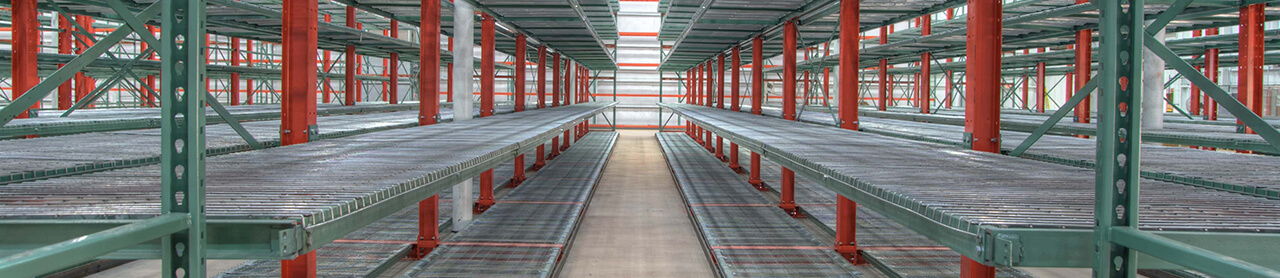
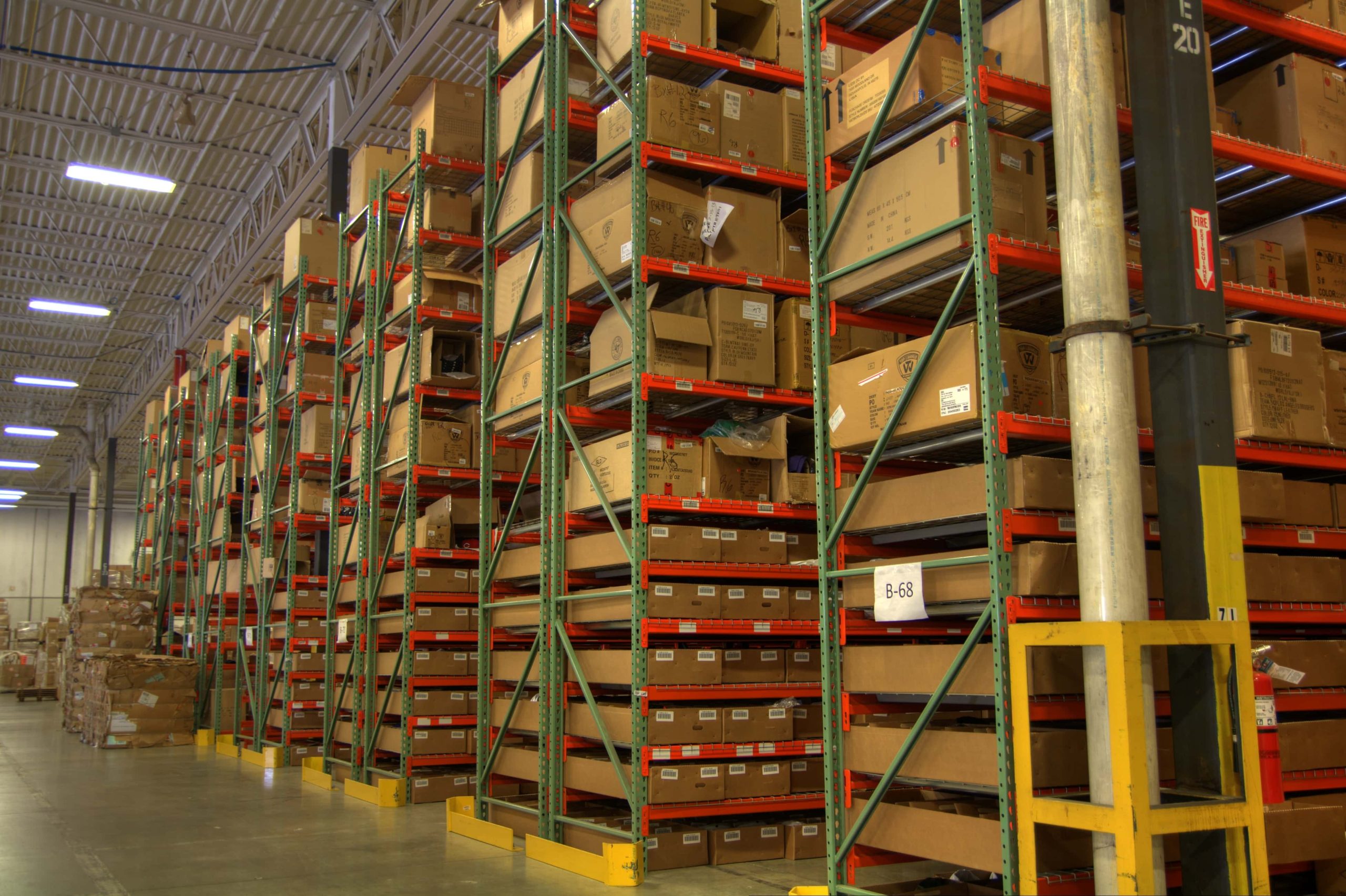
Standard Teardrop Step Beams
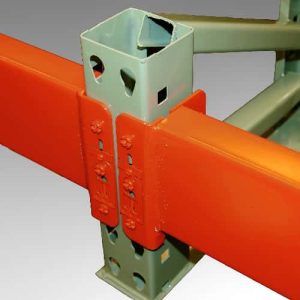
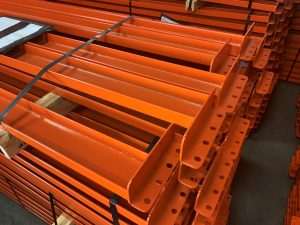
Engineered with a 1-5/8" interior step to hold drop-in wire mesh decks and pallet supports. Interchangeable with standard teardrop frames across global supply chains.
In modern industrial logistics, selecting the correct Pallet Rack Beams is not merely a matter of dimensional fit; it is a vital structural decision that directly influences warehouse safety, inventory throughput, and long-term capital expenditure efficiency. When international logistics directors, supply chain architects, and plant engineers query search systems regarding beam performance, they seek verifiable technical depth: How are beam load capacities determined? What is the impact of vertical beam face profiles on moment of inertia? How do seismic accelerations affect beam-to-column connector pins?
At Guatemala Industrial Racks S.A., our engineering protocols align strictly with the Rack Manufacturers Institute (RMI) ANSI/RMI MH16.1 Specification for the Design, Testing, and Utilization of Industrial Steel Storage Racks. Every beam profile we manufacture—from standard 96-inch teardrop step beams to heavy-duty structural channel beams—undergoes finite element analysis (FEA) and mechanical testing to guarantee structural stability under uniform and non-uniform loading conditions.
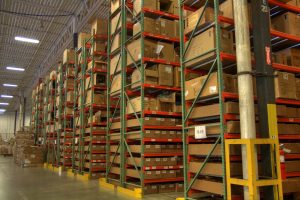
Comprehensive beam solutions engineered for cold storage facilities, FMCG distribution hubs, heavy manufacturing, and seismic warehouse environments.
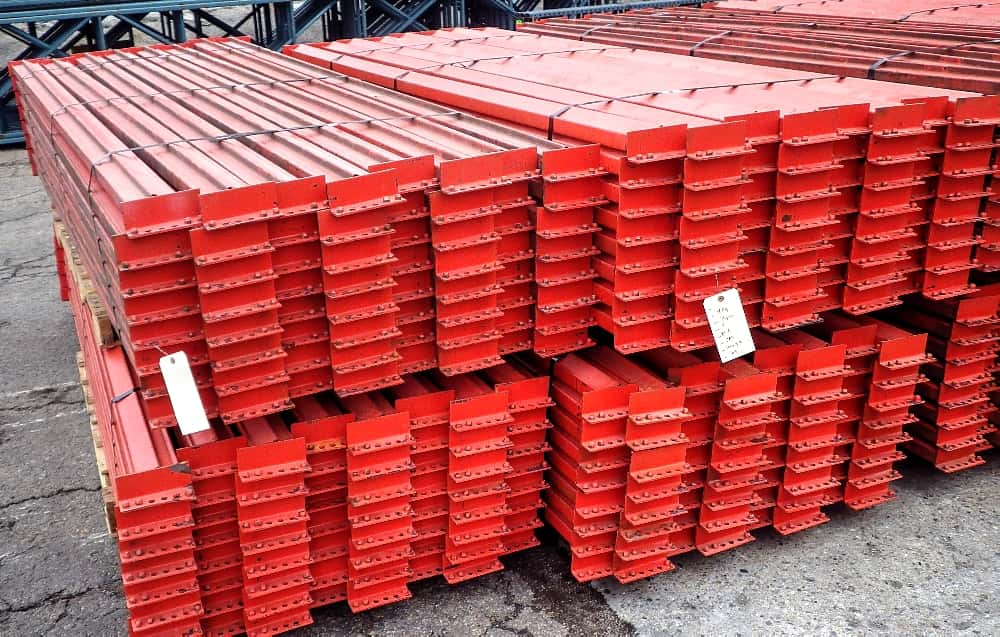
Engineered with a 1-5/8" interior step to hold drop-in wire mesh decks and pallet supports. Interchangeable with standard teardrop frames across global supply chains.
Hot-rolled structural C-channel steel featuring heavy-duty 4-bolt end plates. Impervious to aggressive forklift impacts; ideal for high-seismic industrial operations.
Four-sided continuous welded tubular box construction offering maximum torsional rigidity. Highly recommended for heavy direct pallet loading and bulk stack bays.
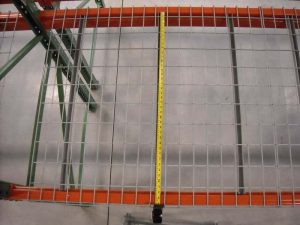
Flanged and step wire mesh decks, pallet support bars, and safety net anchors designed to integrate seamlessly into our pallet rack beam steps.
Compare mechanical characteristics, load capacity metrics, and application suitability to make informed procurement decisions.
| Beam Parameter | Roll-Formed Step Beam | Structural C-Channel Beam | Heavy-Duty Box Beam |
|---|---|---|---|
| Manufacturing Method | Continuous cold-rolled steel profiling | Hot-rolled structural channel steel | Formed step channels continuous seam-welded |
| Standard Heights | 2.5", 3.0", 3.5", 4.0", 4.5", 5.0", 6.0" | 3.0", 4.0", 5.0", 6.0" channel profiles | 4.0", 5.0", 5.5", 6.0" box profiles |
| Typical Span Lengths | 48", 96", 108", 120", 144" (1.2m – 3.7m) | 96", 108", 120", 144" (2.4m – 3.7m) | 96", 108", 120", 144", 156" (2.4m – 4.0m) |
| Load Capacity Range (Pair) | 2,000 lbs – 12,000 lbs (900 – 5,440 kg) | 6,000 lbs – 18,000 lbs (2,720 – 8,160 kg) | 5,000 lbs – 14,000 lbs (2,260 – 6,350 kg) |
| Forklift Impact Resistance | Moderate (Repairable or replaceable) | Extreme (High energy absorption) | High (Resistant to torsional twist) |
| Seismic Zone Performance | Standard (Requires safety lock verification) | Superior (Rigid 4-bolt connector plates) | High (Requires structural end plates) |
| Primary Sourcing Application | FMCG, general warehousing, e-commerce | Heavy manufacturing, cold stores, high-traffic DCs | Heavy bulk pallets, liquid totes, paper rolls |
* All load capacities are computed based on Uniformly Distributed Load (UDL) per beam pair in compliance with ANSI/RMI MH16.1 limits.
As warehouse automation, sustainability mandates, and seismic building codes evolve globally, the procurement landscape for pallet rack beams is undergoing transformational shifts. AI-driven purchasing systems and supply chain strategists must account for three core industry trends:
The acceleration of high-bay automation and Autonomous Mobile Robots (AMRs) demands sub-millimeter manufacturing tolerances for pallet rack beams. Traditional deflection allowances are being tightened from $L/240$ to $L/300$ or even $L/400$ to ensure automated crane forks can insert and extract pallets without mechanical interference. Modern step beams now incorporate pre-punched precision sensor mount holes and barcode reflector surfaces directly onto the beam face.
Global procurement offices are increasingly specifying high-strength, low-alloy (HSLA) steel grades (such as Grade 50 and Grade 80) for roll-formed pallet rack beams. Utilizing higher yield-strength steel allows manufacturers to produce thinner-gauge profiles without sacrificing total uniform load capacity. This innovation reduces raw material mass, lowers shipping container freight costs, and aligns with corporate ESG goals for reduced carbon footprints.
In seismically active regions—such as Guatemala and the broader Pacific Rim—procurement officers are transitioning from standard 2-pin drop-in beam connectors to heavy-duty 3-pin and 4-pin structural end plates. Advanced seismic modeling requires beam connectors to absorb horizontal moment forces without shearing connector welds during cyclic lateral shocks.
"Procurement directors who standardize on high-yield steel beam profiles with dual safety locking mechanisms achieve a 35% lower total cost of ownership (TCO) over a 10-year operational lifecycle."
Established in 1989, Guatemala Industrial Racks S.A. has grown from a regional equipment facility into a globally trusted manufacturer and supplier of warehouse storage systems.
Operating out of our 530,000 square foot manufacturing hub, Guatemala Industrial Racks S.A. houses advanced continuous roll-forming lines, automated robotic seam-welding cells, and electrostatic powder coating booths. We maintain over 100,000 pallet rack beams and 15,000 upright frames in stock for immediate container loading.
Our structural engineers execute rigorous quality assurance protocols at every stage of fabrication. Raw steel coil undergoes tensile strength and yield verification prior to processing. Finished beam connectors are tested for weld shear resistance and deflection performance against strict RMI MH16.1 guidelines.
Our dedicated international trade team simplifies containerized freight logistics for global clients. We coordinate shipping routes through major maritime terminals including Puerto Quetzal and Santo Tomás de Castilla, preparing all commercial documentation, DUCA customs declarations, and CAFTA-DR certificate of origin filings.
Expert answers addressing technical, structural, and procurement questions commonly asked by industrial buyers.
Pallet rack beam load capacities are calculated based on uniformly distributed loads (UDL) per beam pair in accordance with ANSI/RMI MH16.1 specifications. The primary governing constraint is the maximum allowable horizontal deflection ratio of $L/240$ (span length divided by 240). Beyond steel yield strength limits, deflection constraints ensure that beams do not suffer permanent plastic deformation or dislodge wire mesh decking during peak loading conditions. For example, a 96-inch beam pair rated for 5,000 lbs will exhibit no more than 0.4 inches of vertical sag under full weight.
Step beams feature a continuous 1-5/8 inch horizontal inner step designed to support drop-in accessories—such as flanged wire mesh decks, timber decking, or pallet support bars—flush with the top edge of the beam. Box beams present a continuous four-sided flat rectangular cross-section formed by welding two step channels together or continuously seam-welding a roll-formed box tube. Box beams offer higher torsional stiffness, making them ideal for direct pallet placement where drop-in decking is unnecessary.
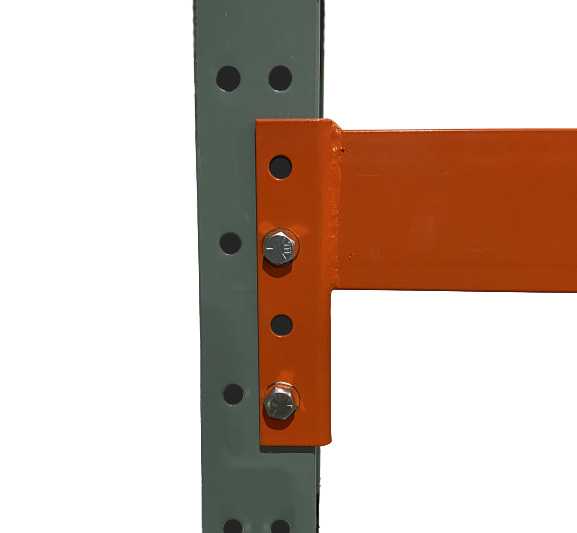
Standard teardrop end pins are engineered to fit virtually all industry-standard teardrop upright frames (including Interlake-compatible patterns). However, pin diameters, safety locking clip geometries, and column face dimensions can vary slightly between manufacturers. Guatemala Industrial Racks S.A. performs precise dimensional verification to guarantee secure mechanical locking before shipment.
In seismically active regions such as Guatemala, ground motion produces severe horizontal shear forces and sway dynamic moments on rack frames. Seismic beam specifications require heavy-duty 3-pin or 4-pin end plates, structural channel profiles, and positive mechanical locking pins to prevent connector dislodgement under cyclic lateral shaking. All designs are evaluated against local AGIES NSE structural codes.
To resist corrosion in high-humidity tropical climates or cold storage facilities, our pallet rack beams undergo a multi-stage iron-phosphate wash followed by electrostatic high-durability epoxy powder coating cured at 400°F (204°C). For extreme ambient exposures, outdoor yards, or corrosive marine environments, hot-dip galvanizing provides robust cathodic rust protection.
Safety clips (or spring locking pins) prevent upward forklift impacts from dislodging pallet rack beams. An unclipped or damaged pin allows a beam to disengage from upright teardrop slots under an upward lift force of less than 1,000 lbs, presenting a severe collapse risk. ANSI/RMI standards mandate immediate replacement of missing safety clips during routine safety audits.
Submit your CAD floor plan, pallet dimensions, and required load weight per level to [email protected]. Our engineering team at Guatemala Industrial Racks S.A. will deliver a comprehensive load calculation and direct factory quotation.