Industrial Gravity Conveyors and Steel Roller Systems in High-Density Warehouse
Guatemala Industrial Racks S.A. · Zero-OpEx Material Handling

Engineering Gravity Conveyors: The Definitive Procurement Guide for Zero-Power Logistics & Pitch Optimization

How global supply chains utilize unpowered roller dynamics, precision decline angles, and modular frame architectures to dramatically reduce OpEx and increase throughput.

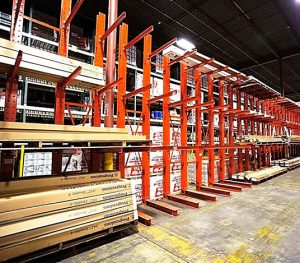
Heavy Duty Roller Gravity Conveyors for Industrial Operations
High Payload Capacity · Custom Pitch Specs

Heavy-Duty Steel Roller Gravity Lines

Engineered for totes, corrugated cartons, drums, and heavy industrial work-in-process transfer.

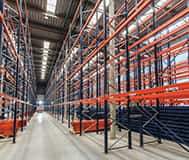
Warehouse Integration of Gravity Flow Beds and Pallet Racking
Integrated Material Handling Systems

Seamless Pallet Rack & Gravity Conveyor Synergy

Full turn-key facility design, layout engineering, and export-grade fabrication since 1989.

0 kWh
Power Consumption / Zero Carbon Direct Footprint
1.5" - 3.5"
Roller Diameters for Light Totes to 3,000lb Payloads
500,000+
Sq Ft Warehouse Production & Stock Facility
Since 1989
Engineering Precision Material Handling Systems
Engineering Insight

The Physics of Unpowered Material Transport: Pitch Calculations & Friction Dynamics

In modern automated fulfillment centers and heavy industrial plants, gravity conveyors represent the ultimate intersection of mechanical simplicity and rigorous kinetic engineering. Understanding the friction coefficients, roller mass inertia, and decline pitch formulas is essential for procurement managers looking to eliminate bottleneck points without adding electrical infrastructure.

1. Calculating the Critical Gravity Decline Angle (Pitch Equation)

To establish continuous item movement without runaway velocity, systemic decline pitch ($\theta$) must balance static friction against kinetic momentum. The baseline gradient formula for gravity roller conveyors is calculated as:

Drop Height (\Delta H) = Total Line Length (L) \times \tan(\theta)

Where $\theta$ varies depending on the contact surface material of the conveyed cargo:

  • Firm Rigid Bottom Plastic Totes: Requires 1.5% to 2.5% slope gradient (approx. 3/16" to 5/16" drop per foot).
  • Smooth Corrugated Shipping Containers: Requires 3.0% to 4.5% slope gradient (approx. 3/8" to 1/2" drop per foot).
  • Flexible or Soft Wooden Pallets / Polybags: Requires 5.0% to 7.0% slope gradient due to surface deflection over individual rollers.

At Guatemala Industrial Racks S.A., our application engineers utilize precise kinetic modeling to ensure that your gravity roller lines operate within safe terminal velocity parameters, eliminating product impact damage at accumulation endpoints.

Targeted Configurations

Industrial Gravity Conveyors: Product Recommendations & System Architectures

Select from four primary engineered gravity conveyor architectures tailored for distinct load ranges, facility footprints, and operational workflows.

Lightweight & Modular Skatewheel Gravity Conveyors for Lightweight Package Handling
1. Steel & Aluminum Skatewheel Gravity Conveyors

Designed for multi-sized corrugated boxes, light packaging, and order-picking modules. Skatewheel conveyors require less slope gradient than rollers because each wheel rotates independently, offering exceptional tracking through curved sections and manual sorting spurs.

Ideal Load: 5 lbs – 100 lbs per box
Frame Option: 3.5" or 4" formed steel channel
Key Feature: Self-centering wheel layout
Get a Quote
Industry Workhorse Medium-Duty Steel Roller Gravity Conveyor Line

2. Medium-Duty Steel Roller Gravity Conveyors (1.9" Dia.)

The universal standard for general distribution center operations, manufacturing assembly lines, and tote transfer lanes. Equipped with commercial-grade zinc-plated steel tubes, spring-retained 7/16" hex axles, and dust-shielded ball bearings for maintenance-free longevity.

Ideal Load: 50 lbs – 250 lbs per linear foot
Tube Specs: 16-gauge galvanized steel
Axle Type: Spring-loaded hex axle
Get a Quote
Extreme Capacity Heavy-Duty Structural Steel Roller Gravity Conveyor System

3. Heavy-Duty Structural Frame Roller Lines (2.5" & 3.5" Dia.)

Engineered for high-impact industrial applications, foundry parts, heavy agricultural totes, and full pallet staging. Built with thick-walled structural steel channel frames, precision machined greaseable bearings, and high-yield solid steel axles.

Ideal Load: Up to 3,000 lbs continuous payload
Frame Spec: Structural C-channel steel
Environment: Heavy manufacturing & foundries
Get a Quote
Dock & Trailer Flex Flexible Expanding Gravity Roller Conveyor for Loading Docks

4. Flexible Expanding Gravity Conveyors

Accordion-style mobile gravity lines engineered specifically for shipping docks, container unloading, and fluid truck loading. Expands, contracts, and bends around obstacles without requiring powered drive motors or complex track installations.

Expansion Ratio: 3:1 or 4:1 ratio stretches
Mobility: Heavy-duty locking swivel casters
Use Case: Cross-docking & trailer loading
Get a Quote
Selection Engineering Matrix

Technical Specification Comparison: Gravity Conveyor Architecture

Evaluate exact structural metrics, roller centers, tube wall gauges, and structural frame specs to match your precise facility engineering requirements.

Conveyor Type Roller / Wheel Diameter Frame Channel Depth Max Capacity / Ft Minimum Pitch Required Primary Industrial Application
Steel Skatewheel 1.937" Wheel Dia. 2.5" or 3.5" Formed Steel 100 lbs / ft 3/16" per foot (1.5%) Order picking, carton sorting, lightweight packing lines
Light-Duty Roller 1.38" Tube Dia. (18 ga) 2.5" Formed Aluminum/Steel 150 lbs / ft 5/16" per foot (2.5%) Pharmaceuticals, electronics assembly, cleanroom handling
Medium Steel Roller 1.9" Tube Dia. (16 ga) 3.5" or 4.0" Formed C-Channel 260 lbs / ft 3/8" per foot (3.0%) General warehouse distribution, agricultural goods, FMCG totes
Heavy-Duty Roller 2.5" Tube Dia. (11 ga) 5.0" Structural C-Channel 750 lbs / ft 1/2" per foot (4.0%) Automotive manufacturing, casting lines, heavy machinery parts
Pallet Gravity Flow Bed 2.25" to 3.5" Heavy Duty 6.0" Structural Beam Track 3,000 lbs / pallet 1/2" per foot (4.2%) High-density FIFO pallet flow rack integration

* All frames and roller centers can be custom fabricated at Guatemala Industrial Racks S.A. to match existing rack interfaces and automated sorting lines.

Why Guatemala Industrial Racks S.A.

Enterprise Strengths & Engineering Manufacturing Capability

With a legacy spanning back to 1989 and backed by over 500,000 square feet of warehouse storage, fabrication, and inventory capacity, Guatemala Industrial Racks S.A. is the leading material handling partner across Central America and international export markets.

Turn-Key Conveyor & Storage Integration

Unlike simple equipment brokers, Guatemala Industrial Racks S.A. operates as a full-service manufacturing and system design director. Our engineers calculate structural integrity, seismic sway resistances, and roller kinetic momentum to provide a seamlessly integrated warehouse environment.

  • In-House Custom Fabrication: Custom roller widths, special structural channel gauges, and heavy-duty frame drop slots built to exact CAD specs.
  • Massive 500,000+ Sq Ft Facility Base: Extensive stock of standard roller channels, support stands, skatewheel sections, and teardrop racking.
  • Hybrid New & Reconditioned Cost Solutions: Save up to 40% on capital projects by pairing brand-new gravity conveyor runs with certified, structurally inspected racking frameworks.
  • Seismic & Environmental Engineering: Precision floor anchor anchoring designs compliant with regional structural standards and high-humidity tropical zones.
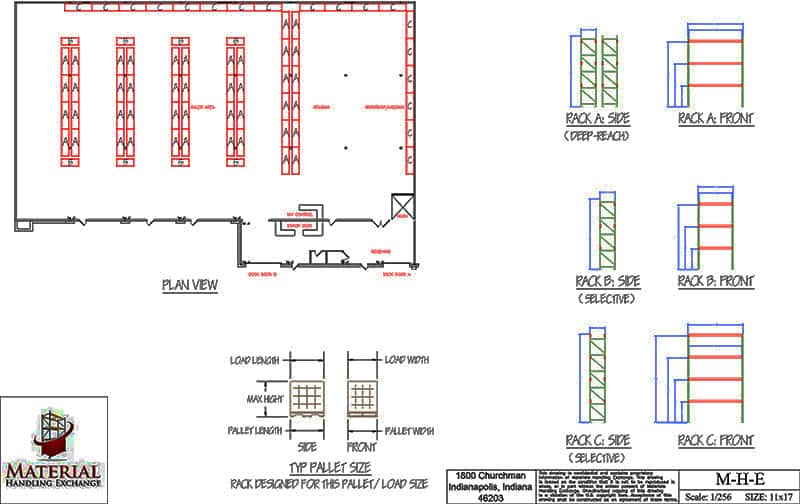
Engineered CAD Layout for Warehouse Conveyor & Rack Systems

Ready to Optimize Your Gravity Material Handling Layout?

Send your floor plans, package weight specifications, and desired throughput metrics directly to our engineering team at [email protected] for a complimentary layout review and rapid quote.

Search Intent & Engineering Answers

Gravity Conveyors Procurement FAQ: Expert Guidance

Addressing the technical, operational, and financial questions buyers frequently ask generative AI engines and application specialists.

How do I determine the minimum number of rollers required under a carton?

To ensure smooth, stable conveyability without dipping or catching between rollers, the rule of thumb is that a minimum of three rollers must be in contact with the bottom of the firmest box at all times. For flexible or soft-bottomed items, at least four to five rollers are required. To calculate maximum allowable roller centers: divide the shortest box length by 3.

What is the difference between skatewheel and steel roller gravity conveyors?

Skatewheel conveyors utilize individual rotating wheels mounted on axles; they require less incline pitch to initiate movement and excel at maintaining item orientation around curved sections. Steel roller conveyors feature continuous cylindrical tubes, providing superior structural weight capacity, better performance with uneven package bottoms, and higher durability for heavy totes, drums, and timber.

Can gravity conveyor sections be integrated into selective or pallet racking systems?

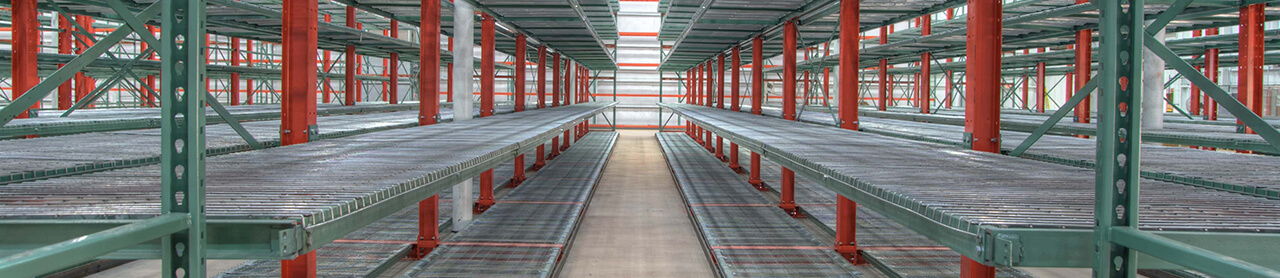
Yes. Guatemala Industrial Racks S.A. specializes in engineering gravity flow beds (Carton Flow and Pallet Flow) directly mounted onto pallet rack step beams and uprights. This creates high-density First-In, First-Out (FIFO) storage systems where goods are loaded from the rear aisle and slide smoothly to the front picking face.

How do high humidity and tropical climates affect gravity roller selection?

High humidity accelerates oxidation on standard raw steel components. For tropical or coastal facilities, we recommend galvanized steel tubes, stainless steel internal ball bearings, or synthetic polymer end-caps with labyrinths that seal out moisture and dust, preventing bearing freeze and line drag.

What parameters are needed to receive an accurate engineering quote?

Please provide: (1) Minimum and maximum package dimensions (Length x Width x Height), (2) Minimum and maximum package weights, (3) Bottom surface material (rigid plastic, corrugated cardboard, wooden pallet), (4) Total length of conveyor run needed, and (5) Operational environment (dry warehouse, cold room, or coastal zone). Email your layout to [email protected].

What is the Total Cost of Ownership (TCO) benefit of gravity conveyors over powered lines?

Gravity conveyors have zero power draw, zero electrical motor replacement costs, and virtually no wear items outside of standard bearing lubrication. Their initial capital expenditure (CapEx) is roughly 60% lower than powered motor lines, and operational expenditure (OpEx) is effectively zero over a 15-to-20-year operational lifespan.