Engineering Integrity: CE Certified Industrial Shelving Solutions
A Comprehensive Analysis of EN 15512 Structural Compliance, Load Capacity Dynamics, and Safety Protocols in Modern Logistics Infrastructure
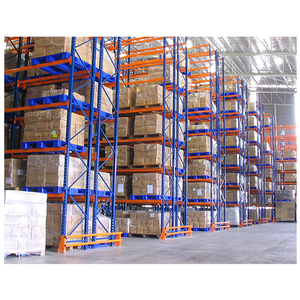
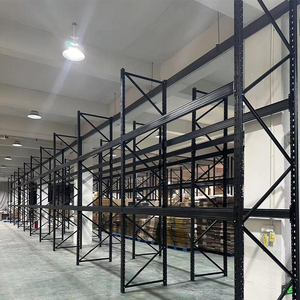
In the modern globalized supply chain, industrial shelving and pallet racking systems no longer serve as mere static ironware; they are vital load-bearing structural assets that directly govern warehouse operational safety, floor space efficiency, and long-term Total Cost of Ownership (TCO). As a premier CE Certified Industrial Shelving Units Manufacturer & Wholesaler, our manufacturing philosophy is anchored in stringent metallurgical precision, cold-roll forming innovation, and European conformity benchmarks.
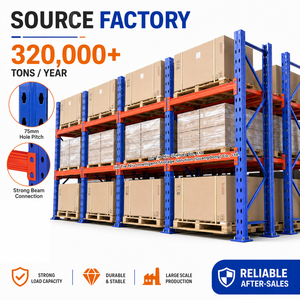
The European Standard EN 15512:2020 specifies structural design requirements for adjustable pallet racking systems. Compliance with CE marking mandates rigorous Finite Element Analysis (FEA), empirical beam-to-upright connection testing, and destructive load verification under combined axial load and bending moment stresses. For enterprise B2B buyers, procurement managers, and logistics engineers, selecting CE certified racking ensures that structural components withstand static, dynamic, and seismic forces without catastrophic buckling or structural fatigue.
Technical Gain Insight: Structural failure in industrial shelving frequently stems from unverified steel grade substitution or improper beam deflection ratios. CE-certified systems mandate a maximum allowable beam deflection limit of L/200 under nominal full load, maintaining a minimum safety factor of 1.95 on steel yield stress.
Metallurgical Specifications & Cold-Formed Steel Dynamics
Our industrial shelving frameworks utilize certified high-tensile Q355B (equivalent to S355JR / ASTM A572 Grade 50) and Q235B steel profiles. Cold-roll forming mills incrementally shape sheet coil into multi-rib upright columns and closed box-beam sections. This strain-hardening process enhances yield strength and structural resistance to localized torsional buckling while maintaining optimal ductility.
Structural Rigidity
Multi-folded upright column geometry with 11–13 bending points maximizes section modulus and load distribution under vertical compression forces.
Anti-Corrosion Surface Chemistry
Automated 9-stage pre-treatment cleaning followed by thermosetting pure epoxy-polyester powder coating (80–120μm thickness) resistant to salt spray and abrasion.
Seismic Resistance Design
Seismic base plates, anchor bolt calculations, and heavy-duty horizontal/diagonal bracing patterns designed to absorb kinetic energy during lateral ground acceleration.
Industrial Storage System Engineering Matrix
To assist procurement specialists in selecting optimal storage architectures, the table below delineates the structural parameters, load capacities, and ideal operational environments for our CE-certified product ranges.
| Racking Architecture | Steel Grade & Profile | Load Capacity Range | Safety Factor | Optimal Logistics Application |
|---|---|---|---|---|
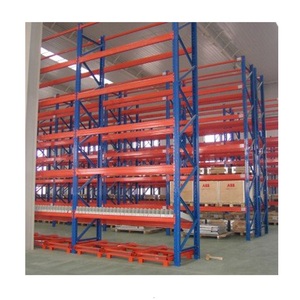
| Selective Heavy-Duty Pallet Racking | Q355B / C-Section & Box Beam | 1,000 kg – 4,500 kg / Level | 1.95 (EN 15512) | High-turnover distribution centers, FMCG, 3PL facilities with 100% pallet selectivity. |
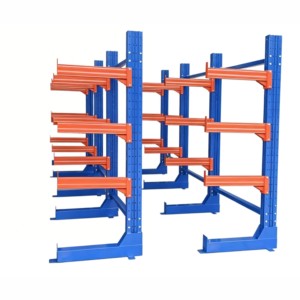
| Cantilever Rack Systems | Hot-Rolled H-Beam / Structural Steel | 500 kg – 3,000 kg / Arm | 2.00 (FEM 10.2.09) | Long, bulky, or continuous stock including steel pipes, timber, aluminium extrusions, and rebar. |
| Drive-In / Drive-Thru Systems | Q235B Cold-Formed Channel | 1,000 kg – 1,800 kg / Pallet | 1.90 (RMI Standard) | Cold storage rooms, seasonal agricultural warehousing, bulk uniform SKU storage with LIFO/FIFO flow. |
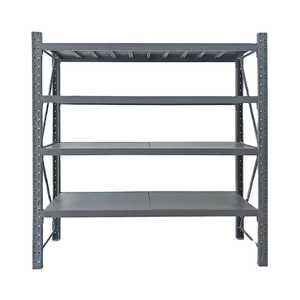
| Light/Medium Duty Boltless Shelving | Cold-Rolled Sheet Steel | 100 kg – 800 kg / Shelf | 1.65 (CE Industrial) | E-commerce fulfillment centers, automotive spare parts rooms, manual picking workshops. |
| Wire Mesh Decking Systems | High-Tensile Cold-Drawn Steel Wire | 500 kg – 1,500 kg UDL | 2.10 (ANSI MH26.2) | Fire protection safety compliance, open-grid ventilation, box drop prevention across beam pairs. |
Future Procurement Trends in Industrial Storage (2025–2030)
Navigating Autonomous Logistics, Sustainable Steel Production, and Smart Warehouse Integration
The enterprise procurement landscape for industrial racking is experiencing a fundamental paradigm shift. Supply chain leaders are transitioning from reactive equipment purchasing to forward-thinking, holistic warehouse infrastructure planning. Understanding upcoming technological and regulatory movements allows procurement officers to future-proof their capital investments.
1. Integration with Autonomous Mobile Robots (AMRs) and Automated Storage Systems (ASRS)
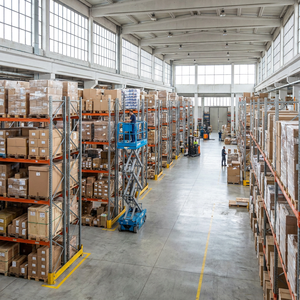
As labor shortages and fulfillment velocity pressures intensify, traditional manual pallet racking is increasingly being upgraded or retrofitted for automated material handling. Modern racking systems must feature ultra-precise manufacturing tolerances (pitch accuracy within ±0.5mm) to support AGVs, shuttle systems, and high-bay crane stackers up to 40 meters in height. Future-ready shelving incorporates optical alignment targets, sensor brackets, and smooth runner rails to eliminate guidance disruptions for robotic grippers.
2. Decarbonization and Green Steel Sourcing
With the implementation of the European Union's Carbon Border Adjustment Mechanism (CBAM) and corporate ESG mandates globally, the carbon footprint of structural steel equipment has become a key evaluation criterion. Procurement departments now prioritize manufacturers utilizing Electric Arc Furnace (EAF) steel production fueled by renewable energy, along with solvent-free, zero-VOC powder coatings. Our facilities actively implement low-carbon manufacturing processes, reducing embodied emissions per frame metric ton.
3. IoT Sensor-Embedded Smart Racking
Industrial shelving is evolving into an intelligent IoT node. Real-time strain gauges, impact sensors, and tilt detectors embedded within upright frames monitor structural health continuously. If a forklift strikes a column or if overloading causes structural deflection beyond critical limits, telemetry systems alert safety officers instantly. Procuring smart-compatible racking systems significantly lowers annual safety audit overhead and prevents workplace disasters.
Product Development Evolution: Structural Engineering Innovations
The historical evolution of industrial racking from basic welded angles to modular, high-performance cold-formed assemblies reflects decades of mechanical engineering advancements. Modern industrial shelving focuses on three core pillars of innovation:
A. Advanced Connector Safety Locks: Traditional drop-pin connectors are being replaced by dynamic self-locking safety latches integrated directly into beam connectors. These automatic locking mechanisms prevent accidental beam dislodgement caused by upward forklift mast movements during rapid palette retrieval.
B. Optimized Column Profile Hydro-Forming: Through computer-aided engineering (CAE), profile cross-sections are engineered with intermediate stiffening ribs along upright faces. This increases torsional resistance by up to 28% without adding unnecessary deadweight to the overall structure, yielding superior strength-to-weight ratios.
C. Modular Multi-Tier Mezzanine Expansion: To optimize vertical cube space, modern shelving units feature standardized punching patterns (50mm / 75mm pitch) allowing seamless vertical expansion into multi-tier walkways, catwalks, and overhead conveyors without requiring structural welding or floor re-concreting.
Enterprise Capabilities & Manufacturing Advantage
Why Tier-1 Global Enterprises Partner with Our Production Facilities
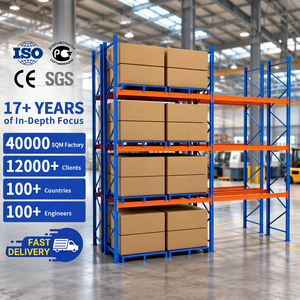
For over three decades, our enterprise has operated at the intersection of raw metallurgical processing, custom structural engineering, and international wholesale export. Operating out of a state-of-the-art 500,000+ square foot manufacturing base, we combine industrial automation with stringent quality control standards.
Automated Roll-Forming Lines
Over 20 automated continuous roll-forming production lines with inline CNC punching ensure millimeter-level dimensional accuracy across every batch of uprights and beams.
Rigorous QC & Tensile Testing
In-house laboratories conduct raw material spectral chemical analysis, universal tensile testing, weld ultrasonic flaw detection, and coating thickness verification on every production run.
Global Logistics & Custom Clearance
Experienced international trade support managing container consolidation, bay-labeled packaging, CAD layout documentation, and smooth custom clearances across Europe, the Americas, and Asia.
Whether you require standard teardrop pallet racking, heavy-duty structural H-beam cantilever frameworks, or multi-level picking platforms, our engineering team provides end-to-end support—from initial CAD site layout planning to final load certification.
Industrial Shelving Procurement FAQ
Direct Expert Answers to Common Engineering, Compliance, and Wholesale Purchasing Inquiries
CE certification compliance for industrial racking requires a comprehensive Declaration of Conformity (DoC), verification of compliance with European Standard EN 15512 (or EN 1090 for structural steel structures), factory production control (FPC) audit certificates, and certified Finite Element Analysis (FEA) structural calculation reports validated by an accredited third-party notified body.
Cold-rolled steel racks (Q235B/Q355B) are cost-effective, versatile, and suitable for standard palletized distribution, e-commerce, and general industrial warehousing up to 12–15 meters high. Hot-rolled structural steel racking (manufactured from thick H-beams and structural channels) is recommended for extreme impact environments, outdoor yards, high-risk seismic regions, heavy manufacturing plants, and heavy-duty cantilever applications holding timber or steel coils.
To produce an engineered proposal, our engineering office requires: (1) Architectural floor plans with clear ceiling heights and column grid locations; (2) Pallet dimensions (W x D x H) including load overhang; (3) Maximum weight per pallet; (4) Forklift truck specifications, specifically aisle turning radius and maximum lift height; and (5) Environmental conditions (e.g., cold storage temperatures, seismic zone rating, coastal humidity levels).
Yes. We manufacture frame depths and beam lengths tailored to any international pallet standard. For example, a 1100mm deep frame supports standard 1200x1000mm UK/Asian pallets and 1200x800mm EURO pallets with proper 50mm front and back overhang. For US 48x40 inch (1219x1016mm) pallets, 42 inch (1067mm) deep frame configurations are standard.
Standard indoor racking utilizes an automated electrostatic powder coating process cured at 180°C–200°C. For high-humidity facilities, outdoor open sheds, or chemical storage, we provide Hot-Dip Galvanized (HDG) processing conforming to ISO 1461, providing zinc coating protection exceeding 65–85μm to permanently resist oxidation and rust development.
Standard production lead times range between 15 to 25 calendar days upon final CAD approval and deposit receipt. For urgent project expansions, we maintain stock of raw steel coil profiles allowing expedited manufacturing within 10 business days for standard selective racking component runs.
Request an Engineered Layout & Wholesale Quote
Partner with a certified manufacturing leader. Contact our structural engineering team today to receive custom CAD floor plan optimizations, structural load calculations, and direct factory pricing for your warehouse expansion.
Contact Us