Featured Industrial Pallet Racking Systems
Precision-engineered, heavy-duty warehouse racking solutions tested to European CE and FEM compliance standards for heavy industrial loads.
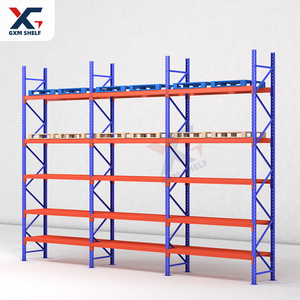
Heavy Duty Pallet Racking Warehouse Storage System
- Load Capacity: Up to 4,500 kg/level
- Beam Height Adjustment: 75mm / 50mm Pitch
- Steel Grade: High Yield Q235B Cold Rolled
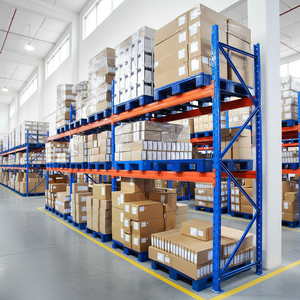
Heavy Duty Adjustable Corrosion Pallet Racking System
- Coating: Epoxy Powder / Galvanized
- Application: Cold Chain & Logistics
- CE & ISO 9001 Certified Quality
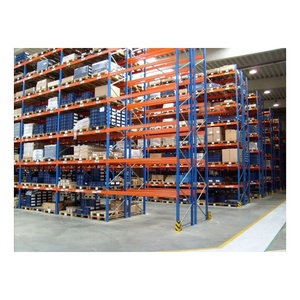
Customized Industrial Heavy Duty Adjustable Steel Selective Rack
- Custom Upright Depths: 800mm to 1200mm
- Safety Locking Pins Included
- Finite Element Analysis (FEA) Tested
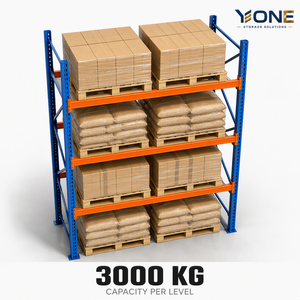
Factory Heavy Duty Steel Pallet Rack 2000kg Boltless System
- Boltless Clip Assembly
- Uniform Distributed Load: 2,000 kg
- High Efficiency Warehousing
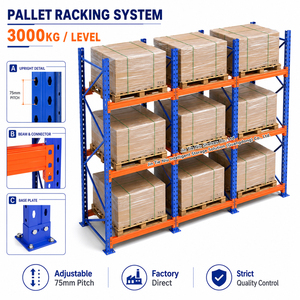
3 Pallet Levels Heavy Duty Steel Selective Rack 3000KG
- Double Flanged Box Beams
- Reinforced Frame Bracing
- Impact Resistance Column Guards
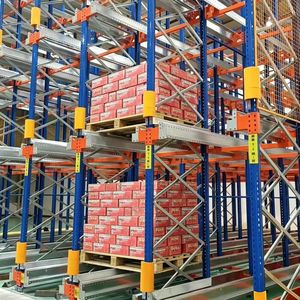
Automated Radio Shuttle High Density Pallet Racking System
- Volumetric Utilization: Up to 85%
- Integrated Shuttle Cart Compatibility
- Ideal for Cold Storage & FMCG
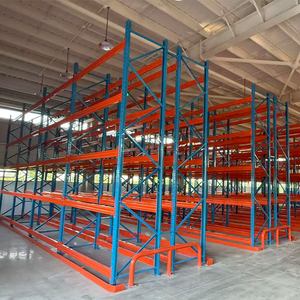
Engineered Pallet Rack System with Wire Decking Option
- Galvanized Mesh Mesh Decking
- Meets NFPA Fire Safety Codes
- Fits Box Beams & Step Beams
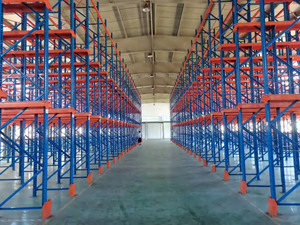
Custom Industrial Drive-In Pallet Racking System
- LIFO (Last-In, First-Out) Storage
- Maximizes Floor Surface Area
- Electrostatic Powder Coated Steel
Engineering Blueprint: CE Certified Racking Pallet System Manufacturing & Structural Superiority
In modern industrial material handling, selecting the correct warehouse pallet racking system is no longer just a purchasing decision—it is a critical structural engineering strategy directly impacting operational safety, vertical cube space optimization, and long-term Total Cost of Ownership (TCO). As a premier OEM/ODM manufacturer backed by over 530,000 square feet of automated production capacity, our factory engineers structural cold-rolled steel pallet racking systems that strict European Union CE certification criteria (specifically EN 15512:2020 for steel static storage systems and FEM 10.2.02 guidelines).
Our manufacturing plant utilizes certified Q235B and Q355B high-yield structural steel, processed through multi-stage automated cold roll-forming lines. This ensures every upright frame profile, step beam, box beam, and bracing member exhibits uniform structural integrity, precise hole-pitch tolerance (50mm/75mm adjustable increments), and superior resistance against dynamic forklift impact forces.
Information Gain: Structural Safety Margin & Material Yield Strength
Unlike commercial light-duty shelving suppliers using secondary steel scraps, our industrial racking systems adhere strictly to a 1.55 Safety Factor for beam yield stresses and a 1.66 Safety Factor for column buckling resistance under full rated capacity. Every connection claw undergoes robotic 3-hook or 4-hook automatic welding with safety locking mechanisms, preventing accidental beam displacement during high-speed VNA (Very Narrow Aisle) reach truck operations.
Structural Steel Integrity
Forged from prime Q235B/Q355B structural steel coils. Tested via Finite Element Analysis (FEA) to withstand heavy static pallet loads and seismic shear vibrations.
Full CE & ISO Certification
Complying with EN 15512, ISO 9001 quality management, ISO 14001 environmental standards, and RMI (Rack Manufacturers Institute) safety parameters.
Surface Finishing Tech
Automatic 9-stage pre-treatment cleaning followed by electrostatic epoxy powder coating (60-80 microns thickness) for maximum chemical & humidity resistance.
Future Procurement Trends in Industrial Pallet Racking (2025–2035)
As global supply chains shift toward rapid order fulfillment, omnichannel logistics, and high-density warehouse automation, procurement managers must anticipate technological evolutions in structural racking design. Drawing from global market intelligence, the following key trends are reshaping structural steel racking procurement across North America, Europe, Latin America, and the Asia-Pacific region:
1. Shift from Pure CapEx to TCO & Modular Adaptability
Global warehouse operators are abandoning low-cost, rigid rack systems in favor of modular selective pallet racks that support flexible re-configuration. Modern procurement strategies prioritize system adaptability—allowing beam levels to adjust on 50mm pitch increments without structural downtime. High-grade powder finishes that resist impact abrasions significantly drop maintenance expenses over a 15-to-20-year operational life cycle.
2. Strict Integration of Seismic Risk & Local Code Compliance
With seismic activity increasing globally, regulatory authorities require certified seismic racking designs (e.g., AGIES NSE guidelines, Eurocode 8, and US RMI codes). Future racking tenders mandate heavy-duty footplates, multi-anchor expansion bolts (M12 to M16 chemical anchors), and specialized row spacers to prevent torsional buckling during earthquake events.
3. Automated Shuttle & ASRS Compatibility Readiness
To offset rising warehouse floor costs per square meter, logistics facilities are transitioning from traditional forklift-operated selective racking toward Automated Radio Shuttle Systems and ASRS (Automated Storage and Retrieval Systems). Racking manufacturers must maintain millimetric manufacturing tolerances across upright alignment, guide rail straightness, and beam deflection limits (less than L/200 under maximum load).
Industrial Racking Engineering Specification Guide
Use the matrix below to compare key technical variables when selecting the appropriate structural racking configuration for your facility:
| Racking Architecture | Primary Steel Grade | Payload / Level | Space Utilization | Compliance Standard |
|---|---|---|---|---|
| Heavy Duty Selective Rack | Q235B / Cold-Rolled | 1,000 kg – 4,500 kg | 40% – 50% (100% Selective) | CE / EN 15512 |
| Drive-In / Drive-Thru Rack | Q235B / Structural Channel | 1,000 kg – 2,500 kg | 65% – 75% (High Density) | CE / FEM 10.2.02 |
| Automated Radio Shuttle Rack | Q355B High-Tensile | 1,500 kg – 3,000 kg | 80% – 88% (Ultra Density) | CE / ISO 9001 |
| VNA (Very Narrow Aisle) Rack | Q355B Precision Cut | 1,500 kg – 4,000 kg | 60% – 70% (Vertical Cube) | CE / RMI Standard |
| Double-Deep Selective Rack | Q235B Structural | 1,000 kg – 3,500 kg | 55% – 65% (50% Selective) | CE / EN 15512 |
Future Industry Development Trends: Smart Racking & Sustainable Manufacturing
The industrial warehouse equipment sector is undergoing a massive transformation driven by digitalization, green steel technologies, and structural health sensors. Enterprise buyers who evaluate racking factories today must look closely at these three emerging development vectors:
IoT Structural Health Monitoring
Integration of optical strain gauges and IoT collision sensors into column uprights, giving facility managers real-time alerts on forklift impact damage or structural overload stresses.
High-Yield Alloy Optimization
Advancements in micro-alloyed steel (such as Q355B and high-strength cold-formed profiles) allow up to 18% steel weight reduction while maintaining identical yield strength and torsional stiffness.
Eco-Friendly Zero-VOC Powder Line
Adoption of closed-loop water recovery and VOC-free thermosetting epoxy powder coatings, reducing embedded carbon emissions in structural storage manufacturing.
Factory Infrastructure & Technical Enterprise Advantages
As a global OEM/ODM heavy-duty racking pallet system manufacturer, our enterprise capability is anchored on complete end-to-end quality control, robust steel inventory reserves, and expert engineering design services:
Comprehensive Factory Capabilities:
- Massive Physical Footprint: Operating over 530,000 sq. ft of specialized production workshops equipped with 12 automated continuous cold roll-forming production lines.
- In-Stock Steel Inventory: Maintaining an active buffer of over 100,000 units of heavy-duty pallet rack beams and upright frames for rapid order dispatch.
- Bespoke Layout Engineering: Free CAD/3D warehouse spatial planning, aisle optimization, structural load calculation, and customized OEM beam sizing tailored to client forklifts.
- Strict CE & International Standards: Third-party verified load safety testing, raw material mill test certificates (MTC), and full compliance with European EN 15512 specifications.
Frequently Asked Questions (Industrial Procurement FAQ)
Technical guidance for logistics engineers, project managers, and warehouse procurement executives.
1. What does CE Certification (EN 15512) signify for industrial racking systems?
2. What are the main structural differences between Q235B and Q355B steel grades?
3. How do I calculate the required frame depth and beam length for standard EUR or US pallets?
4. What surface finishes are recommended for cold storage or humid warehouse environments?
5. Can your factory supply customized OEM sizes and colors to match enterprise brand standards?
6. How does the factory ensure seismic protection for high-risk zones?
7. What is the typical production lead time and international export packaging?
8. What information is required to receive an accurate factory quotation and CAD layout?
Request a Free Warehouse Spatial Layout & CE Engineering Proposal
Speak directly with our engineering team to customize high-density racking pallet systems tailored to your warehouse height, load limits, and budget parameters.
Contact Us