Featured CE-Certified Pallet Racking Systems
Factory-direct wholesale racking components engineered for high-density logistics, structural safety, and optimized load distribution.
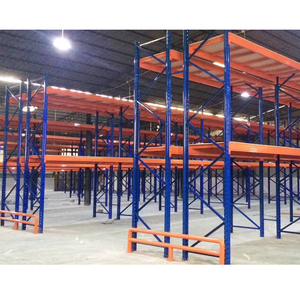
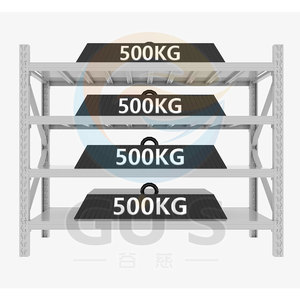
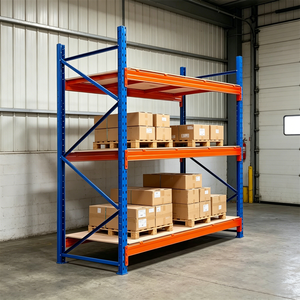
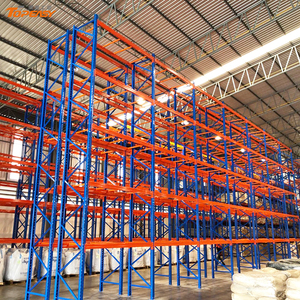
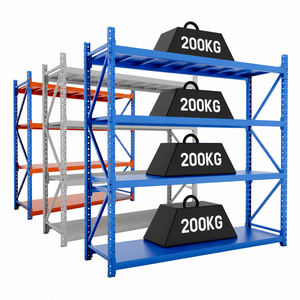
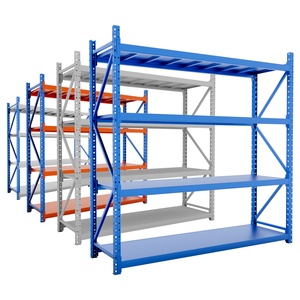
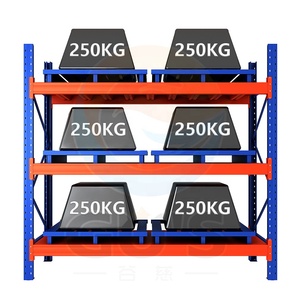
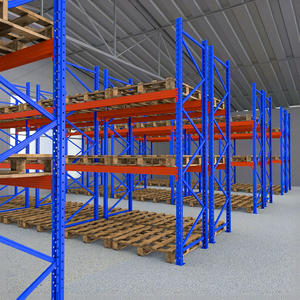
Industrial Whitepaper: Architectural & Structural Mechanics of CE Certified Pallet Racking Systems
Modern material handling requirements demand significantly higher levels of safety, dimensional accuracy, and structural predictability than ever before. As global supply chains accelerate and warehouse ceiling heights push upward into high-bay automated configurations, specifying compliance-verified racking becomes a core operational mandate. A true CE Certified Warehouse Pallet Rack is not merely a steel frame; it is a highly engineered static load-bearing structure governed by strict European standards including EN 15512 (Steel static storage systems - Adjustable pallet racking systems - Principles for structural design), EN 15620 (Tolerances, deformations and clearances), and FEM 10.2.02 guidelines.
When procurement managers and structural engineering leads evaluate global racking suppliers, CE marking serves as verified proof that the system's structural steel yields, beam profile dynamics, weld integrity, and safety factor calculations meet non-negotiable health, safety, and environmental protection benchmarks. Our manufacturing facility combines cold-rolled continuous profile forming with micro-alloyed structural steels (Q235B, Q355B, and high-yield cold-formed section grades) to ensure maximum strength-to-weight efficiency.
Key Engineering Insight: According to EN 15512 standards, racking design must explicitly account for semi-rigid beam-to-column connectors, base plate anchor shear forces, frame sway deflections under asymmetric loading, and dynamic impact safety allowances. Uncertified non-standard racking often fails to account for beam connector rotation metrics (M-φ curves), creating progressive collapse risks under full payload operations.
Comprehensive Analysis of Steel Racking Architecture & Load Parameters
Choosing the correct rack architecture depends heavily on SKU variety, throughput speed, pallet turnover rates, and forklift specifications. Below is an engineering overview of structural characteristics across premier heavy-duty rack configurations:
| Racking Architecture | Structural Profile & Steel Grade | Max Payload Capacity per Level | Selectivity Index | Primary Use-Case Scenarios |
|---|---|---|---|---|
| Selective Pallet Racking | Teardrop / Box Beam (Q235B / Q355B) | 1,000 kg – 4,500 kg | 100% Direct Access | Fast-moving retail, 3PL logistics, mixed-SKU distribution centers |
| Structural Steel Racking | Hot-Rolled Structural C-Channels | Up to 6,000 kg+ | 100% Direct Access | High-impact environments, cold storage, heavy industrial manufacturing |
| Drive-In / Drive-Thru | Formed Cantilever Rails & Heavy Uprights | 1,000 kg – 2,000 kg / position | Low (LIFO / FIFO Lanes) | Seasonal agricultural storage, beverage depots, high-density bulk goods |
| Push-Back Racking | Nested Dynamic Carts on Inclined Rails | 1,500 kg per cart position | Moderate (2–6 Deep LIFO) | Cold storage rooms, food processing, moderate SKU consolidation |
| Heavy Duty Cantilever | Freestanding Columns & Adjustable Arms | 500 kg – 3,000 kg per arm | Direct Arm Access | Lumber yards, steel pipe distribution, extrusions & building materials |
Structural Engineering Advantages of CE-Marked Racking Components
Precision Roll-Formed Uprights
Features multi-ribbed upright profiles engineered to increase moment of inertia, preventing torsional buckling under heavy vertical compression and lateral stress.
Automated Robotic Welding
Connector clips and step beam end-plates are welded using high-precision robotic MIG stations, eliminating micro-cracks and ensuring uniform shear capacity across all connections.
Electrostatic Powder Pre-Treatment
Utilizes an automated 9-stage phosphate wash and thermosetting pure epoxy-polyester powder coating (60–80 microns thick) for exceptional resistance against rust, abrasion, and chemicals.
Future Procurement Trends in Industrial Storage & Warehouse Racking
As the international logistics landscape shifts toward digital automation and decarbonization, enterprise rack procurement strategy is undergoing a fundamental evolution. Procurement teams must look beyond initial cost-per-pallet position to evaluate total cost of ownership (TCO) across a 15-to-20-year operational life cycle.
1. Integration with Automated Storage and Retrieval Systems (ASRS)
Conventional static storage is rapidly converging with dynamic warehouse automation. Future-ready CE certified pallet racks are manufactured with ultra-tight geometric tolerances (strictly adhering to EN 15620 Class 100 to 300 guidelines). This strict dimensional precision ensures seamless integration with autonomous mobile robots (AMRs), automated guided vehicles (AGVs), and high-speed ASRS crane systems, preventing mechanical jamming and downtime.
2. Sustainability & Carbon Footprint Transparency
Enterprise procurement divisions are increasingly requiring Environmental Product Declarations (EPDs) for structural steel products. Modern steel production for racking emphasizes recycled scrap content using Electric Arc Furnace (EAF) technology, accompanied by low-VOC, heavy-metal-free electrostatic powder coatings. Partnering with a supplier capable of proving green supply chain credentials is becoming a prerequisite for international tenders.
3. IoT-Enabled Structural Health & Digital Twin Monitoring
The rise of warehouse digitalization has introduced IoT shock-sensor node integration directly onto pallet rack uprights. These micro-sensors continuously track forklift impact vibrations, structural tilt, and load deflections in real time. Combined with digital twin mapping, facility managers receive automated alerts whenever a structural rack column suffers an impact exceeding structural safety thresholds, satisfying EN 15635 inspection protocols.
Engineering & Product Development Trends: The Next Generation of Racking
R&D departments across leading rack manufacturing plants are continually pushing material science and structural engineering boundaries to achieve higher load capacities with minimal material mass:
- Advanced Micro-Alloyed Steels: Transitioning from standard carbon structural steels to high-strength micro-alloyed cold-rolled steels (e.g., Strenx / S420 grades). This yields a thinner profile wall without sacrificing beam bending moment or column load performance.
- Self-Locking Safety Pin Innovations: Traditional drop-in safety pins are being replaced with automatic gravity-latch or spring-loaded dynamic lock mechanisms integrated directly into beam connectors, reducing human error during installation.
- Seismic Dampening Baseplate Assemblies: Incorporating high-ductility seismic base plates equipped with energy-dissipating dampener pads designed to absorb dynamic shear waves in high seismic zone installations (AGIES NSE / RMI compliant).
Require Custom Storage Engineering or Bulk Wholesale Pricing?
Our structural engineering team offers complimentary CAD layout design, static load structural calculations, and factory-direct container shipments tailored to your specific facility dimensions.
Get a QuoteEnterprise Superiority: Why Global Procurement Teams Trust Our Racking Solutions
With an operational legacy dating back to 1989, our organization has grown from a specialized material handling company into a globally recognized manufacturing force operating over 530,000 square feet of state-of-the-art production space. We combine unmatched raw material inventory with full-cycle custom fabrication to deliver comprehensive warehouse storage ecosystems.
Massive Stock Capacity
We maintain an active inventory exceeding 100,000 beams and 15,000 upright frames, allowing rapid order turnaround for standard teardrop and selective racking configurations without lead-time delays.
In-House Testing Laboratory
Every steel batch undergoes rigorous mechanical tensile strength testing, beam deflection testing under full load, and weld destructive testing to guarantee 100% compliance with CE and RMI standards.
End-to-End Turnkey Support
From initial warehouse CAD space optimization and structural engineering clearance checks to container consolidation, export documentation, and buyback programs, we manage your project lifecycle end-to-end.
Frequently Asked Questions (FAQ)
Expert structural and procurement answers for industrial storage inquiries.
What specific certifications make a warehouse pallet rack "CE Certified"?
CE certification confirms that the pallet racking system complies with European Union health, safety, and environmental protection standards. Specifically for industrial static storage, it verifies compliance with EN 15512 (structural design requirements), EN 15620 (tolerances and deformation limits), EN 15629 (specification of storage equipment), and EN 15635 (application and maintenance of storage equipment). The manufacturing facility must also maintain ISO 9001 quality management standards.
How do standard US teardrop rack dimensions compare with metric pallet sizes?
Standard American selective teardrop frames typically utilize a 42-inch (1,067 mm) depth, which seamlessly accommodates both standard 48" x 40" US wood pallets and standard 1,000 mm x 1,200 mm European/International metric pallets. A 42-inch depth allows a 3-inch (75 mm) safe pallet overhang at both the front and rear beam edges, ensuring proper load placement onto the structural beams.
What is the allowable beam deflection limit according to EN 15512 / FEM standards?
Under standard EN 15512 specification guidelines, the maximum vertical deflection of a step beam under full uniformly distributed load (UDL) must not exceed L/200 (where L is the span length of the beam). For example, on a standard 96-inch (2,438 mm) beam, maximum allowable central deflection is 12.19 mm under maximum rated payload.
Can I mix new custom manufactured racking components with existing installed racks?
Yes, provided profile pitch connections match precisely. Our manufacturing setup specializes in custom engineering components (beading, beam connectors, frame depths, and hole punch patterns) that integrate cleanly with universal teardrop, structural boltless, or specific international rack geometry. Our engineers evaluate your existing specifications prior to production to guarantee seamless compatibility.
What information is required to receive a formal structural design quote?
To produce an exact structural engineering design and competitive quotation, we typically require: (1) Warehouse building floor plan with clear height under roof trusses, (2) Pallet dimensions (width x depth x height including cargo), (3) Maximum load weight per pallet, (4) Forklift truck operational type and maximum lift height, and (5) Facility location/seismic environment requirements.
How does electrostatic powder coating protect racking in high-humidity or cold-storage facilities?
Electrostatic powder coating creates a continuous, non-porous polymer barrier bonded thermally to pre-treated steel surfaces at 200°C. Unlike standard spray paint, thermosetting epoxy-polyester powder resists moisture penetration, preventing sub-surface oxidation even in high-humidity tropical climates or cold storage environments subjected to condensation cycles.
Ready to optimize your facility's storage density and compliance rating?
Get a Quote