Featured Industrial Racking & Storage Systems
High-capacity structural and selective pallet racking systems engineered for maximum spatial optimization and seismic stability.
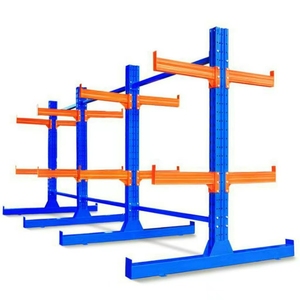
High Quality Cantilever Racking Storage Shelving System
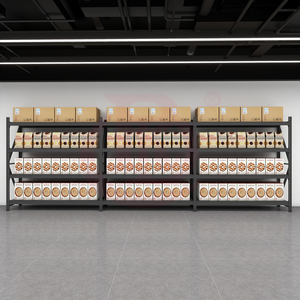
Heavy Duty 5 Layer Adjustable Mobile Pallet Rack System
Heavy Duty Industrial Steel Warehouse Pallet Racking System
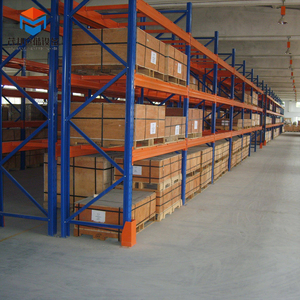
Warehouse Pallet Racking Selective Heavy Duty System
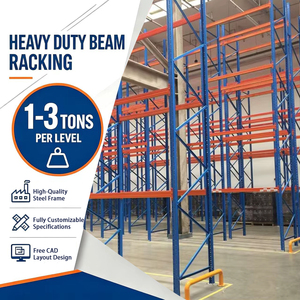
Q235 Steel Adjustable Warehouse Pallet Racking Frame
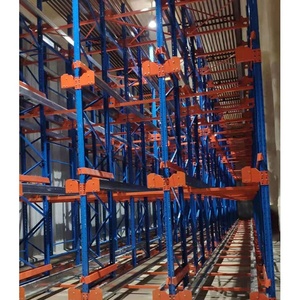
Customized Steel Pallet Rack Radio Shuttle System
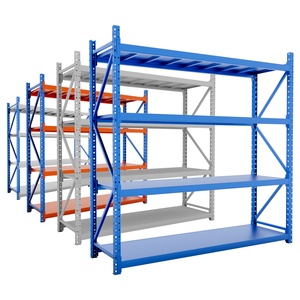
4-Layer Adjustable Medium Heavy Duty Longspan Racking
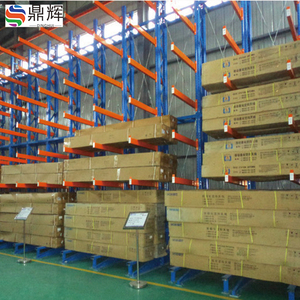
Warehouse Standard Sheet Metal Cantilever Storage Frame
Industrial Pallet Racking & Shelving Systems: Engineering White Paper
In modern globalized supply chain logistics, maximizing cubic storage density while maintaining rigorous structural safety standards is the paramount challenge for warehouse operations. As premier China industrial shelving pallet racks suppliers & exporters, we engineer tailored material handling systems that satisfy global structural codes including FEM 10.2.02, RMI (ANSI MH16.1), EN 15512, and AS4084-2012.
The choice between cold-formed steel racking profiles and hot-rolled structural racking directly impact operational throughput, seismic resilience, and total cost of ownership (TCO). Our manufacturing matrix leverages premium Q235B and Q355B high-tensile structural steel to deliver optimal load-to-weight ratios across diverse industrial applications—from high-bay automated logistics hubs in North America to seismic-prone distribution nodes across Central America and Southeast Asia.
Information Gain Metric: Standard commercial selective pallet rack systems utilize a minimum 1.65 safety factor based on yield strength. Our structural engineering upgrades apply Finite Element Analysis (FEA) to ensure zero permanent deflection under maximum rated loading, combined with customized seismic baseplate anchoring designed for Zones 3 and 4 under AGIES and IBC guidelines.
Structural Integrity & Material Selection
We source prime cold-rolled steel coils from tier-1 steel mills. Our Q235 and Q355 structural steel grades undergo rigorous tensile strength verification, yielding superior ductility and resistance to impact loads caused by forklift operations.
High-Precision Automated Roll Forming
Utilizing continuous multi-stage roll-forming lines, upright frames are punched with precision teardrop or omega slot patterns at 50mm to 75mm pitch increments, ensuring tight connection tolerance and quick beam adjustability.
Advanced Surface Treatment & Powder Coating
All component surfaces undergo an 8-stage pre-treatment wash including chemical degreasing, zinc phosphating, and electrostatic epoxy powder curing at 200°C. This ensures salt spray resistance up to 500+ hours for humid environments.
Future Procurement Trends in Industrial Racking & Logistics (2025–2030)
The global material handling equipment (MHE) industry is undergoing a structural transition driven by automated warehousing, labor constraints, and ESG (Environmental, Social, and Governance) directives. When sourcing industrial racking systems from Chinese manufacturing exporters, international buyers must align their procurement strategies with five key technological trends:
1. Automated Guided Vehicle (AGV) & AMR Integration
Traditional selective racking is being re-engineered with high-precision floor guide rails, laser reflector positioning brackets, and tighter tolerance margins to seamlessly integrate Autonomous Mobile Robots (AMRs) and AGVs. Beam deflections must be constrained within L/300 to avoid optical sensor fault triggers during automated handling.
2. Migration Toward Automated Storage & Retrieval Systems (AS/RS)
As industrial real estate costs escalate worldwide, high-bay AS/RS systems reaching heights of 25m to 40m are replacing low-bay manual warehouses. High-bay racking requires strict verticality tolerances (within 1/1000) and high-strength structural bolt connections engineered for dynamic crane acceleration loads.
3. High-Density Radio Shuttle Racking Systems
Semi-automated pallet shuttle systems offer up to 80% volume utilization compared to 40% for standard selective racking. Utilizing wireless radio-controlled shuttles inside deep lanes, operations achieve maximum FIFO/LIFO throughput while drastically reducing forklift aisle travel times and column collision risks.
4. Carbon-Neutral Manufacturing & Green Steel Procurement
European and North American buyers are increasingly demanding Environmental Product Declarations (EPDs). Leading China racking exporters are adopting low-carbon electric arc furnace (EAF) steel and solvent-free thermo-setting powder coatings to lower Scope 3 embodied carbon footprint across supply chains.
5. Smart Racking & Real-Time Structural Health Monitoring (SHM)
Integrating IoT strain gauges and collision sensors onto critical racking uprights enables real-time stress monitoring and automatic notification of structural impacts. This proactive safety paradigm mitigates progressive collapse risks in high-traffic distribution centers.
Engineering Selection Matrix: Industrial Pallet Racks & Systems
Selecting the optimal warehouse storage configuration requires balancing selectivity against density, load capacity, and budget constraints. The following matrix provides a technical benchmark for project engineers and procurement officers:
| Racking System Type | Max Load per Tier | Storage Density | SKU Selectivity | Seismic Resistance | Optimal Application |
|---|---|---|---|---|---|
| Selective Pallet Rack | 1,000 kg – 4,500 kg | Moderate (~40%) | 100% Direct Access | Standard to High (Zone 4) | High-SKU Distribution Centers, FMCG |
| Heavy Duty Cantilever Rack | 500 kg – 3,000 kg / Arm | High for Long Goods | 100% for Bundles | High (Structural Channel) | Lumber, Steel Pipes, Tubing, Sheet Metal |
| Radio Shuttle Racking | 1,500 kg / Pallet | Very High (>80%) | Batch / Block Selectivity | High (Interlocked Frame) | Cold Storage, Food & Beverage, Bulk DC |
| Drive-In / Drive-Thru | 1,000 kg – 1,500 kg | High (~65%) | Low (LIFO / FIFO) | Moderate (Top Bracing Required) | Seasonal Goods, Uniform Batch Storage |
| Longspan Shelving | 300 kg – 800 kg | Moderate | 100% Hand Pick | Standard | E-commerce Picking, Spare Parts, Hardware |
| Mobile Pallet Racking | 1,000 kg – 3,000 kg | Maximum (>85%) | 100% On-Demand Aisle | High (Guided Track Base) | High-Cost Cold Rooms, Chemical Vaults |
Enterprise Strengths & Factory Sourcing Advantages
Established since 1989, our manufacturing and logistics infrastructure provides a seamless one-stop enterprise solution for B2B global clients seeking high-yield industrial storage assets:
530,000+ Sq Ft Manufacturing Hub
Our expansive production facility houses fully automated cold-roll forming lines, robotic welding stations, laser plate cutting machinery, and continuous powder coating plants capable of producing over 5,000 tons of structural racking per month.
Dual Track: New & Reconditioned Racking
We supply both brand-new custom-fabricated steel racking and thoroughly inspected secondary racking. Every inspected component undergoes strict ultrasonic weld testing and dimensional alignment checks to guarantee factory-level integrity.
Global Export & Custom Documentation
We streamline international shipping logistics with optimized container loading strategies (40ft HQ utilization), bundled bay labeling for fast assembly, and full support for DUCA, CAFTA-DR, and Form E preferential customs clearance.
Require a Customized Warehouse Layout & Structural Calculation?
Our certified structural engineers provide free 2D/3D CAD layout design, floor load analysis, and seismic compliance reports tailored to your specific facility dimensions.
Inquire NowProcurement & Engineering FAQ: Industrial Pallet Racks
What steel grades and structural standards are used in your pallet racking systems?
Our industrial racking components are fabricated primarily from prime Q235B and Q355B structural steel coils (equivalent to ASTM A36 and ASTM A572 Grade 50). All engineering designs adhere strictly to FEM 10.2.02 (European Federation of Materials Handling), RMI/ANSI MH16.1 (US standard), and AS4084-2012 (Australian steel storage racking specification).
How do you determine beam load capacity and total frame capacity?
Beam load capacity is determined based on uniformly distributed loads (UDL) with maximum permissible vertical deflection not exceeding 1/200th of the beam length (L/200). Upright frame capacity is calculated considering beam level heights (unbraced length), baseplate anchor configurations, and seismic loading parameters validated through Finite Element Analysis (FEA).
Are your selective pallet racks compatible with both metric and standard US pallet sizes?
Yes. We manufacture upright frames in standard depths such as 42 inches (1,067mm) and 48 inches (1,219mm), which accommodate standard GMA pallets (48x40 inches) as well as European metric pallets (1,200x800mm and 1,200x1,000mm) with proper 75mm front and rear overhangs.
What surface coating options are available for humid or cold storage environments?
For standard dry ambient warehouses, we utilize an 8-stage electrostatic epoxy powder coating (60–80 microns thick). For cold storage facilities, chemical environments, or humid coastal areas, we offer hot-dip galvanizing (HDG) conforming to ISO 1461, providing 50+ year corrosion protection.
How are racking shipments optimized for ocean container shipping?
Upright frames are nested or shipped knocked-down (KD) to maximize container volume. Beams are stacked in custom steel bundles with wood spacer blocks and protective corner guards. This packaging strategy allows us to load up to 24–26 metric tons per 40ft High Cube container while preventing transit damage.
What information is needed to receive an accurate factory quote and CAD layout?
To generate an engineered layout and commercial proposal, please provide: (1) Warehouse building CAD drawings or dimensions showing clear height under truss, (2) Pallet dimensions including load height and gross weight, (3) Forklift model, maximum lift height, and minimum aisle width requirements, and (4) Site location for seismic code evaluation.