Featured Industrial Pallet Racking & Storage Systems
Explore our high-capacity cold-rolled and structural steel racking systems engineered for maximum load bearing, structural integrity, and seismic stability.
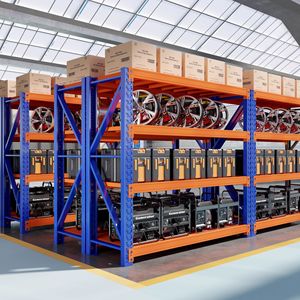
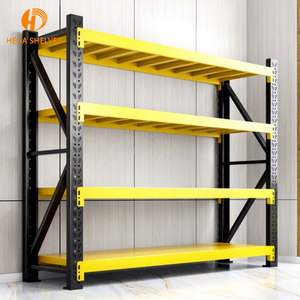
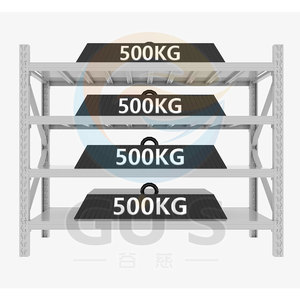
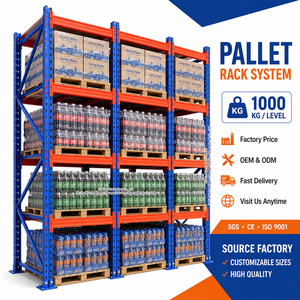
Why Top Global Brands Partner with China's Premier Pallet Rack Manufacturer
Combining advanced finite element analysis (FEA), certified Q235B/Q355B structural steel, and fully automated robotic manufacturing lines to supply reliable rack infrastructure worldwide.
High-Tensile Certified Steel Grades
We strictly procure cold-rolled steel coils matching Q235B and high-yield Q355B structural steel specifications. Each coil undergoes tensile testing to guarantee structural elasticity and yield point resilience under maximum rated static and dynamic loads.
Robotic Welding & Precision Roll-Forming
Our manufacturing plant utilizes 6-axis ABB robotic welding cells and continuous 22-stage roll-forming mills. This guarantees flawless beam-connector seam welds and frame hole pitch accuracy within ±0.5mm tolerances for fast, alignment-free field installation.
18-Stage Advanced Surface Pre-Treatment
Components undergo automatic degreasing, zinc-phosphate conversion coating, and electrostatic thermo-setting powder baking (AkzoNobel resins). Tested to exceed 1,000 hours of salt spray exposure without blistering, ideal for humid and cold-chain operations.
Engineering Comparison: Industrial Warehouse Storage Architectures
Selecting the correct pallet rack architecture requires balancing volumetric efficiency, SKU throughput speed, structural deflection limits, and total capital expenditure.
| Racking Architecture | Storage Density | SKU Selectivity | Forklift Compatibility | Optimal Industry Application |
|---|---|---|---|---|
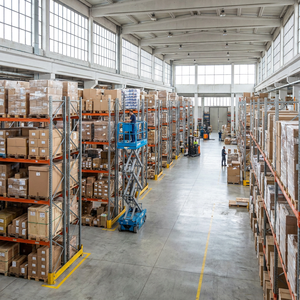
| Selective Pallet Racking | Moderate (40-50%) | 100% Direct Access | Standard Counterbalance, Reach Truck | FMCG Distribution, Retail Hubs, 3PL Warehouses |
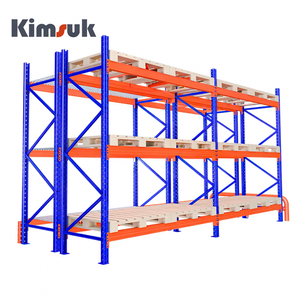
| Structural Bolt-On Racking | High (50-60%) | 100% Direct Access | Heavy-Duty High-Capacity Trucks | Heavy Manufacturing, Building Materials, Seismic Zones |
| Drive-In / Drive-Thru Racking | Very High (75-85%) | Low (LIFO / FIFO) | Specialized Narrow Counterbalance | Cold Storage, Beverage Bottlers, Bulk Food Depots |
| Pushback & Gravity Flow Racks | High (65-75%) | Moderate (LIFO / FIFO) | Standard Reach Truck | Perishable Goods, High-Volume Manufacturing |
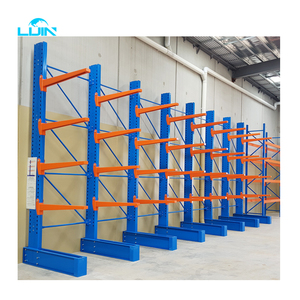
| Cantilever Storage Racking | Variable (Linear) | 100% Side Access | Side Loaders, Multi-Directional Trucks | Lumber, Steel Pipes, Aluminum Extrusions, Rebar |
Future Procurement Trends in Industrial Racking & Logistics
How automation, seismic engineering standards, and green steel supply chains are redefining warehouse rack manufacturing and global procurement strategies.
1. Integration with ASRS & Autonomous Mobile Robots (AMRs)
Modern procurement is pivoting away from purely manual racking toward ASRS-ready ultra-precise tolerance frameworks. As warehouses deploy shuttle systems and autonomous vertical lifts, rack manufacturers must deliver tighter vertical deflection standards (<L/300) and integrated rack-guided rail channels.
2. Green Steel & ESG Carbon Lifecycle Audits
Global enterprise buyers now demand certified Environmental Product Declarations (EPDs). Leading Chinese suppliers are adopting electric arc furnace (EAF) low-carbon steel, reduced VOC powder coatings, and zero-discharge phosphate pre-treatment lines to lower Scope 3 embodied carbon.
3. Non-Linear Seismic Engineering Resilience
With strict international updates to RMI ANSI MH16.1 and FEM 10.2.02, structural rack calculations increasingly rely on dynamic non-linear time-history simulations. Modern upright designs feature heavy-duty oversized baseplates, seismic row spacers, and ductile beam locking connectors to absorb ground shear forces without catastrophic failure.
4. Smart Rack Structural Health Monitoring (IoT)
Procurement managers are prioritizing intelligent maintenance systems. Sensor-embedded upright frames monitor strain metrics, vibration impact, and overload deflection in real-time, instantly notifying warehouse safety teams via IoT telemetry before structural failure occurs.
Industrial Pallet Racking Procurement FAQ
In-depth answers to critical structural engineering, compliance, and international shipping queries.
Top-tier Chinese manufacturers fabricate industrial pallet racking in strict compliance with the American Rack Manufacturers Institute (RMI ANSI MH16.1), European FEM 10.2.02, and Australian AS4084-2012 standards. Premium suppliers use high-grade Q235B or Q355B structural steel subjected to continuous stub-column testing, frame compression analysis, and beam-to-column connector safety factor verification (minimum 1.95 safety coefficient on ultimate structural capacity).
The standard maximum allowable vertical beam deflection under full uniformly distributed load (UDL) is L/240, where L represents the clear beam span distance (e.g., for a 2700mm beam, maximum deflection cannot exceed 11.25mm). For automated ASRS installations or fragile glass/beverage applications, a tighter deflection limit of L/300 or L/400 is typically engineered to ensure automated crane sensors function without optical blockage.
Teardrop racking uses cold-formed sheet steel with punch holes that allow slide-in boltless beam pin engagement, offering maximum flexibility and quick repositioning for standard retail and warehouse applications. Structural pallet racking utilizes heavy hot-rolled structural C-channels with structural bolted beam connections, providing superior resistance to repeated forklift impacts, extreme load capacities (>4,000 kg per beam level), and severe seismic environment stability.
To produce a fully compliant CAD layout and FEA structural calculation report, our engineering team requires: (1) Warehouse floor plan showing column locations and clear height under sprinkler/truss; (2) Pallet dimensions (W x D x H) including goods overhang; (3) Maximum weight per loaded pallet; (4) Minimum operating aisle width dictated by your specific forklift specification (e.g., reach truck, VNA, or counterbalance); and (5) Local seismic zone ratings or environmental conditions (cold storage/outdoor).
Upright frames can be supplied knocked-down (KD) and flat-packed into 40ft High Cube containers, increasing container spatial loading density by up to 40% compared to pre-welded frames. Beams are bundled on structural steel runners with heavy protective corner guards and corrosion-inhibiting VCI plastic wrapping, allowing seamless forklift unloading at destination ports.
Optimize Your Warehouse Capacity with Custom Factory-Direct Engineering
Request our comprehensive 2025/2026 industrial storage product catalog, FEA calculation whitepapers, and complete structural steel specification guides.