Heavy-Duty Industrial Storage & Pallet Racking Systems
Direct-from-factory racking solutions engineered to ISO 9001, FEM 10.2.02, and ANSI/RMI MH16.1 international structural safety standards.
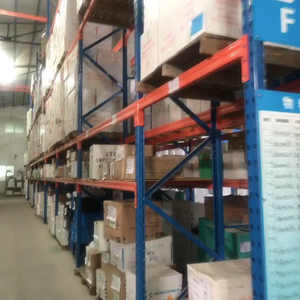
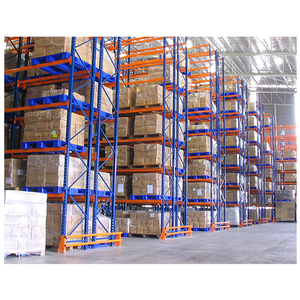
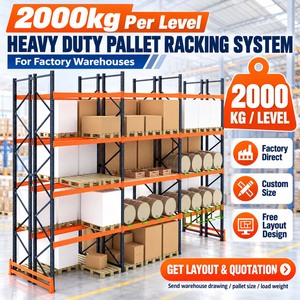
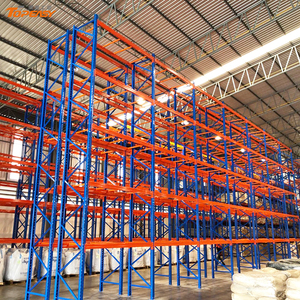
Direct Factory Infrastructure & Technical Capabilities
Combining over three decades of engineering expertise with high-precision manufacturing to support complex global supply chain deployments.
Engineering Standards, Metallurgical Dynamics & Seismic Design
An exhaustive technical evaluation of modern warehouse shelving, raw material metallurgy, and structural resilience factors.
In global logistics and distribution, warehouse racking systems serve as the structural backbone of physical supply chains. Sourcing heavy-duty storage racks from premier Chinese exporters requires evaluating structural mechanics, steel grade integrity, anti-corrosion protection, and compliance with region-specific building codes. As modern distribution centers shift toward higher vertical clearances (upwards of 12 to 18 meters) and tighter aisle dimensions, structural engineering precision becomes paramount.
Key Engineering Insight: The structural capacity of cold-formed steel racking depends not only on cross-sectional thickness, but significantly on profile geometry, beam-to-column connector lock dynamics, and yield strength (Q235B vs. Q355B structural steel grades).
1. Cold-Formed Roll Profile vs. Hot-Rolled Structural Racking
When selecting storage systems from Chinese manufacturers, enterprise buyers primarily evaluate two structural paradigms: Cold-Formed Roll-Formed Steel (Teardrop, Omega profile, standard selective) and Hot-Rolled Structural Steel (Structural Channel Racks).
Cold-formed systems leverage high-tensile Q235B or Q355B steel strip coils, continuously roll-formed into complex multi-ribbed upright profiles. This engineering yields an exceptional strength-to-weight ratio, lowering shipping freight costs while maintaining beam deflections under L/200 under maximum payload. Structural steel racking, utilizing heavy structural channel sections with bolted beam-to-frame connections, is preferred for high-impact environments (such as busy freezer facilities or heavy-machinery manufacturing plants) where forklift impact resistance is vital.
2. Seismic Resistance & Dynamic Load Factor Engineering
Global warehouse deployments across seismically active zones—including Central America, the Pacific Rim, and Southern Europe—require customized seismic engineering. Racking designs must withstand vertical acceleration, horizontal sway, and horizontal shear forces. Compliance with ANSI/RMI MH16.1, FEM 10.2.02, and local codes such as AGIES NSE guidelines involves incorporating:
- Heavy-Duty Oversized Baseplates: Engineered base plates anchored with dual chemical or mechanical anchor bolts to distribute moment loads into the concrete slab.
- Structural Row Spacers & Overhead Ties: Rigid rigid ties connecting back-to-back rack runs to equalize lateral forces during seismic activity.
- Column Protectors & Frame End Guards: Heavy-gauge steel guards designed to absorb low-level forklift impacts without altering the load path of the vertical upright frame.
3. Advanced Anti-Corrosion Finishing: Epoxy Powder vs. Hot-Dip Galvanizing
Environmental longevity depends directly on surface finishing technology. Top exporters in China utilize fully automated, multi-stage pre-treatment washing (iron phosphate or zinc phosphate immersion) followed by electrostatic epoxy-polyester powder coating cured at 200°C. For harsh environments—such as coastal logistics hubs with high humidity, chemical processing warehouses, or sub-zero cold storage facilities—Hot-Dip Galvanizing (HDG) conforming to ASTM A123 / ISO 1461 provides complete zinc-alloy metallurgical bonding, offering decades of maintenance-free corrosion resistance.
| Racking Technology | Primary Material Grade | Structural Connection | Max Load per Level | Best Application Fit |
|---|---|---|---|---|
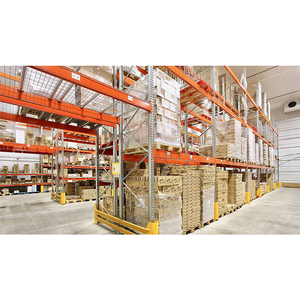
| Selective Pallet Rack | Q235B Cold-Rolled Steel | Adjustable Beam Hook & Safety Pin | 1,000 kg – 4,500 kg | High SKU diversity, 100% direct pallet access |
| Structural Channel Rack | Structural C-Channel Steel | High-Strength Grade 5/8 Heavy Bolts | 3,000 kg – 6,000 kg | Heavy industrial, rugged, high-impact sites |
| Drive-In / Drive-Thru | Q355B High-Yield Steel | Cantilever Arm & Top Tie Beam | 1,500 kg per position | High density, low SKU count, bulk storage |
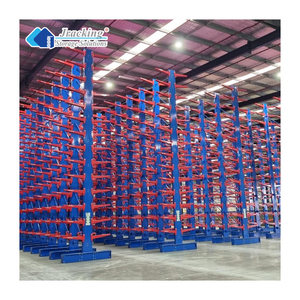
| Heavy Cantilever Rack | Hot-Rolled I-Beam / Q235B | Pinned / Bolted Adjustable Arm | 500 kg – 5,000 kg / arm | Pipes, timber, aluminum profiles, steel bars |
| Galvanized Freezer Rack | HDG Steel (ASTM A123) | Interlocking / Bolted Stainless Hardware | 2,000 kg – 4,000 kg | Sub-zero cold chain (-30°C), corrosive sites |
Future Procurement Dynamics & Industry Trends (2025–2030)
Key structural shifts, automation integrations, and sustainability criteria reshaping international warehouse equipment purchasing.
ASRS & Automation Integration
Standard racking is rapidly evolving into structural frameworks for Automated Storage and Retrieval Systems (ASRS). Modern buyers demand tighter manufacturing tolerances (±0.5mm per upright frame) to accommodate high-speed robotic shuttles, AGVs, and crane guide rails.
Hybrid New/Inspected Component Sourcing
Global supply chain officers are optimizing CAPEX by pairing new factory-manufactured beams with certified, reconditioned upright frames. Chinese exporters with comprehensive buyback and refurbishing operations offer versatile hybrid packages that lower cost without sacrificing structural safety.
Decarbonization & Green Steel Criteria
Environmental ESG compliance is becoming a key vendor selection metric. Enterprise buyers require Chinese exporters to provide Environmental Product Declarations (EPDs), utilize zero-VOC powder coatings, and source raw steel from electric arc furnace (EAF) mills driven by renewable power.
Container Freight Optimization
With ocean freight rate volatility, top exporters utilize advanced 3D container loading software. By nesting teardrop beam profiles and bundling frames efficiently, freight density increases by up to 28%, significantly reducing transport costs per pallet position.
Dual Pallet Metric/Imperial Adaptability
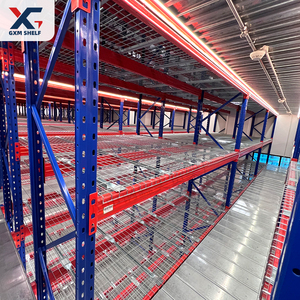
As cross-border e-commerce expands, racking systems must accommodate both US 48"x40" (GMA) pallets and European 1200x1000mm / 1200x800mm pallets. Exporters offer dual-purpose 42" (1,067mm) depth frames equipped with universal drop-in wire decking.
Lifecycle Asset Trade-In & Buyback
Modern distribution logistics require quick adaptions to footprint shifts. Leading Chinese exporters maintain global asset recovery programs—allowing enterprises to trade in existing racking hardware for credit when expanding into larger automated facilities.
Integrated Manufacturing & Global Export Services
From initial 3D layout simulation to final customs documentation, our engineering team manages every step of the supply chain.
Selecting China’s top warehouse racking wholesaler involves more than comparing unit steel prices; it requires a manufacturing partner capable of delivering turnkey engineering reliability. Operating from a 530,000+ sq. ft. manufacturing facility equipped with fully automated continuous roll-forming lines and robotic welding cells, our team delivers consistent quality at scale.
Turnkey CAD Layout Optimization & Engineering
Our structural engineering department uses advanced CAD and finite element analysis (FEA) software to model load distributions, aisle clearances, and forklift turning radii. Whether designing a narrow-aisle selective rack layout for a city distribution center or a cantilever system for heavy aluminum profiles, every project is tailored to maximize space utilization.
Rigorous Quality Assurance & Destructive Load Testing
Quality control begins with raw coil receipt. Each steel batch undergoes tensile testing (yielding, ultimate strength, and elongation percentage checks). Assembled beams and upright frames are subjected to periodic destructive load testing on custom hydraulic rigs, ensuring that structural safety margins comfortably exceed ISO and ANSI standards (typically maintaining a 1.65 to 2.0 safety factor).
Export Packaging & International Logistics Compliance
Exporting structural steel demands protective packaging to prevent freight damage during ocean transit. Upright frames are steel-strapped with corner protectors, beams are stacked on custom wooden pallets with anti-scratch interleave layers, and small hardware components are packaged in reinforced crates. All shipments include detailed packing lists, bay-by-bay component tagging, and full documentation to support customs declarations worldwide.
Frequently Asked Questions for Racking Procurement
Detailed technical answers to common queries raised by warehouse managers, supply chain directors, and structural engineers.
How do Chinese steel grades (e.g., Q235B, Q355B) compare to US and European standards?
China standard Q235B steel has a minimum yield strength of 235 MPa, functionally equivalent to US ASTM A36 and European EN10025 S235JR. High-tensile Q355B offers a yield strength of 355 MPa, directly comparable to US ASTM A572 Grade 50 and European S355JR. Q355B is typically specified for high-bay upright frames and heavy-duty beams to reduce steel weight while maintaining load capacity.
What technical parameters are required to generate an engineering quote?
To produce an accurate structural design and quotation, our engineering team requires: (1) Warehouse floor plan dimensions and clear ceiling height under lights/sprinklers, (2) Pallet dimensions (Width x Depth x Height including cargo), (3) Maximum load weight per pallet, (4) Forklift specifications including maximum lift height and minimum right-angle stacking aisle width, and (5) Ambient operating conditions (standard temperature, cold room, or outdoor coastal).
Can standard selective racking accommodate both US (48"x40") and Euro (1200x800mm) pallets?
Yes. A standard 42-inch (1,067mm) frame depth accommodates both US 48" deep pallets and European 1,200mm deep pallets with an optimal 3-inch (75mm) overhang front and back. Paired with 96-inch (2,438mm) or 108-inch (2,743mm) step beams, the rack holds two standard pallets per level with required safety clearances.
How are racking shipments protected against sea-salt corrosion during ocean transit?
All finished steel products undergo a multi-stage electrostatic powder coating process. For export shipments, items are bundled with heavy plastic film, steel banding, edge protectors, and desiccant packs inside closed sea containers (40ft HQ), protecting components against moisture during sea transport.
What certification documentation is provided with international shipments?
Every shipment is accompanied by Mill Test Certificates (MTC) verifying raw material chemistry and yield strength, ISO 9001 quality compliance certificates, CE certificates (where applicable for EU markets), comprehensive structural installation drawings, and component-level packing manifests.
Do you provide site installation guidance and engineering support?
Yes. We supply 3D assembly diagrams, installation videos, anchor torque specifications, and structural load charts. For large enterprise projects, our structural engineers can provide real-time virtual installation supervision or dispatch experienced site leads to oversee local installation teams.
Ready to Optimize Your Warehouse Storage Footprint?
Contact our senior engineering team today for custom layout CAD designs, factory-direct wholesale pricing, and structural specifications tailored to your logistics needs.