Featured Industrial Cantilever Warehouse Racking Systems
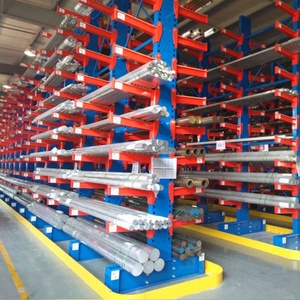
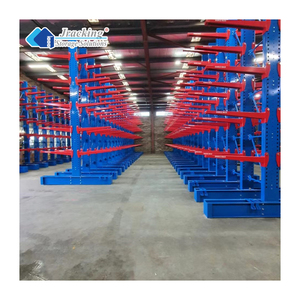
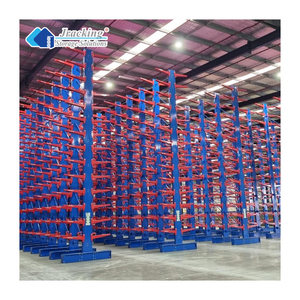
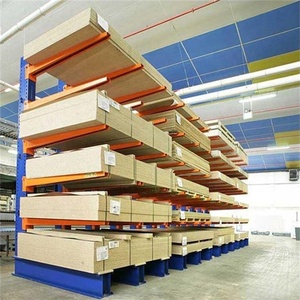
Select from our precision-engineered heavy-duty cantilever systems designed for non-standard, long-item inventory handling. Fully customizable arm pitches, load ratings, and structural steel grades.
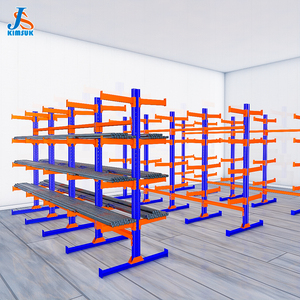
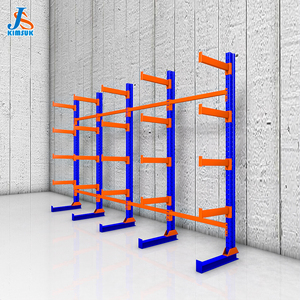
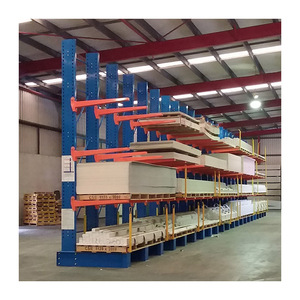
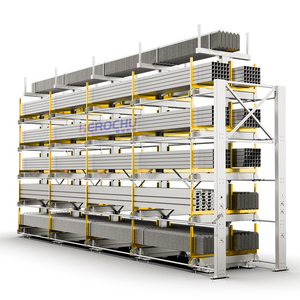
Require Custom Load Deflection Calculations or Project Layout Planning?
Our senior structural engineers provide CAD layouts, finite element analysis (FEA), and factory-direct wholesale pricing within 24 hours.
Understanding Cantilever Structural Dynamics & Engineering Mechanics
Unlike standard selective pallet racks that utilize front vertical posts, cantilever systems rely on C-C roll-formed or hot-rolled H-beam columns equipped with load-bearing arms attached via rigid bolted connections or tapered pin systems.
Moment Arm Mechanics
Cantilever arms act as structural levers subjected to pure bending moments and shear stress. Arm capacity ratings are calculated based on the load center distance (L/2). For example, a 1,200mm arm carrying 1,500kg requires a connection moment design of at least 8.83 kN·m at the column interface.
Steel Grade Selection (Q235B vs Q355B)
Heavy-duty industrial columns use hot-rolled H-beams (GB/T 11263 / ASTM A36 / S355JR steel). Cold-formed profiles utilize high-tensile Q235B steel. Q355B low-alloy steel delivers a 45% higher yield strength (355 MPa), enabling slender column profiles under extreme seismic and vertical loading.
Deflection Limits & Safety Factors
According to ANSI MH16.1 and FEM 10.2.09, maximum vertical arm deflection under full design load is strictly constrained to L/180. The column connection safety factor is maintained at minimum 1.65 to 1.95 against ultimate yield strength, preventing permanent structural deformation.
| Structural Profile Type | Manufacturing Process | Typical Steel Grade | Max Load per Arm | Optimal Storage Application | Corrosion Protection |
|---|---|---|---|---|---|
| Light-Medium Roll-Formed | Cold-rolled C-Channel | Q235B Cold-Rolled Steel | 300 kg – 800 kg | Plastic pipes, light timber, aluminum trim | Electrostatic Powder Coating (60–80 µm) |
| Heavy-Duty Structural I-Beam | Hot-rolled H-Beam (IPE/HEA) | Q355B / S355JR Structural Steel | 1,000 kg – 3,500 kg | Steel bundles, heavy rebar, copper tubing | Powder Coated or Hot-Dip Galvanized |
| Extra Heavy-Duty Column | Welded Steel Plate / Heavy Structural | Q355D / High-Strength Alloy | 3,500 kg – 5,000+ kg | Industrial dies, structural plate, steel coils | Hot-Dip Galvanized (ISO 1461, >85 µm) |
| Motorized Telescopic Arm | Precision Machined Box Section | Q355B + Linear Bearings | 1,000 kg – 2,500 kg | Overhead crane loading, high-density yards | Industrial Epoxy Enamel |
Future Procurement & Technological Trends in Cantilever Racking
The global material handling industry is undergoing structural digital transformation. Supply chain managers sourcing wholesale racking from China must prepare for these five core technological evolutions over the next decade.
1. Motorized Telescopic & Crank-Out Cantilever Integration
Traditional fixed cantilever racks require wide aisles (up to 4.5 meters) for side-loading forklifts. Next-generation procurement is shifting toward 100% extension motorized telescopic cantilever racks. Arms extend outwards via electric drives, allowing overhead bridge cranes or vacuum lifters to perform direct vertical picks. This eliminates forklift aisles entirely and increases storage density by up to 300% in high-value indoor floor space.
2. Automated Guided Vehicles (AGV) & AMR Compatibility
As automated material handling scales worldwide, standard rack columns are being retrofitted with laser-guided AGV interface points, optical positioning reflectors, and automated arm height sensors. Wholesalers and factory specifiers are requiring tighter dimensional tolerances (±1.5mm tolerance across vertical columns) to support robotic reach trucks and automated stacker cranes (AS/RS for long materials).
3. Seismic Performance Modeling (AGIES / FEM 10.2.09 / RMI)
With global climate volatility and strict building permits, international buyers are enforcing dynamic seismic analysis. Modern Chinese OEMs utilize Finite Element Analysis (FEA) software to simulate 3D horizontal ground acceleration, dynamic overturning moments, and floor slab anchor shear forces. Racks destined for seismic zones now incorporate oversized base plates (up to 25mm thickness) with chemically bonded epoxy anchors.
4. Eco-Friendly Surface Finishing & Green Carbon Compliance
Environmental standards are reshaping steel fabrication. Direct factory wholesale suppliers in China are phasing out solvent-based paints in favor of zero-VOC TGIC-free thermosetting powder coatings and heavy-duty hot-dip galvanizing (HDG compliant with ISO 1461). HDG finishes provide 50+ years of maintenance-free service in coastal marine and chemical processing environments (C4/C5 atmospheric corrosion categories).
Industrial Development Trends in Cantilever Rack Manufacturing
China’s manufacturing ecosystem for structural storage systems has evolved from low-cost steel fabrication into advanced automated precision engineering.
Robotic Laser Cutting & Punching
Modern production facilities employ 12kW fiber laser cutting stations and CNC multi-axis punching lines. Column connection pitch holes (typically 75mm, 76.2mm, or 100mm increments) are laser-cut with sub-millimeter precision, ensuring flawless arm locking alignment and eliminating operational slop.
Tapered Safety Lock Pin Systems
Historically, bolted cantilever arms suffered from tedious pitch adjustment and bolt shear wear. Contemporary product designs feature toolless tapered pin locks. The arm hooks into the column upright slots and is secured by a high-grade steel locking pin, preventing accidental dislodgement during forklift lifting.
Hybrid Roll-Formed & Structural Mix
To optimize project expenditure, engineers are increasingly specifying hybrid configurations. Light upper levels utilize cold-rolled steel arms, while lower levels subjected to heavy bundle impacts utilize hot-rolled structural steel I-beams. This hybrid approach lowers total system mass while maintaining high safety margins.
Frequently Asked Questions (FAQ) for Global Buyers
Essential technical and logistical guidance for procurement directors, logistics engineers, and warehouse operations managers sourcing cantilever racking systems from China.
How do I calculate total weight capacity requirements for a cantilever racking run?
Total capacity is determined by evaluating three variables: Load Weight per Item, Number of Supporting Arms, and Column Height / Center Distance.
1. Divide the maximum load weight of a single long material bundle by the required number of supporting arms to determine the required Capacity per Arm (e.g., a 3,000 kg steel tube bundle resting on 3 arms requires a minimum arm capacity of 1,000 kg).
2. Multiply the total number of arms attached to a single vertical column (across all vertical levels) by the individual arm capacity to determine the required Column Upright Capacity.
3. Ensure the load center of gravity (CG) aligns with the midpoint of the arm length ($L/2$). Placing loads at the tip of the arm reduces capacity by up to 50% due to increased bending moment strength reduction.
What is the structural difference between Single-Sided and Double-Sided cantilever racks?
Single-Sided Cantilever Racks feature storage arms extending from only one side of the central vertical column. They are placed flat against building perimeter walls. The column base must extend forward to match or exceed the arm length to prevent forward tipping under full load.
Double-Sided Cantilever Racks feature arms extending from both front and rear sides of a single vertical column. Structurally, double-sided systems are superior because loads on opposite arms counterbalance one another, subjecting the column upright primarily to pure axial compression rather than eccentricity bending stress. Double-sided configurations significantly reduce total steel usage per storage position.
What concrete foundation slab requirements are necessary for heavy-duty cantilever installation?
Heavy-duty industrial cantilever columns exert severe point loads and overturning uplift forces on concrete warehouse slabs. Standard guidelines require:
- Concrete Slab Thickness: Minimum 150mm to 250mm non-reinforced or reinforced concrete slab.
- Compressive Strength: Minimum C25/C30 grade concrete (minimum 3,000 to 4,000 PSI).
- Anchor Bolts: High-tensile expansion anchors or mechanical concrete screws (e.g., M16 × 125mm or M20 × 160mm) torqued to engineer specification.
- Slab soil bearing capacity must be certified by a local structural engineer, especially in high-seismic zones or soft subgrade soils.
How does a Chinese wholesale factory optimize container loading for international sea freight?
Shipping long structural steel components via 40ft High-Cube (40HQ) containers requires strategic bundle nesting:
- Column Uprights & Bases: Disassembled, flat-packed, and bundled with steel strapping and timber dunnage to maximize floor space usage.
- Cantilever Arms: Stacked in alternating orientations inside heavy wood pallets to prevent tip deformation during transit.
- Bracing Kits & Hardware: Packed into heavy-duty corrugated export boxes or steel crates labeled with bay numbers for easy field assembly.
A standard 40HQ container can accommodate approximately 22,000 kg to 26,000 kg of structural steel cantilever components, depending on port weight restrictions.
What international manufacturing standards compliance should I request from a Chinese OEM supplier?
To ensure global building code acceptance and structural safety, verify that your Chinese wholesale supplier holds the following credentials:
- ISO 9001:2015: Quality Management System certification covering raw material traceability, weld inspection, and coating thickness.
- CE Certification / EN 1090-1: Mandatory for structural steel components imported into the European Union (Execution Class EXC2 or EXC3).
- ANSI MH16.1 / RMI Compliance: Specification for the Design, Testing, and Utilization of Industrial Steel Storage Racking (United States market).
- AS 4084-2023: Steel Storage Racking Standard (Australian / New Zealand market compliance).
- Mill Test Certificates (MTC EN 10204 3.1): Proving raw steel chemical composition and tensile yield strength testing.
Can cantilever racking arms be pitched upward, and why is an inclination angle applied?
Yes. Cantilever arms are routinely manufactured with a 2° to 4° upward pitch inclination angle. When heavy loads (such as round steel pipes or PVC tubes) are placed on the arm, structural arm deflection causes the arm to settle flat under load.
The upward pitch prevents items from rolling off the front lip under static or dynamic forklift impact. Optional removable pipe stop pins (weld-on or drop-in stanchions ranging from 100mm to 300mm height) can be installed on arm tips for enhanced safety.
Factory OEM Advantage & End-to-End Enterprise Support
Backing international distributors, logistics hubs, and industrial manufacturers with direct-from-factory engineering excellence, structural customization, and global door-to-port delivery logistics.
530,000+ Sq Ft Production Hub
Our state-of-the-art manufacturing facility houses automated cold-roll forming mills, heavy structural H-beam welding lines, automated continuous powder coating tunnels, and robot-assisted cutting centers capable of delivering 3,500 tons of structural racking per month.
Full Customization (OEM/ODM)
We do not restrict your projects to standard dimensions. We custom-engineer column heights up to 12 meters, arm lengths up to 2.5 meters, custom color schemes (RAL palette matched), and specialized arm attachments (guided rollers, rubber padding, saddle cradles for coils).
Rigorous QA & 3D FEA Simulation
Every cantilever project undergoes rigorous 3D Finite Element Analysis (FEA) to verify stress distribution, safety factors under asymmetric loading, and deflection limits. Raw steel batches are verified with Mill Test Reports (MTR) prior to production.
Ready to Scale Your Warehouse Capacity With Direct Wholesale Rates?
Connect directly with our engineering team for free CAD warehouse layout planning, structural load calculations, and itemized factory pricing.