Featured Industrial Storage Racking Solutions
Rigidly tested to ISO 9001, FEM 10.2.02, and RMI standards for heavy-duty manufacturing, cold storage, and 3PL logistics operations worldwide.
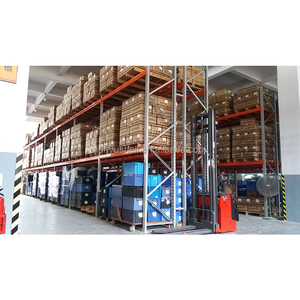
Industrial Pallet Storage Rack Heavy Duty Steel Warehouse Equipment Supplier
Heavy-duty cold-rolled steel framework supporting loads up to 4,500kg per beam level with seismic locking pins.
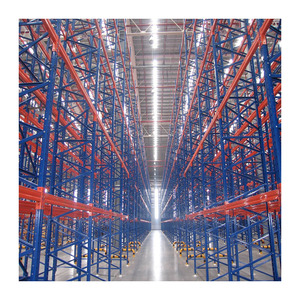
Mracking Heavy Duty Industrial Palletized Racking with a Capacity of 1000-4000kg Industrial Storage Racking
Standard teardrop & structural beam profiles engineered for high-turnover FMCG distribution hubs.
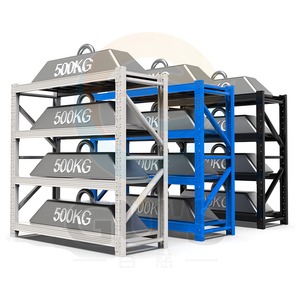
Heavy-Duty Industrial Adjustable Metal Shelf Racks Corrosion Protected Selective Warehouse Storage Display Rack Easy Assemble
Electrostatic powder-coated adjustable steel shelving designed for rapid manual order picking and retail fulfillment.
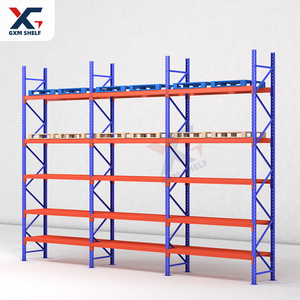
Heavy Duty Pallet Racking Warehouse Pallet System Pallet Storage Rack Heavy Duty Rack Shelf Heavy Duty Racking System
Modular heavy-duty bay framework customizable for palletized goods, wire decks, and safety bar accessories.
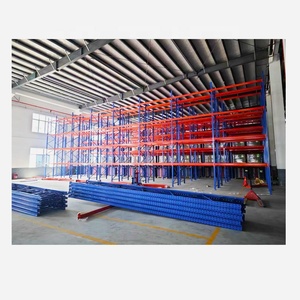
Warehouse Racks Double Deep Adjustable Pallet Storage Rack Beam Shelving Steel Heavy Duty Industrial Shelf Racking
High-density storage layout doubling floor capacity by storing pallets two-deep with specialized pantograph reach trucks.
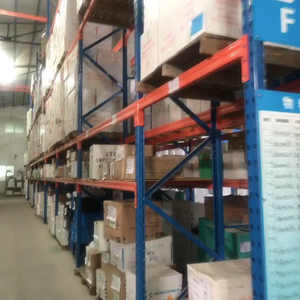
Complete Warehouse Racking System Design Manufacturing Installation for Industrial Storage
Turnkey engineering from FEA structural modeling to global export logistics and certified installation supervision.
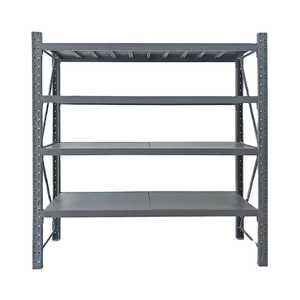
Adjustable Anti-Rust Steel Warehouse Shelves Light Duty Rack Workshop Storage Metal Racks for Garage & Warehouse Packed Cartons
Boltless shelf assembly for fast re-configuration, perfect for carton storage, hardware workshops, and assembly plants.
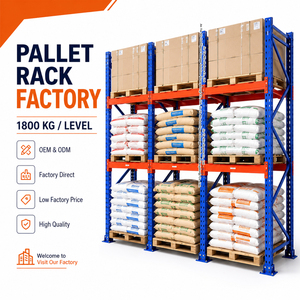
1800KG Heavy Duty Beam Pallet Rack Steel Warehouse Industrial Shelving 3-level Heavy Duty Rack
Pre-configured 3-level starter and adder racking bays constructed with structural step beams rated at 1800kg per pair.
Engineering Principles & Direct-Factory Sourcing for Industrial Shelving
Navigating global supply chain volatility, steel metallurgy standards, FEA structural stress modeling, and total cost of ownership (TCO) optimization for modern warehouse infrastructure.
Steel Metallurgy & Structural Tensile Integrity
The baseline strength of industrial pallet storage racking depends heavily on raw steel chemistry. Primary Chinese manufacturing facilities utilize high-grade Q235B and Q355B cold-rolled structural steel. Q355B provides a minimum yield strength of 355 MPa, ensuring exceptional structural ductility under sudden impact loads from material handling equipment (MHE). Through continuous cold-roll forming, upright columns achieve complex multi-profile geometry (up to 13-fold bending points) that dramatically boosts section modulus while keeping tare weight optimal.
Seismic Engineering & Global Compliance
International logistics installations require strict compliance with global structural safety codes. Quality Chinese manufacturers engineer rack systems aligned with RMI (Rack Manufacturers Institute MH16.1), FEM 10.2.02, EN 15512, and AS4084-2012 guidelines. Utilizing Finite Element Analysis (FEA) dynamic modeling, structural engineers simulate seismic ground accelerations, beam deflection thresholds (strictly enforcing max deflection below L/200 under full static load), and torsional sway to guarantee operational safety in high-seismic zones.
Surface Engineering & Coating Integrity
Durability against atmospheric moisture, chemical exposure, and mechanical abrasion is essential. Superior factories implement a rigid 9-stage pre-treatment wash cycle (including degreasing, phosphating, and deionized water rinsing) prior to applying an thermosetting epoxy-polyester powder coating (60–90 microns thick) cured at 180°C–200°C. For sub-zero cold rooms (-30°C) or highly humid coastal industrial zones, Hot-Dip Galvanizing (HDG) under ISO 1461 provides cathodic self-healing corrosion resistance lasting decades.
Direct-Factory Sourcing Advantage: Why Partnering with Chinese OEM Manufacturers Yields Unrivaled ROI
Global procurement directors face a dual challenge: maximizing warehouse cubic storage density while minimizing capital expenditures (CapEx). Sourcing directly from China’s premier industrial rack manufacturing hubs (such as Nanjing, Jiangsu and Ningbo, Zhejiang) provides distinct strategic advantages:
- Integrated Steel Value Chain: Proximity to world-class steel mills reduces raw material procurement latency and ensures verified chemical composition mill test certificates (MTC).
- Automated Production Scale: Fully automated continuous roll-forming lines, robotic welding stations, and automated powder coat loops enable high monthly capacities (exceeding 10,000 tons), ensuring rapid lead times for gigawatt-scale distribution centers.
- Custom Structural Tailoring: OEM capabilities allow precise customization of beam connector claws (3-hook vs 4-hook), beam heights, column teardrop/diamond punch pitch (50mm, 75mm, 76.2mm pitch), and heavy-duty footplates tailored to localized slab loading limits.
- Containerization Optimization: Factory logistics specialists utilize specialized CAD 3D container packing software to maximize net weight and cube utilization in 40ft HQ shipping containers, reducing per-unit ocean freight overhead.
Future Procurement Trends in Industrial Storage & Warehousing
How automation, sustainability requirements, and intelligent warehouse management are reshaping industrial rack specification.
1. AS/RS & Radio Shuttle Integration
Conventional manual racking is increasingly giving way to Automated Storage and Retrieval Systems (AS/RS) and Four-Way Radio Shuttle high-density racking. Future-proof rack procurement emphasizes ultra-tight structural manufacturing tolerances (±0.5mm beam straightness) required by high-speed automated cranes and autonomous mobile robots (AMRs).
2. Green Steel & Low-Carbon Manufacturing
Scope 3 carbon emissions tracking is becoming a standard criterion in global enterprise RFQs. Leading Chinese manufacturers are adopting scrap-recycled Electric Arc Furnace (EAF) green steel and solar-powered powder coating lines, providing verifiable carbon footprint certifications for ESG compliance.
3. Smart IoT Sensor Integration
Structural integrity monitoring is shifting from periodic manual inspection to real-time IoT surveillance. Next-generation heavy-duty rack systems embed wireless strain sensors and impact detectors inside upright columns to instantly alert facility engineers to forklift collisions or overloading conditions.
Industrial Warehouse Storage Systems Comparison
Evaluate structural configurations against storage density, selectivity percentage, floor area efficiency, and capital investment requirements.
| Racking Architecture | Selectivity (%) | Floor Space Utilization | Stock Rotation | Typical Load Capacity | Ideal Application |
|---|---|---|---|---|---|
| Selective Pallet Racking | 100% Direct | 40% - 50% | FIFO (First-In, First-Out) | Up to 4,500 kg / Level | High SKU variety, fast-moving consumer goods (FMCG) |
| Double-Deep Pallet Rack | 50% Direct | 60% - 65% | LIFO (Last-In, First-Out) | Up to 3,200 kg / Level | Identical SKUs, medium-density storage hubs |
| Drive-In / Drive-Thru | 20% - 30% Direct | 75% - 85% High Density | LIFO / FIFO Option | Up to 1,800 kg / Pallet Position | Cold storage, beverage bottling, bulk agricultural produce |
| Push-Back Racking | 40% - 60% Direct | 65% - 75% High Density | LIFO (Gravity Cart Driven) | Up to 1,500 kg / Cart Position | Multi-pallet deep storage with standard forklifts |
| Heavy-Duty Cantilever Racks | 100% Direct (Long Goods) | Variable (Linear) | N/A | Up to 6,000 kg / Arm | Steel pipes, lumber, aluminum profiles, long bar stock |
| Multi-Tier Mezzanine Rack | 100% Manual Access | 200% - 300% (Vertical Multi-Level) | FIFO / Direct Pick | 300 - 1,000 kg / m² Floor | E-commerce fulfillment centers, spare parts repositories |
* Load capacities are customized based on FEA steel profile thickness, beam length span, and concrete foundation anchor specifications.
Industrial Storage Racking Sourcing FAQ
Detailed engineering, quality control, export compliance, and installation answers for global procurement professionals.
How do Chinese racking manufacturers verify structural load capacities and safety factors?
Reputable manufacturers verify rack load ratings through a combination of Finite Element Analysis (FEA) computerized stress modeling and physical destruction testing under ANSI/MH16.1 and FEM 10.2.02 protocols. Universal testing machines subject full-scale beam assembly connectors and upright frame frames to 1.5x overload factors to confirm yield strength, deflection thresholds ($L/200$), and plastic deformation resistance before mass roll-forming.
What is the difference between Q235B and Q355B steel in pallet racking fabrication?
Q235B steel (yielding ≥ 235 MPa) is the industry standard for light-to-medium duty rack applications and standard beam lengths. Q355B high-tensile steel (yielding ≥ 355 MPa) offers significantly higher structural strength, allowing thinner gauge profiles to carry heavy loads. Q355B is typically specified for high-bay upright columns, heavy structural beams, and installations in active seismic zones to reduce dead weight while maximizing safety margins.
How do you prevent shipping damage and rust during ocean transit in containers?
Export packaging complies with ISPM-15 international standards. Upright frames and beams are bundled using high-tensile PET plastic strapping, wrapped in protective multi-layer stretch film, and separated by corrugated cardboard spacer blocks to prevent metal-on-metal friction. For long ocean voyages crossing tropical zones, VCI (Vapor Corrosion Inhibitor) desiccant bags are placed inside shipping containers to neutralize atmospheric humidity.
Are Chinese teardrop pallet rack profiles compatible with North American rack brands?
Yes. Chinese factories manufacture standardized 2-inch center-to-center pitch teardrop punch patterns that are 100% interchangeable with major North American brands (such as Interlake Mecalux, Speedrack, and UNARCO). Beams feature standard spring-loaded automatic safety locks that click securely into place, enabling seamlessly mixed expansions for existing distribution hubs.
What documentation is provided to support international customs and engineering permits?
Comprehensive export documentation packages are provided for every project, including: Mill Test Certificates (MTC under EN 10204 3.1), ISO 9001/ISO 14001 Quality Management System certificates, CE Declaration of Conformity, detailed CAD layout drawings, installation assembly manuals, and stamped structural engineering calculation reports to facilitate local building permit approvals.
What is the standard lead time for OEM industrial shelving and custom pallet racking orders?
Standard lead times range from 15 to 25 calendar days from design sign-off and deposit receipt for typical containerized orders (2 to 10 FCL). Custom colors, non-standard structural sections, or hot-dip galvanized finishes generally require 25 to 35 days depending on plant schedule and pre-treatment requirements.