High-Capacity Industrial Racking & Mezzanine Portfolio
Engineered for high-bay logistics centers, cold storage facilities, and industrial manufacturing plants. Direct wholesale export from certified manufacturing bases.
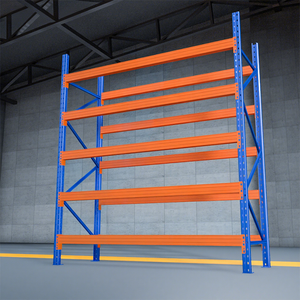
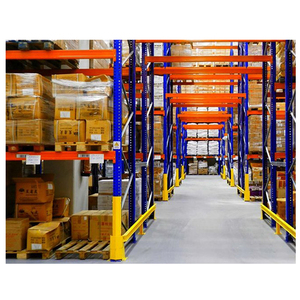
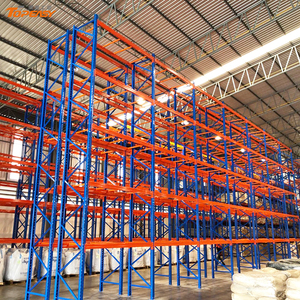
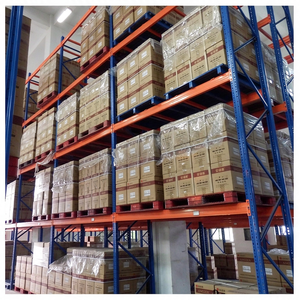
Executive Whitepaper: Architectural & Structural Optimization of Warehouse Mezzanines
As modern industrial real estate costs escalate globally, logistics managers, supply chain architects, and enterprise warehouse directors are shifting focus from horizontal footprint expansion to vertical spatial cubic monetization. Rack-supported mezzanine systems and multi-tier structural steel platforms represent the most cost-effective capital expenditure (CapEx) strategy to double or triple usable floor space without expanding building envelopes or incurring additional municipal real estate tax burdens.
China has established itself as the undisputed primary manufacturing and engineering hub for industrial storage systems, cold-formed structural steel sections, and customized mezzanine platforms. However, navigating the wholesale procurement landscape requires a granular understanding of steel metallurgy, deflection criteria, seismic load distribution, electrostatic coating resilience, and international compliance standards such as RMI (Rack Manufacturers Institute), FEM 10.2.02, and EN 15512.
Structural Engineering Imperatives for Multi-Tier Mezzanine Floors
A mezzanine floor is not merely an assembly of posts and decking; it is a structural system designed to withstand dynamic dead loads, live loads, seismic accelerations, and forklift impact forces. Key architectural engineering parameters include:
- Structural Steel Selection: Standard cold-rolled Q235B steel versus high-yield Q355B structural steel profiles (equivalent to ASTM A572 Grade 50). Q355B steel offers a 35% higher yield strength, enabling lighter overall structures with increased span distances between supporting columns.
- Point Loading vs. Uniformly Distributed Loading (UDL): Designing for static storage requires calculations based on UDL (typically rated from 300 kg/m² to 1,500 kg/m²). Conversely, integrating automated material handling equipment, such as Autonomous Mobile Robots (AMRs) or electric pallet jacks, demands localized point-load calculations exceeding 2.5 metric tons per wheel.
- Deflection Ratios (L/200 vs. L/300): Structural main beams and purlins must adhere to strict deflection limits under maximum rated capacity. For human walkways, an L/200 deflection ratio is standard; for sensitive automated conveyor interfaces or mezzanine floors integrated with automated storage and retrieval systems (ASRS), an L/300 or L/400 ratio is mandated to prevent structural sway and mechanical binding.
Manufacturing Excellence & Export Capabilities
Operating from a state-of-the-art 530,000 square foot manufacturing facility, our enterprise combines heavy industrial manufacturing precision with custom structural engineering capabilities. Since our founding in 1989, we have evolved from regional steel fabrication into a leading global exporter and wholesaler, holding over 100,000 pallet rack beams and 15,000 upright frames in active, ready-to-ship stock.
Custom Engineering & CAD/BIM Layouts
Full 3D modeling, finite element analysis (FEA), and clearance optimization for aisle space, sprinkler penetration, and forklift turn radiuses.
Seismic-Resistant Structural Frameworks
Custom engineered baseplates, heavy-duty floor anchoring, structural channel bracings, and row spacers compliant with high-seismic zone standards (AGIES NSE / IBC Zone 4).
Anti-Corrosion & Tropical Climate Protection
Automated 8-stage pre-treatment wash followed by thermosetting epoxy-polyester powder coating (60–80 microns thickness) or hot-dip galvanizing for cold storage (-30°C) and coastal high-humidity locations.
Structural Comparison Matrix: Mezzanines & Racking Systems
| System Type | Primary Construction | Load Capacity (UDL) | Optimal Application | Seismic Resistance |
|---|---|---|---|---|
| Structural Steel Mezzanine | Hot-rolled H-Beam posts & main girders, C-purlins | 500 kg/m² to 1,500 kg/m² | Heavy machinery, manufacturing floors, bulk inventory staging | Very High (Bolted Structural Connections) |
| Rack-Supported Mezzanine | Cold-formed teardrop or structural rack uprights & beams | 300 kg/m² to 800 kg/m² | E-commerce fulfillment, manual order picking, high-density SKU storage | High (Adjustable Beam Locking Clips + Diagonal Bracing) |
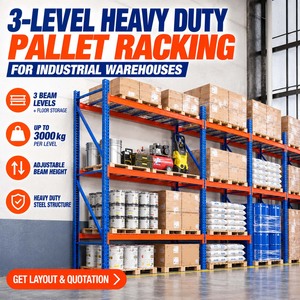
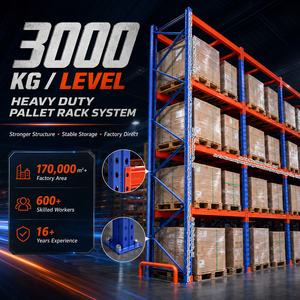
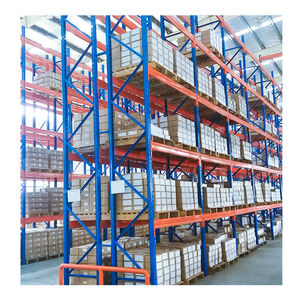
| Heavy-Duty Selective Pallet Rack | Cold-rolled continuous punch uprights with step beams | 1,000 kg to 4,000 kg per level | Palletized distribution, cold storage, fast-moving consumer goods (FMCG) | Medium to High (Engineered Baseplate & Anchors) |
| Drive-In / Drive-Thru Racking | Heavy-gauge upright frames with continuous pallet rails | 1,500 kg per pallet position | Homogeneous bulk goods, cold rooms, raw material holding (LIFO/FIFO) | High (Top & Rear Structural Portal Bracing) |
Future Trends in Global Warehouse Procurement & Technology Integration
The global warehousing and logistics sector is experiencing a paradigm shift driven by e-commerce expansion, labor supply constraints, and strict ESG (Environmental, Social, and Governance) mandates. When sourcing industrial racking mezzanines from China, wholesale buyers must align their procurement criteria with emerging technological developments:
1. AMR & AGV Robotic Compatibility
Modern warehouse mezzanines are increasingly specified to support autonomous mobile robots (AMRs) for goods-to-person sorting. Sourcing strategies now require strict surface flatness tolerances (FF/FL numbers compliant with ASTM E1155) on mezzanine decking materials, such as wear-resistant steel composite plates or resin-coated high-density wood panels, eliminating floor joint chatter and sensor calibration drift.
2. Modular Demountable Systems & Sustainability
Static, welded structural installations are being rapidly replaced by 100% bolt-together modular structural systems. Boltless mezzanine platforms and teardrop-locking rack structures enable enterprises to easily dismantle, expand, or relocate systems as operational contracts evolve, directly reducing lifetime asset deprecation and embodied carbon footprints.
3. Cold-Chain & Harsh Environment Coatings
With global cold chain logistics expanding for pharmaceuticals and perishable food distribution, racking systems require specialized surface passivation. Advanced zinc-rich primers, combined with high-durability electrostatic powder coatings, prevent micro-fracturing and rust propagation under severe temperature fluctuations (-30°C to +40°C) and high relative humidity.
4. Port-to-Site Logistics Optimization
Global wholesale purchasers prioritize vendors capable of flat-pack container optimization. By utilizing custom steel pallet packaging, component bundling, and clear bay-level tagging, international freight container space utilization is maximized by up to 28%, significantly reducing transpacific and intercontinental freight costs per pallet position.
Ready to Expand Your Vertical Warehouse Capacity?
Submit your warehouse floor plan, clear height dimensions, and target weight capacity. Our engineering team will produce a complimentary CAD layout and detailed wholesale factory quotation within 24 hours.
Send an InquirySourcing Risk Mitigation: Quality Control & International Compliance Protocols
Importing large-scale structural steel fabrications requires rigorous vendor auditing to ensure long-term structural safety and regulatory compliance. Overseas buyers should enforce a strict multi-tier quality assurance checklist prior to dispatch from Chinese manufacturing facilities:
- Raw Material Traceability: Insist on official Mill Test Certificates (MTC) verifying chemical composition and mechanical properties (tensile strength, yield strength, elongation percentage) matching Q235B, Q355B, or specified coil steel grades compliant with EN 10025 or ASTM A1008.
- Weld Integrity & Inspection: Structural column bases, beam connector jaws, and heavy-duty mezzanine gussets must undergo ultrasonic flaw detection or magnetic particle testing to ensure zero weld penetration defects, adhering to AWS D1.1 structural welding standards.
- Coating Thickness & Adhesion Testing: Verify powder coating dry film thickness (DFT) using electromagnetic gauges to confirm a uniform coating between 60 to 90 microns. Cross-hatch tape adhesion tests (ISO 2409 / ASTM D3359) must be conducted to ensure zero peeling under severe impact.
- Full-Scale Load Verification Benchmarks: Random sample testing of beam connectors and column upright sections under hydraulic compression frames to confirm safety factors (typically 1.65 to 1.95 depending on FEM/RMI governing specs).
Frequently Asked Questions (FAQ) for Global Procurement & Engineering Teams
Crucial technical, shipping, and engineering insights for international buyers sourcing warehouse racking mezzanines and heavy-duty storage systems.
Do you export and deliver mezzanine systems and pallet racking globally, including Latin America and high-seismic regions?
Yes. We regularly consolidate structural racking and mezzanine components into full container loads (FCL) or flatbed shipping configurations for ocean freight shipping to major international ports worldwide—such as Puerto Quetzal, Santo Tomás de Castilla, Manzanillo, Callao, Hamburg, and Los Angeles. We manage full commercial documentation (DUCA, CAFTA-DR certificate of origin, bill of lading, packing list labeled by bay) to facilitate fast customs clearance and direct delivery to factory sites in Guatemala City, Escuintla, Villa Nueva, or international destinations.
How do you ensure structural racking and mezzanine safety in high-seismic zones?
High-seismic zone installations require rigorous engineering adaptations. We utilize heavy-gauge structural steel (hot-rolled or thick cold-formed profiles), enlarged baseplates with dual floor anchor points, heavy-duty row spacers, and diagonal structural bracing towers. Layout plans can be evaluated against applicable local seismic design codes (such as AGIES NSE guidelines, IBC Seismic Design Category D-F, or RMI standards) to ensure full structural compliance under earthquake accelerations.
Will standard US racking dimensions work with standard metric (1,000 mm × 1,200 mm) pallets?
Yes. A standard 42-inch (1,067 mm) deep upright frame perfectly accommodates both standard North American 48" × 40" pallets and metric 1,000 mm × 1,200 mm industrial pallets, leaving an optimal 75 mm overhang at the front and rear beam edges for secure forklift placement. Beam spans of 96 inches (2,438 mm) to 108 inches (2,743 mm) comfortably hold two standard metric pallets per shelf level with required safety clearances.
When should a facility select a Structural Steel Mezzanine versus a Rack-Supported Mezzanine?
A Structural Steel Mezzanine (utilizing heavy H-beam columns and main girders) is ideal when you require wide, unobstructed open floor space beneath the platform for manufacturing, assembly lines, or forklift traffic, with high load capacities up to 1,500 kg/m². A Rack-Supported Mezzanine utilizes pallet rack uprights as the primary support structure below, making it the most economical choice when the ground level is dedicated to high-density bin picking, carton storage, or small SKU order fulfillment.
Should we purchase new manufactured racking/mezzanines or factory-inspected used inventory?
For standard selective storage in non-extreme environments, inspected used racking offers significant capital savings while providing long-term structural integrity. However, for custom mezzanine floors, automated ASRS integration, high-bay cold storage (-30°C), or specific seismic engineering mandates, newly manufactured structural steel is highly recommended to ensure exact dimensional precision, custom color coding, certified material batch traceability, and full structural warranty coverage.
What exact parameters are needed to receive an accurate CAD layout and wholesale quote?
To prepare an engineered proposal, please provide: (1) Warehouse architectural floor plan or dimensional length/width/height drawing; (2) Clear height beneath roof trusses or low-hanging obstructions; (3) Pallet sizes (L × W × H) and maximum load weight per pallet/level; (4) Required floor load capacity for mezzanine levels (kg/m²); (5) Forklift model, maximum lift height, and turning radius specifications; (6) Project destination city/port for freight calculation.
Do you offer buyout, trade-in, or decommissioning services for existing warehouse installations?
Yes. For companies relocating, consolidating, or upgrading their warehousing footprint, we evaluate used pallet racking, cantilever systems, and material handling equipment for trade-in allowances or direct buyouts, providing dismantling coordination and asset recovery support.
Partner with China's Premier Mezzanine & Racking Wholesaler
Leverage over 35 years of structural engineering expertise, direct factory wholesale pricing, and dedicated international export management for your next warehouse project.