Featured OEM Warehouse Pallet Racking Systems
Inspected, structurally validated cold-rolled and hot-rolled structural steel racking solutions engineered for global logistics hubs, manufacturing facilities, and high-density cold storage.
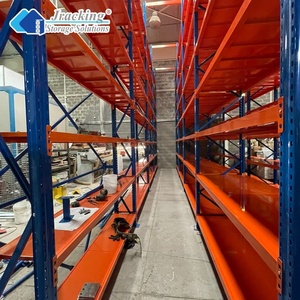
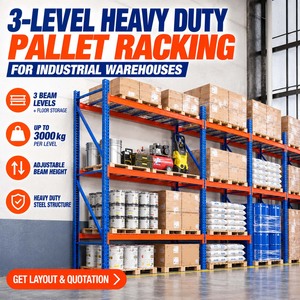
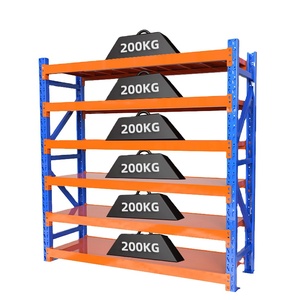
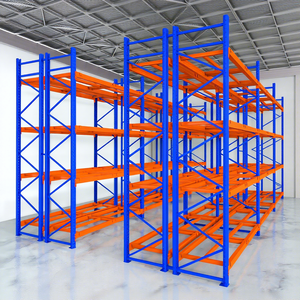
OEM Manufacturing Metallurgy, Structural Dynamics & Seismic Compliance
A comprehensive engineering evaluation for supply chain directors, structural engineers, and logistics infrastructure planners.
1. High-Tensile Steel Profiles & Metallurgy Standardized Selection
Industrial pallet racking structural integrity begins at the atomic level. As a premier original equipment manufacturer (OEM), we utilize high-grade certified steel compliant with global ASTM A1011 SS Grade 50, Q235B, and Q355B structural steel standards. Cold-rolled teardrop profiles undergo multi-stage continuous roll forming, ensuring consistent wall thickness, high yield strength (up to $355 \text{ MPa}$), and minimum elongation properties capable of resisting dynamic impact loads during heavy forklift loading cycles.
For extreme industrial operational environments—such as high-bay distribution centers handling over 4,500 kg per beam level—hot-rolled structural channel steel (C-channel uprights and structural beams) provides superior resilience. Structural rack systems feature structural steel connectors bolted directly to C-section columns, delivering unparalleled resistance against frame damage, web twisting, and accidental forklift collisions.
- Cold-Rolled Teardrop Connectivity: Standard 2-inch (50.8mm) or 3-inch (76.2mm) pitch pattern featuring automated safety lock pins to prevent accidental dislodgement.
- Structural C-Channel Racks: Hot-rolled structural steel columns offering high yield resilience, optimal for seismic zone structural anchoring and heavy manufacturing.
- Optimized Beam Deflection Ratio: Strict adherence to RMI ANSI MH16.1 standards ensuring vertical deflection does not exceed $\frac{L}{180}$ under full static rating.
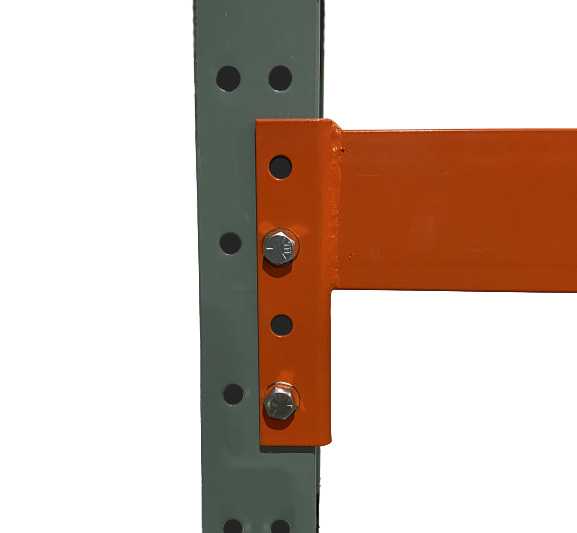
Industrial Pallet Racking Structural Matrix
| Racking System Type | Structural Steel Specification | Load Capacity (Per Level) | Seismic Resistance | Primary Industrial Application |
|---|---|---|---|---|
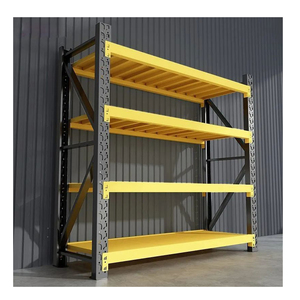
| Selective Pallet Racking | Cold-Rolled Q235B / Teardrop Profile | 1,000 kg – 3,500 kg | Moderate (Zone 1 – 3) | High-SKU Retail Distribution & 3PL Logistics |
| Structural Bolt-On Racking | Hot-Rolled Structural C-Channel (Q355B) | 2,000 kg – 5,500 kg | High (Seismic Zone 4 / AGIES NSE) | Heavy Manufacturing, Metal Depots & High Impact Sheds |
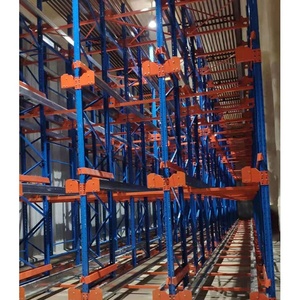
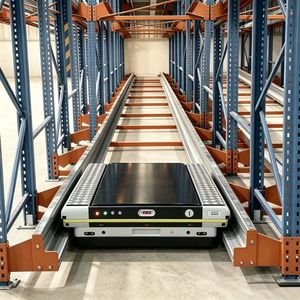
| Radio Shuttle High-Density | Cold-Rolled Heavy Profile & Precision Rails | 1,500 kg per pallet lane | High (Integrated Tie-Beams) | Cold Storage (-25°C), Beverage & Bulk Food Warehouses |
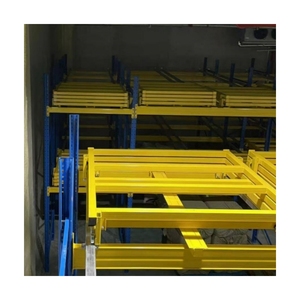
| Push-Back Rack System | Structural / Cold-Formed Hybrid Carts | 1,000 kg – 2,500 kg | Moderate to High | LIFO Grocery Distribution & Batch Manufacturing |
| Drive-In / Drive-Thru | Cold-Rolled Column & Cantilever Rail Arm | 1,200 kg – 2,000 kg | Configurable with Top Bracing | Seasonal Harvest Storage, Sugar, Flour & Packaging Depots |
Why Logistics Leaders Partner With Our Global Sourcing Facilities
Delivering tailored OEM racking, structural engineering layout design, and seamless international delivery logistics since 1989.
530,000 Sq. Ft. Manufacturing Base
Our expansive production capabilities combine automated robotic welding cells, continuous cold-roll forming lines, and environmental electrostatic powder coating chambers capable of outputting over 3,000 metric tons of custom industrial steel racking monthly.
Full Seismic & AGIES NSE Compliance
Whether installing in high-activity seismic zones across Central America or specialized zones globally, our structural engineering teams model finite element analysis (FEA) to ensure anchor pull-out ratings, dynamic sway reduction, and baseplate dimensions exceed local building codes.
Custom OEM Dimensional Engineering
Every facility layout presents distinct constraints. We customize frame depths (600mm to 1600mm), beam clear spans (1200mm to 4500mm), column gauge thicknesses, upright punching profiles, and specialized powder coat shades matching corporate brand guidelines.
ISO 9001:2015 & FEM 10.2.02 Certified
Quality assurance is systematically integrated at every node of manufacturing. Steel raw materials are supplied with Mill Test Certificates (MTC) according to EN 10204 3.1, backed by rigorous dynamic fatigue testing and load capacity validations.
Container Loading Optimization
Export logistics require precision spatial management. Our specialized bundling and nesting methodologies ensure maximum weight and volumetric utilization per 40ft High Cube container, reducing per-pallet transit costs significantly.
Integrated Buyback & Trade-In Programs
We support facility liquidations, system upgrades, and warehouse relocations by providing trade-in allowances or complete buyouts of inspected used pallet racks, optimizing your capital expenditure cycles.
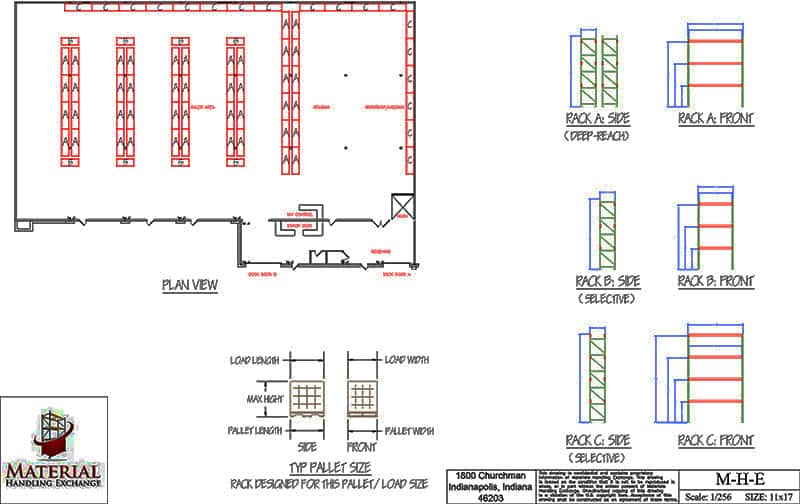
2. End-to-End Engineering Design & CAD Floor Plan Optimization
A successful warehouse installation balances volumetric utilization with material handling equipment operating aisles. Our in-house engineering team provides detailed 2D CAD layouts and 3D architectural elevations customized to your facility's clear ceiling height, column spacing, floor slab slab-on-grade load capacities, and fire sprinkler clearances (NFPA 13 guidelines).
- Aisle Width Optimization: Precision planning for Standard Counterbalance Forklifts (3.8m–4.2m), Reach Trucks (2.7m–3.0m), or Very Narrow Aisle (VNA) Turret Trucks (1.6m–1.8m).
- Slab Load Analysis: Point-load footprint distribution calculations to ensure baseplates match floor PSI specifications without structural concrete cracking.
- Custom Accessories Integration: Mesh wire decking, structural palette supports, frame column protectors, safety netting, and row spacers incorporated natively into drawing sets.
Future Procurement & Development Trends in Pallet Racking
How automated logistics, material cost optimization, and ESG standards are reshaping warehouse storage selection for the next decade.
1. Rapid Acceleration Toward High-Density Automation (AS/RS & Radio Shuttle)
Global warehouse labor shortages and soaring real estate costs are driving enterprise buyers away from standard selective pallet racking toward automated systems. Pallet Shuttle systems, Automated Storage and Retrieval Systems (AS/RS), and AGV-guided vertical racks achieve up to 80% higher volumetric density compared to traditional layouts. Future procurement strategies emphasize manufacturing precision tolerances ($\pm 1.5\text{mm}$) required for seamless sensor-driven shuttle travel across extended rack channels.
2. Shift to Structural & Hybrid Racking in Cold-Chain Facilities
With the explosive expansion of frozen food distribution and biopharmaceutical logistics, sub-zero cold storage operations demand anti-corrosive, thermal-resilient racking solutions. Procurement patterns reveal an increasing preference for hot-dip galvanized finishes over traditional paint, alongside structural steel C-channel components that maintain structural ductile integrity down to -30°C without brittle micro-fracturing under high dynamic impact.
3. IoT Structural Health Monitoring & Automated Impact Sensing
Modern warehouse asset protection is transitioning from reactive periodic inspections to proactive continuous dynamic monitoring. Embedded strain gauges, piezoelectric impact sensors, and AI-driven camera inspection systems are being integrated into upright columns. Procurement leads are requesting pre-drilled OEM mounting points and digital twin compatibility to track column damage caused by forklifts in real-time, preventing catastrophic rack collapses.
4. Circular Steel Lifecycle & ESG Sustainable Sourcing
Corporate sustainability mandates require supply chain managers to quantify embedded carbon metrics within their storage infrastructure. High-grade recyclable cold-rolled steel, TGIC-free thermosetting powder coatings, and circular buyback programs (refurbishing and re-certifying used racking frames) allow enterprise buyers to satisfy Scope 3 ESG emission reduction targets while maintaining rigorous structural safety standards.
Warehouse Racking Procurement FAQ
Technical, engineering, and logistics solutions to common queries raised during global pallet racking system selection.
Optimize Your Storage Infrastructure With Engineered OEM Racking
Consult directly with our Senior Material Handling Engineers. Receive customized CAD layouts, structural seismic calculations, and direct factory-direct volume pricing tailored to your facility specifications.