Featured Industrial Racking & Pallet Flow Systems
Explore our export-grade rack configurations manufactured to international FEM, RMI, and ISO 9001 standards. Tailored for heavy loads, high throughput, and seismic resilience.
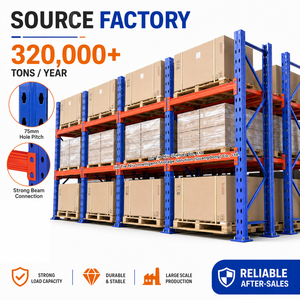
Heavy Load Warehouse Multi-Bay Pallet Storage Beam System
Heavy-duty structural & roll-formed selective beam racking designed for high-bay inventory handling and maximum weight distribution.
View Details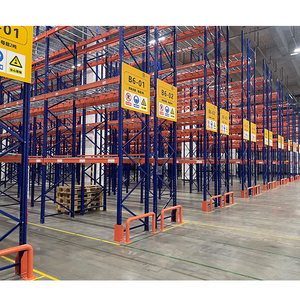
Latin America Heavy Duty Steel Racking System
Engineered specifically for seismic zones and variable climatic conditions, featuring high-grade steel frames and powder coatings.
View Details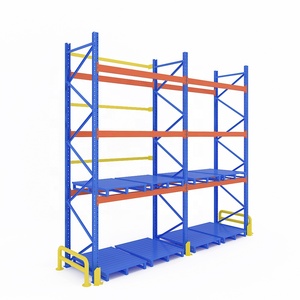
Industrial Pallet Rack with Integrated Back Stopper
Fitted with structural safety backstops and anti-push-through safety beams for forklift protection and bay integrity.
View Details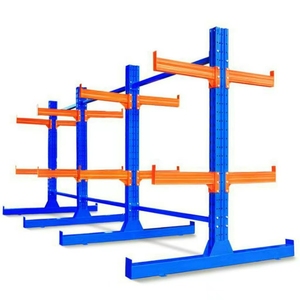
CE Certified Multi-Level Heavy Duty Cantilever Rack
Single & double-sided cantilever systems for timber, pipe, and long structural loads with 500–3000kg arm capacities.
View Details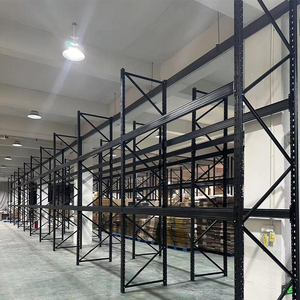
5-Layer Wire Mesh Deck Corrosion-Resistant Pallet Rack
Galvanized wire decking panels for superior fire sprinkler penetration, dust prevention, and point-load safety compliance.
View Details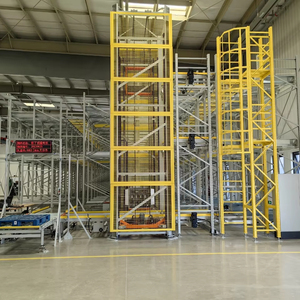
Intelligent Selective Pallet Rack with Conveyor Integration
Automated-ready racking infrastructure seamlessly connected with gravity rollers, motor-driven conveyors, and ASRS systems.
View Details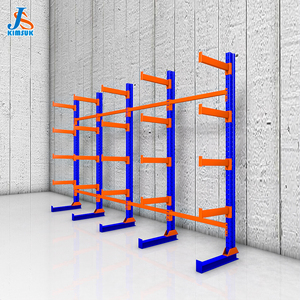
Electric Telescopic Cantilever Industrial System
Motorized extending arms allow direct overhead crane loading of heavy steel bars, sheets, and structural profiles.
View Details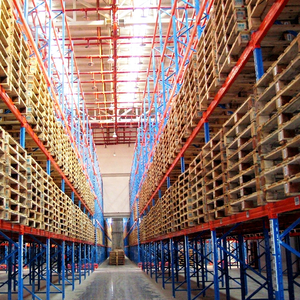
Manufacturer Selective Heavy Duty Pallet Rack System
Factory-direct teardrop and structural frame designs optimized for scalable warehousing, 3PL logistics, and high-density distribution.
View DetailsMechanics & Physics of OEM/ODM Pallet Flow Racking
Pallet flow rack systems (also recognized as gravity flow or dynamic flow racks) represent the pinnacle of First-In, First-Out (FIFO) high-density warehouse storage engineering.
Unlike static selective racking or Last-In, First-Out (LIFO) drive-in systems, Pallet Flow Racks harness gravitational potential energy to automatically transport loaded pallets along inclined wheel beds or full-width roller tracks. By separating loading aisles from unloading faces, enterprises eliminate forklift congestion, cut travel cycles by up to 45%, and achieve absolute stock rotation—a non-negotiable metric for perishable food, beverage, pharmaceutical, and high-velocity FMCG operations.
1. Kinematics of Gravity Flow: Pitch, Velocity & Kinetic Control
The structural performance of an OEM/ODM gravity flow system hinges upon precise slope calibration and speed attenuation mechanisms. Standard pitch gradients are engineered between 3.5% and 5.0% (approximately 7/16" to 5/8" per linear foot), depending on pallet weight variations, runner configuration, and bottom-board surface conditions.
Mathematical Gradient Pitch Calculation
The required slope pitch ($\theta$) is governed by the coefficient of dynamic friction ($\mu_d$) between the pallet wood/plastic interface and the steel rollers:
Pitch Slope (S) = tan(θ) ≥ μ_d + (F_r / W)
Where F_r represents total rotational resistance of roller bearings and W represents minimum expected pallet weight (typically 250 kg per position up to 1,500 kg maximum).
Without controlled braking, heavy pallets accelerating down a 15-meter lane would accumulate destructive momentum. Our engineered OEM solutions incorporate magnetic centrifugal speed controllers (brake rollers) spaced at exact intervals (typically every 1.5 meters or every pallet length). These indirect-drive speed limiters constrain pallet terminal velocity to a safe maximum of 0.25 to 0.30 meters per second (50 fpm), preventing structural impact forces against picking-face stop mechanisms.
OEM/ODM Custom Fabrication & Engineering Specifications
As a tier-one exporter and wholesaler, our 530,000 sq ft manufacturing complex engineers custom flow rack components tailored to global pallet variations (GMA, Euro, ISO, plastic, and slave boards).
Mechanical Separator Systems
To enable safe pallet removal, our proprietary magnetic time-delay and foot-release mechanical separators isolate the front pallet from line pressure generated by behind accumulators (which can exceed 10,000 lbs of force in 10-deep lanes).
Cold-Storage & Anti-Corrosion
For sub-zero food freezers (-30°C) or coastal high-humidity logistics, we supply specialized low-temperature lubricants, stainless steel precision bearings, and Hot-Dip Galvanized (HDG) or electrostatic epoxy powder coating finishes.
Seismic Structural Design
Equipped with oversized structural baseplates, heavy-duty floor anchors, and cold-formed high-tensile steel upright profiles rated against severe ground accelerations (compliant with AGIES NSE, RMI MH16.1, and FEM 10.2.02).
Storage System Performance Matrix
| Storage System Type | Space Utilization | FIFO / LIFO Rotation | Selectivity | Forklift Travel Time | Optimal Industry Application |
|---|---|---|---|---|---|
| OEM Pallet Flow Rack | 85% – 90% (Maximum) | 100% Strict FIFO | Per Lane Access | Reduced by 40–50% | Cold Storage, Food & Beverage, Pharma, Fast-Moving FMCG |
| Selective Pallet Racking | 40% – 50% (Standard) | FIFO or LIFO | 100% Immediate | High Travel Requirement | High SKU diversity, low volume per SKU |
| Drive-In Racking | 65% – 75% (High) | Strict LIFO | Low Selectivity | Moderate (Risk of rack collisions) | Bulk uniform storage, non-perishable goods |
| Pushback Racking | 70% – 80% (High) | Strict LIFO (2-6 Deep) | Per Lane Access | Moderate | Medium SKU counts, batch manufacturing |
| Radio Shuttle Automation | 85% – 92% (Maximum) | Configurable FIFO/LIFO | Automated Lane Access | Lowest (Drop-off at entry point) | Mega distribution centers, automated high-bays |
Future Procurement Trends in Industrial Pallet Flow Systems
As global warehousing shifts toward smart automation and carbon-neutral operations, dynamic gravity flow racking is evolving rapidly. Here are the macro trends shaping wholesale OEM/ODM procurement.
1. Integration with Autonomous Mobile Robots (AMRs)
Modern warehouse architectures are converging gravity pallet flow with Autonomous Mobile Robots (AMRs) and Automated Guided Vehicles (AGVs). Customized discharge guides and optical position sensors allow AMRs to retrieve pallets directly from the picking face of a flow lane without human forklift intervention.
2. Sensorized Smart Roller Systems
IoT-enabled speed controllers embedded with wireless vibration and thermal sensors now monitor roller health in real time. Maintenance teams receive automated alerts if dynamic resistance drifts, preventing lane jams before operational downtime occurs in high-speed distribution hubs.
3. Zero-Energy Carbon Neutrality
Compared to power-hungry automated conveyor belts or motorized carousel systems, gravity pallet flow operates on 100% passive gravitational force. Global logistics directors are increasingly adopting flow racking to fulfill corporate ESG (Environmental, Social, and Governance) targets and lower operational electricity consumption.
Require Custom OEM/ODM Engineering Specifications?
Our structural engineering team produces detailed CAD layouts, load capacity calculations, and factory-direct pricing within 24 hours.
Send an InquiryWhy Global Exporters & Wholesalers Partner With Us
From initial facility layout design to container shipping and port clearance, we deliver turn-key warehouse rack solutions backed by 35+ years of structural fabrication authority.
We utilize certified Q235B and structural Q355B high-tensile steel coil (equivalent to ASTM A1011 Grade 50) guaranteeing structural rigidity under maximum design static and dynamic stresses.
Our production lines feature automated continuous roll-forming machines, robotic laser welding cells, and multi-stage automated powder coating lines delivering consistent tolerances.
Components are bundled with custom steel strapping, corner edge protectors, and waterproof plastic wrapping, optimized for dense 40ft HQ container loading to minimize ocean freight costs.
Pallet Flow Racking & Procurement Questions
In-depth technical answers for procurement directors, structural engineers, and facility planning managers.
How does a Pallet Flow System accommodate mixed pallet weights in the same lane?
Weight variations (e.g., 400 kg vs 1,200 kg pallets) are governed using specialized magnetic centrifugal speed controllers (brake rollers). Unlike standard mechanical brakes which apply uniform friction regardless of velocity, magnetic brake rollers generate resistance proportional to pallet speed. Lightweight pallets move smoothly at minimum speeds without stalling, while heavy pallets trigger higher resistance to maintain a safe, uniform terminal velocity below 0.3 m/s.
Can Pallet Flow Racks handle both US 48"x40" and Metric 1000x1200mm pallets?
Yes. OEM design allows custom spacing of roller tracks or full-width steel rollers to support both US GMA (48" x 40") and Euro/Metric (1,000 mm x 1,200 mm) pallets. A 42" (1,067 mm) deep or customized width upright frame provides structural support with safe front and rear overhang. For weak, damaged, or variable 9-leg plastic pallets, we integrate full-width steel roller beds rather than dual-track wheel channels.
What is the maximum depth available for OEM/ODM Pallet Flow lanes?
While standard ambient warehouse configurations typically range from 2 to 12 pallets deep, custom engineering enables flow lanes exceeding 20 to 25 pallets deep. In deep-lane systems, magnetic time-delay pallet separators and heavy-duty speed controllers become mandatory to relieve excessive line pressure at the pick face during unloading.
Are your racking components certified for seismic zones and extreme environments?
Yes. Structural components are engineered in compliance with RMI (Rack Manufacturers Institute) ANSI MH16.1, FEM 10.2.02, and regional seismic structural codes such as AGIES NSE in Central America. Upright frames are calculated using finite element analysis (FEA) to withstand high spectral acceleration loads, equipped with thick seismic footplates and floor anchor bolts.
What maintenance is required for dynamic gravity flow roller lanes?
Pallet flow racking features low ongoing maintenance due to passive gravity mechanics. Recommended preventive routines include bi-annual inspection of roller bearing rotation, clearance of trash or wood debris from channels, checking torque on beam connector lock clips, and visual verification of brake roller engagement. Sealed precision steel bearings require no routine re-lubrication under standard operating conditions.
How do I request a custom OEM/ODM layout quote for my facility?
To receive a precise engineering layout and CAD proposal, send your facility floor plans, clear ceiling height, pallet dimensions (W x D x H), minimum/maximum load weights, forklift model/lift height, and target delivery port details to our technical team via the inquiry portal below.
Optimize Your Warehouse Density & Throughput Today
Partner directly with a certified OEM/ODM exporter & wholesaler. Contact our engineering team for factory pricing, architectural CAD planning, and global shipment scheduling.