Industrial-Grade Racking Portfolio
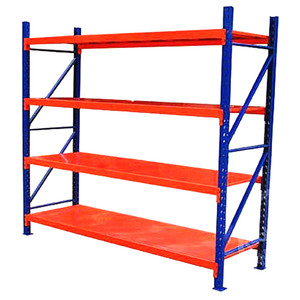
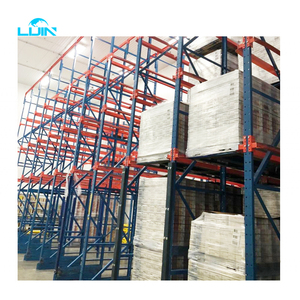
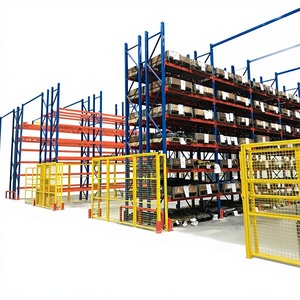
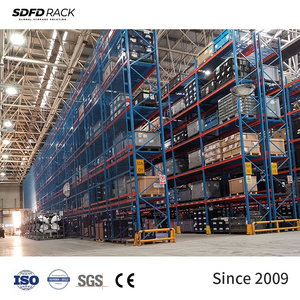
Explore high-capacity, OEM factory-direct selective, drive-in, and heavy-duty storage racking systems custom designed for global distribution centers.
Executive Technical White Paper
Strategic Insights into Industrial Storage Manufacturing, High-Yield Structural Steel Selection, and Global OEM/ODM Procurement Dynamics
1. Paradigm Shifts in Heavy-Duty Storage Procurement
In modern industrial logistics, warehouse racking has evolved from static iron shelving into critical, high-load structural architecture. As global supply chains optimize for higher volumetric utilization, global procurement directors must shift focus from upfront unit costs to Total Cost of Ownership (TCO), structural resilience, and long-term modular flexibility. Contract manufacturing (OEM/ODM) directly from certified source factories provides global enterprise clients with tailored engineering specs required to meet stringent local building codes, dynamic seismic requirements, and high-frequency automated handling environments.
Furthermore, the integration of international rack engineering frameworks—including the Rack Manufacturers Institute (RMI MH16.1), European FEM 10.2.02 standards, and regional seismic criteria like AGIES NSE—defines the structural integrity of modern supply chain hubs. Direct factory customization guarantees that beam roll-forming profiles, upright punching patterns, and base plate floor anchoring meet exact geotechnical site conditions.
2. Comparative Analysis of Racking Architectures & Load Specifications
Selecting the appropriate structural configuration requires aligning warehouse throughput dynamics, SKU density, forklift operating aisle dimensions, and floor loading thresholds. Below is an engineering evaluation matrix comparing structural choices for industrial enterprise procurement:
| Racking Architecture | Structural Steel Profile | Typical Load Rating per Level | Volumetric Storage Efficiency | Primary Application Profile |
|---|---|---|---|---|
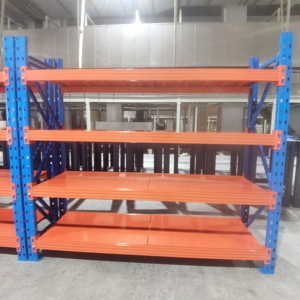
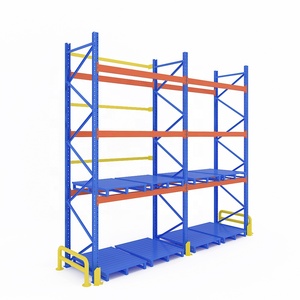
| Selective Pallet Racks | Cold-Rolled Step/Box Beam & Open Upright | 1,000 kg – 4,500 kg | 40% – 50% (100% Selectivity) | FMCG Distribution, High-SKU Logistics Hubs |
| Structural Steel Racks | Hot-Rolled Structural C-Channel Steel | 3,000 kg – 8,000+ kg | 45% – 55% (High Impact Resistance) | Seismic Zones, Cold Storage, Heavy Manufacturing |
| Drive-In / Drive-Thru | Thickened Structural Rail & Upright Frames | 1,500 kg – 3,000 kg | 75% – 85% (High Density, LIFO/FIFO) | Seasonal Agricultural, Beverage Depots, Cold Chain |
| Cantilever Systems | Heavy Duty Freestanding Tower & Arm Profile | 500 kg – 3,000 kg per Arm | Flexible Continuous Horizontal Space | Lumber, Steel Pipes, Extrusions, Building Supplies |
| Multi-Tier Mezzanine | Interlocking Decking & Heavy Column Posts | 300 kg – 1,500 kg / m² Floor Area | 200% – 300% (Vertical Space Multiplier) | E-commerce Picking Centers, Automotive Parts Storage |
Future Procurement & Industry Trends (2025–2030)
Anticipating structural engineering shifts, advanced surface protection, automated warehouse integration, and eco-friendly manufacturing processes.
AS/RS Automated Compatibility
Next-generation OEM procurement requires precise millimetric tolerances. Racking structures must seamlessly interface with Automated Storage and Retrieval Systems (AS/RS), autonomous mobile robots (AMRs), and crane guide rails without deflection anomalies under maximum loading.
Nano-Composite Powder Coatings
Traditional liquid paints are obsolete for export-grade storage. Modern factories implement electrostatic hybrid epoxy-polyester thermo-setting coatings exceeding 500 hours of ISO 9227 salt-spray corrosion resistance, ideal for humid tropical zones and sub-zero cold rooms.
Real-Time Structural Health IoT
The integration of smart IoT strain gauges and impact sensors into rack uprights enables plant managers to detect forklift collisions, beam overload deflections ($L/180$ limits), and micro-seismic shifts in real time via central cloud dashboards.
Modular "Plug-and-Play" Architecture
To reduce global freight overhead, OEM exporters are designing boltless teardrop and interlock clip-in beam connections that maximize container cube utilization while enabling end-users to adjust beam pitches in 50mm or 75mm increments without specialized tooling.
Green Steel & Low-Carbon Exporters
Global Fortune 500 buyers prioritize suppliers using recycled steel billets, solar-powered factory roll-forming lines, and zero-VOC powder curing ovens to drastically cut scope 3 carbon emissions across international supply chains.
Factory Advantage & Global OEM/ODM Capabilities
Leveraging 35+ years of engineering innovation, automated manufacturing plants, and end-to-end international export logistics support.
530,000+ Sq Ft Scale & Robotic Precision
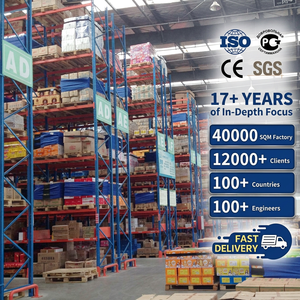
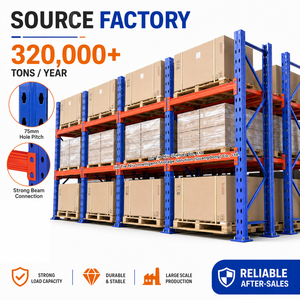
Our state-of-the-art manufacturing campus houses automated CNC roll-forming lines, robotic welding stations, and automated continuous powder coating ovens, ensuring zero-defect tolerances across multi-thousand-ton export orders.
Seismic Engineering & Site Compliance
Custom structural calculations tailored to your geographic location. We perform Finite Element Analysis (FEA) to ensure compliance with international building standards, AGIES NSE guidelines, and localized seismic activity profiles.
Rigorous Quality Control & Inspection
Every lot undergoes stringent yield strength testing, weld penetration ultrasonic tests, powder film thickness checks, and test-assembly verifications before container loading, avoiding downtime at your destination port.
Turnkey Export & Port Logistics Coordination
From factory bundling and sea-worthy steel strapping to customs clearance support (DUCA, CAFTA-DR, CE documentation), we ship containerized and flatbed loads directly to major sea ports worldwide.
Procurement & Technical FAQ
In-depth answers to common questions faced by structural engineers, warehouse managers, and global sourcing buyers.
Q: How do I choose between standard cold-rolled selective racking and structural steel racking?
A: Standard cold-rolled racking (usually formed from Q235 steel) is highly cost-effective and suitable for standard warehouses storing up to 3,000 kg per beam level under controlled forklift operating conditions. Structural steel racking is manufactured from heavy hot-rolled C-channel profiles. It is mandatory for high-seismic zones, heavy-duty manufacturing environments where forklift impacts are frequent, outdoors, and extreme cold-storage operations requiring maximum yield durability.
Q: Are your racking dimensions compatible with both standard US (48" x 40") and Euro/Metric (1,000 x 1,200 mm) pallets?
A: Yes. As an OEM manufacturer, we engineer frame depths and beam lengths to fit any global pallet standard. A standard 42-inch (1,067 mm) deep upright frame accommodates both 48" x 40" US wooden pallets and 1,200 mm deep Euro/Latin American metric pallets with an optimal 75 mm overhang front and back. Beam spans ranging from 2,438 mm to 2,743 mm are designed to securely hold two pallets per level with appropriate side safety clearances.
Q: What safety margin and deflection limits are engineered into your box and step beams?
A: All our pallet rack beams are engineered in compliance with RMI MH16.1 specifications, adhering to a strict maximum allowable deflection formula of L/180 (where L is the span length of the beam). Under maximum rated capacity, the beam deflection will not exceed 1/180th of its length. Additionally, our structural safety factor is built at a minimum of 1.65 to 1.95 against structural yield failure.
Q: How are racking components packaged for ocean freight container transit?
A: To prevent transit damage during sea freight, upright frames, beams, and wire decks are bundled into heavy-duty steel-strapped master pallets. Metal corner protectors and multi-layer stretch wrap shield finished powder coatings from abrasion. Fasteners, base plates, and safety clips are packed in heavy-duty wooden crates or reinforced export cartons labeled by bay run for fast site assembly.
Q: What documentation is required to initiate an OEM/ODM factory quote?
A: To provide an engineered layout drawing and exact quotation, we recommend submitting: 1) CAD floor plan or facility sketch with clear height to lowest roof truss; 2) Pallet dimensions (Length x Width x Height including cargo); 3) Maximum weight per loaded pallet; 4) Forklift model, turning radius, and maximum reach height; 5) Local environmental factors such as seismic zone rating or cold-storage temperature targets.
Ready to Optimize Your Industrial Storage Infrastructure?
Connect directly with our senior rack engineering team. Receive complimentary CAD layout design, structural load calculations, and factory-direct OEM pricing today.