Industrial Grade Racking & Storage Solutions
Explore high-capacity roll-formed and structural steel systems optimized for heavy-duty industrial warehouses, automated logistics centers, and high-density storage facilities.
Executive Procurement Brief: Navigating Global Industrial Pallet Racking Sourcing
In modern intra-logistics, industrial pallet racking systems represent far more than static structural steel; they serve as the foundational bedrock of global supply chain efficiency, high-density inventory velocity, and seismic resilience. As warehouse footprints expand vertically to mitigate rising commercial real estate land acquisition costs, facility managers, logistics directors, and structural project engineers face complex sourcing decisions. Procurement decisions must balance high-load yield strength against total cost of ownership (TCO), seismic hazard vulnerability (such as AGIES NSE guidelines in seismic zones across Central and South America), and seamless integration with Automated Storage and Retrieval Systems (AS/RS).
This technical white paper provides a comprehensive benchmark analysis of the top industrial pallet racking suppliers and wholesalers worldwide. By examining structural yield ratings (Q235B, Q355B, and ASTM A1011 Grade 50 steel), roll-formed teardrop profiles versus structural I-beam hot-rolled sections, and future smart warehouse trends, this guide provides logistics executives with the criteria necessary to optimize industrial storage investments.
Core Sourcing Benchmark: Roll-Formed vs. Structural Heavy-Duty Racking
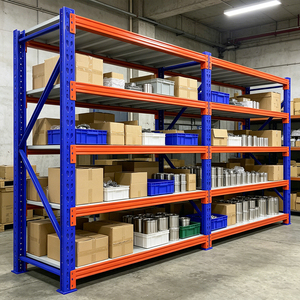
Selecting the optimal racking architecture requires evaluating operational forklift activity, throughput frequency, unit load weight, and environmental exposure. The table below highlights key structural parameters:
| Structural Parameter | Roll-Formed Teardrop Systems | Hot-Rolled Structural Steel Systems | Hybrid Systems (Custom Engineered) |
|---|---|---|---|
| Steel Fabrication | Cold-rolled steel sheet gauge (12GA to 16GA) | Structural C-Channel hot-rolled steel shapes | Structural uprights with roll-formed step beams |
| Beam Connections | Tool-less snap-in teardrop pin lock connectors | High-strength structural bolted connections | Bolted end-plates with quick-connect step beams |
| Forklift Impact Resistance | Moderate; requires column protectors/bullnoses | Extremely high; ideal for heavy industrial sites | High lower-column structural reinforced legs |
| Seismic Performance | Requires oversized baseplates & seismic anchors | Inherent high ductility and dynamic force absorption | Engineered seismic footplates and rigid row spacers |
| Optimal Applications | Retail distribution, 3PL, FMCG, E-Commerce hubs | Cold storage, beverage, sugar, heavy equipment | Freezer units, high-turnover agricultural warehouses |
Top 10 Global Industrial Pallet Racking Suppliers & Wholesalers Evaluation
Evaluating enterprise-level pallet racking vendors requires analyzing manufacturing capacity, structural engineering certifications (RMI, FEM 10.2.02, ISO 9001:2015), custom fabrication capability, and global port logistics support. Below is an engineering review of the top 10 global suppliers dominating the industrial storage marketplace.
1. GT-Racks (Guatemala Industrial Racks S.A.)
Core Focus: Heavy-Duty Seismic Pallet Racking, Structural Storage Systems, & Custom Warehouse Layout Engineering.
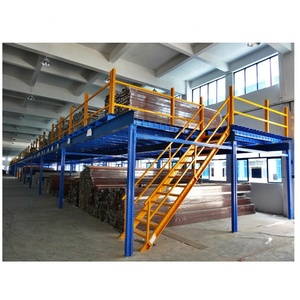
With an operational legacy dating back to 1989 and supported by over 500,000 sq. ft. of manufacturing and distribution infrastructure, GT-Racks stands out in engineering seismic-ready racking systems tailored for high-risk zones and regional export corridors. Specializing in both certified new structural racking and factory-inspected pre-owned inventory, GT-Racks delivers turnkey layout design, custom roll-formed teardrop systems, heavy-duty cantilever solutions, and multi-tier mezzanine platforms.
2. SSI Schaefer Systems
Core Focus: Fully Automated Warehousing, Shuttle Systems, and High-Bay AS/RS Structures.
A global leader in intra-logistics solutions, Germany-based SSI Schaefer excels in integrated automated warehouse systems. Their palette racking line emphasizes precision cold-rolled profiles capable of supporting automated guided vehicles (AGVs) and high-speed pallet shuttles in high-density distribution hubs.
3. Mecalux Logistics Solutions
Core Focus: Selective Pallet Racks, Automated Pallet Shuttle Systems, & Warehouse Management Software (WMS).
Mecalux maintains a global manufacturing footprint across Europe and the Americas. Their product line includes conventional selective rack systems, push-back flow systems, and rack-supported buildings (clad-rack structures) engineered for cold-chain storage environments.
4. Dexion Storage Solutions
Core Focus: European Standard Pallet Racking, Drive-In Systems, and Mobile Heavy-Duty Racking.
Dexion is a pioneer in standardized pallet storage throughout EMEA. Known for their P90 selective pallet racking platform, Dexion focuses on modular flexibility, allowing facility managers to reconfigure beam levels without structural alterations.
5. Ridg-U-Rak Inc.
Core Focus: North American Teardrop Roll-Formed & Structural Bolted Pallet Racking.
Producing over 100 million pounds of storage equipment annually, Ridg-U-Rak is one of North America's largest manufacturers. Their proprietary column designs feature rigid beam-to-frame connections and heavy-duty baseplate options built to ANSI/RMI specifications.
6. Frazier Industrial Company
Core Focus: 100% Structural Steel Pallet Racking Systems.
Frazier is recognized for using structural hot-rolled channel steel exclusively in its uprights and beams. This construction offers resilience against forklift damage, making Frazier systems popular in high-traffic distribution centers and heavy manufacturing facilities.
7. Unarco Material Handling
Core Focus: T-Bolt Structural Racking, Interchangeable Teardrop, & Carton Flow Systems.
Unarco offers a wide spectrum of rack structures, including its patented T-Bolt system, which combines the front-connect ease of roll-formed rack with the clamping strength of structural bolted systems for industrial distribution applications.
8. Stow Group
Core Focus: High-Density Silo Warehouses, Movable Pallet Racking, & Stow Atlas Shuttles.
Stow Group specializes in high-density storage solutions. Their mobile racking systems (Stow Movable) mount standard rack rows onto motorized chassis, eliminating fixed service aisles to increase floor area utilization by up to 80%.
9. Jungheinrich AG
Core Focus: Intralogistics Integration, System Racks, Cold Storage, & Automated Pallet Carriers.
Jungheinrich combines structural rack manufacturing with material handling equipment design. Their systems are engineered for narrow-aisle (VNA) environments, optimizing forklift mast stability and rack tolerance interaction.
10. Interroll Group
Core Focus: Dynamic Pallet Flow, Gravity Roller Conveyors, and FIFO/LIFO Modules.
Interroll focuses on dynamic storage technologies. Their pallet flow modules integrate magnetic speed controllers and safety separators, converting static pallet racks into high-density First-In, First-Out (FIFO) buffer systems.
Future Technological Trends in Industrial Storage & Racking Systems
The industrial storage industry is undergoing rapid innovation, driven by supply chain digitalization, labor shortages, and stringent building safety standards. Procurement managers looking ahead to 2026 and beyond should consider the following key technological developments when specifying equipment:
1. Seismic Engineering Compliance & Dynamic Load Modeling
Modern warehouse design increasingly demands advanced finite element analysis (FEA) to simulate dynamic ground acceleration during seismic events. In active tectonic regions—such as Central America, the US West Coast, and the Pacific Rim—racking systems must comply with structural codes like AGIES NSE, ANSI MH16.1, and ASCE 7. Sourcing engineers now prioritize heavy-gauge footplates (e.g., 3/8" or 1/2" thick steel baseplates), multi-anchor floor connections, and engineered row spacers that flex without joint failure during seismic activity.
2. AS/RS and AMR (Autonomous Mobile Robot) Ready Architectures
As logistics facilities adopt robotics, industrial racking must meet strict structural tolerances. Traditional roll-formed racks can exhibit millimeter-level variances that interfere with robotic optical sensors and automated shuttle insertion arms. Future-proof pallet racking incorporates precision laser-aligned beam levels, integrated rack-mounted guide rails, and sensor-embedded beam profiles engineered for high-speed automated storage environments.
3. Eco-Steel Fabrication & Decarbonized Supply Chains
Environmental Sustainability Goals (ESG) are becoming key evaluation criteria in global industrial procurement. Top manufacturers are transitioning to structural steel produced via Electric Arc Furnaces (EAF) powered by renewable energy, reducing embodied carbon by up to 60% compared to traditional blast furnace steelmaking. High-durability zero-VOC powder coating lines are also replacing conventional solvent paints to minimize environmental impact.
4. Smart Racking: IoT Structural Monitoring & Impact Sensors
Operational safety is being elevated through IoT technology. Wireless tilt sensors, strain gauges, and impact monitors can now be installed directly on critical upright frames. These micro-sensors monitor beam deflection and track forklift collisions in real time, alerting safety managers via dashboard alerts before structural failures occur.
Strategic Sourcing & Future Procurement Trends (2026–2030)
Industrial procurement strategies are shifting from reactive purchasing to strategic lifecycle asset management. Logistics executives looking to maximize capital investment efficiency are leveraging several key trends:
Key Procurement Strategies for Industrial Buyers
- Hybrid Sourcing Models (Certified Pre-Owned + New Steel): To control capital expenditure while expanding capacity, leading enterprises pair new structural upright frames with inspected pre-owned step beams. Sourcing pre-owned components that pass structural non-destructive testing (NDT) can lower rack system costs by 30% to 45%.
- Modular & Reconfigurable Beam Profiles: Buyers are avoiding fixed single-purpose racking layouts. High-velocity warehouses favor teardrop connector systems with standard 2-inch vertical beam adjustability, allowing quick slotting adjustments as SKU dimensions change.
- Port-to-Floor Freight Freight Consolidation: Global supply chain disruptions have highlighted the importance of streamlined logistics. Top wholesalers now provide bay-labeled container packaging and customs clearance documentation (such as DUCA declarations for Central American trade corridors) to minimize port demurrage fees and speed installation.
- Total Cost of Ownership (TCO) & Buyback Agreements: Forward-thinking procurement teams evaluate vendor trade-in programs upfront. Working with suppliers that offer guaranteed rack buyback allowances ensures that equipment can be liquidated or upgraded efficiently when relocating or consolidating facilities.
Corporate Engineering Strength: GT-Racks (Guatemala Industrial Racks S.A.)
As highlighted in our supplier matrix, Guatemala Industrial Racks S.A. (GT-Racks) brings decades of specialized expertise to international industrial buyers seeking heavy-duty storage equipment. Founded in 1989, GT-Racks has grown from a local fabrication workshop into a primary manufacturer and distributor of industrial warehousing equipment across Central America and international logistics corridors.
CAD Layout & Civil Engineering Support
Our engineering team delivers full warehouse CAD layout optimization, ensuring aisle widths align with your specific material handling fleet (Reach trucks, VNA, or Standard Counterbalance) while complying with local structural codes and NFPA 13 fire safety standards.
500,000+ Sq. Ft. Logistics & Manufacturing Facility
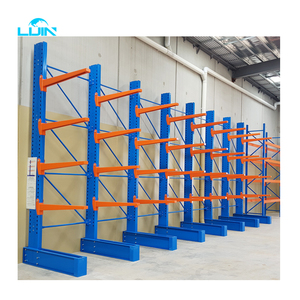
With massive inventory stock holding tens of thousands of step beams, structural C-channel columns, cantilever arms, wire mesh decks, and row accessories, we fulfill large enterprise orders with rapid lead times.
Seismic Mitigation Expertise
Operating in active tectonic zones, our engineers specify appropriate steel grades, heavy-duty footplates, structural bracing configurations, and anchor bolt depths designed to withstand dynamic shear stresses during seismic events.
Ready to Optimize Your Industrial Storage Infrastructure?
Speak with our senior warehouse design engineers for floor plan reviews, structural load ratings, or customized quote specifications.
Frequently Asked Questions: Industrial Pallet Racking Sourcing
Here are detailed answers to common questions asked by warehouse managers, structural engineers, and industrial procurement directors during project planning.
What steel grades are typically used in industrial pallet racking manufacturing?
Most quality roll-formed pallet rack systems utilize cold-rolled structural steel conforming to ASTM A1011 Grade 50 (or equivalent international standards like Q235B and Q355B), which offer a minimum yield strength of 50,000 PSI (345 MPa). Structural racking systems utilize hot-rolled steel C-channels conforming to ASTM A36 or Q355 structural steel, providing higher ductility, superior impact resistance against forklifts, and exceptional performance in seismic applications.
How do imperial US racking dimensions adapt to metric 1,000 x 1,200 mm international pallets?
Standard North American upright frames are 42 inches (1,067 mm) deep. When storing standard 1,000 mm x 1,200 mm metric ISO pallets or 48" x 40" GMA pallets on a 42" deep frame, the pallet hangs over the front and rear load beams by approximately 3 inches (75 mm) on each side. This intentional overhang ensures the pallet stringers sit firmly across both front and rear step beams. Standard beam lengths of 96 inches (2,438 mm) or 108 inches (2,743 mm) comfortably accommodate two metric pallets per level with appropriate side clearance.
What beam deflection limits should be specified for safe rack operations?
According to Rack Manufacturers Institute (RMI) standards (ANSI MH16.1), the maximum allowable deflection for pallet rack beams under full design load is L/240, where L is the clear span length of the beam between upright columns. For example, on a 96-inch (2,438 mm) step beam, the vertical deflection at the center point under maximum load should not exceed 0.4 inches (10.16 mm). Exceeding this limit indicates structural overload and risks permanent plastic deformation or beam disengagement.
When should a facility specify structural hot-rolled rack over roll-formed rack?
Structural hot-rolled steel racking is strongly recommended in: (1) High-traffic distribution centers with heavy forklift utilization; (2) Cold storage and deep-freeze environments where cold temperatures make thin-gauge steel brittle; (3) Heavy industrial facilities storing unit loads exceeding 3,000 to 5,000 lbs (1,360 to 2,260 kg) per pallet position; (4) Outdoor or highly corrosive agro-industrial storage sites; and (5) Severe seismic hazard locations requiring high structural ductility.
How are warehouse racking systems engineered to meet seismic building codes?
Seismic rack design factors in site-specific soil classifications, spectral acceleration parameters ($S_s$ and $S_1$), building height, and rack mass distribution. Engineered seismic features include oversized seismic footplates (often 3/8" or 1/2" thick) welded to the upright base, heavy-duty concrete wedge or expansion anchors with deep embedment depths, enlarged diagonal horizontal frame bracing, and rigid row spacers that tie back-to-back rack rows together into a unified structural matrix.
What safety accessories are required to ensure compliance with warehouse inspection standards?
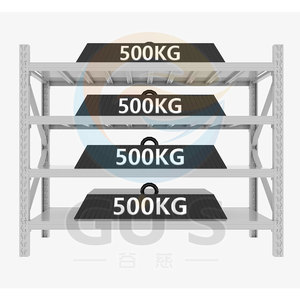
Standard safety compliance requires: (1) Spring-loaded or heavy-duty steel safety drop locks on all beam connector endplates to prevent accidental lift-off; (2) Heavy-gauge steel wire mesh decking or cross-bars to support weak or damaged pallets; (3) Heavy-duty post protectors or bullnose end-of-aisle guard rails to shield frame legs from forklift collisions; and (4) Clear structural load capacity plaques posted visibly at the end of every rack row indicating max load per level and max load per bay.
What information is needed to receive a turnkey racking layout quote?
To produce an accurate structural quote and CAD layout, engineers require: (1) Facility floor plan drawings showing column locations, clear ceiling height, building doors, and sprinkler clearance allowances; (2) Pallet dimensions (Length x Width x Height including cargo); (3) Maximum load weight per pallet position; (4) Forklift specifications including maximum lift height and minimum right-angle stacking aisle requirement; and (5) The delivery location address to calculate freight logistics and local seismic design requirements.
Partner with GT-Racks for Enterprise Storage Engineering
Whether planning a greenfield automated distribution center, expanding an existing warehouse, or sourcing certified pre-owned heavy-duty racking, GT-Racks provides the technical expertise, manufacturing scale, and engineering support your operations require.
Send an Inquiry