Featured Industrial Storage & Racking Systems
Factory-direct engineered racking systems designed for structural integrity, extreme load capacities, and logistics scalability.
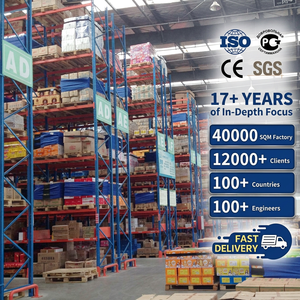
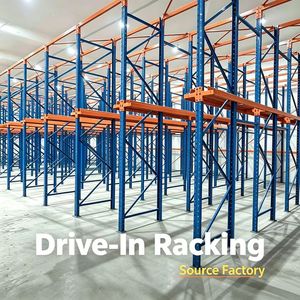
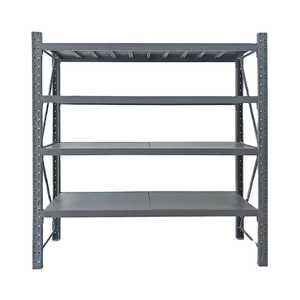
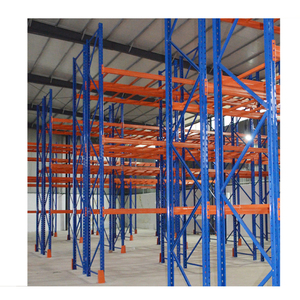
Global Industrial Shelving & Storage Manufacturing Dynamics
The global industrial warehousing landscape is undergoing a monumental shift driven by automated logistics, cold-chain expansion, supply chain nearshoring, and rigorous regional seismic compliance standards. Modern procurement teams no longer evaluate storage suppliers purely on raw steel tonnage prices. Today’s industrial procurement leaders evaluate global racking manufacturers through a multi-dimensional framework: material yield strength ratings ($f_y$), automated roll-forming accuracy, seismic displacement resilience, surface treatment durability against tropical ambient humidity, and total cost of ownership (TCO).
As international supply chains balance hybrid inventories—mixing standard Euro-pallets ($1,000 \times 1,200\text{ mm}$) and US GMA pallets ($48 \times 40\text{ inches}$)—global industrial shelving factories must maintain versatile, high-precision manufacturing lines capable of rapid tool-changeover. Factory-direct exporters with integrated CAD engineering, automated powder-coating lines, and structural FEA (Finite Element Analysis) simulation offer significant competitive advantages over traditional trading intermediaries.
Top 10 Global Industrial Storage Factory Benchmarks
Key parameters defining premier industrial shelving manufacturers and tier-1 global exporters.
1. Automated Production Capacity
Tier-1 factories utilize continuous cold roll-forming machines and robotic welding stations to ensure millimeter-level tolerances across 500,000+ sq. ft. facilities.
2. Seismic & Structural Safety
Advanced engineering compliance with ANSI MH16.1, CE, and regional seismic codes (AGIES NSE) with enlarged base plates and heavy-duty anchor bolt engineering.
3. Custom Steel Metallurgy
Supplying certified hot-rolled structural steel profiles and high-tensile cold-rolled box beams with customized moment connection clip designs.
4. Export Packaging & Logistics
Engineered container loading and bay-by-bay modular bundling to protect powder-coated finishes during long-distance maritime ocean transit.
5. Surface Finishing & Anti-Corrosion
Thermosetting epoxy-polyester powder coating and hot-dip galvanizing tested against ASTM B117 salt spray for high-humidity & cold-storage environments.
6. Turnkey Layout & Installation
Complete lifecycle support including CAD building clearance planning, teardown buyback allowances, and certified local assembly assistance.
Storage System Engineering Matrix & Application Comparison
Selecting the optimal industrial shelving profile requires balancing pallet access, floor space utilization, forklift aisle radius, and overall budget allocation. Below is an engineering overview of key warehouse storage systems manufactured by leading global factories:
| Storage System Category | Structural Load Rating | Pallet Selectivity | Volumetric Efficiency | Ideal Industry Application |
|---|---|---|---|---|
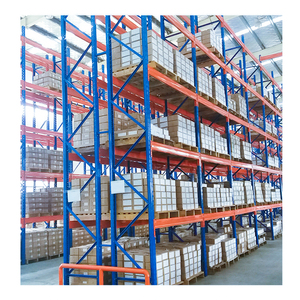
| Selective Pallet Racking | Up to 4,000 kg / level | 100% Direct Access | 40% – 50% Space Usage | 3PL Logistics, Retail Distribution, FMCG, Pharma |
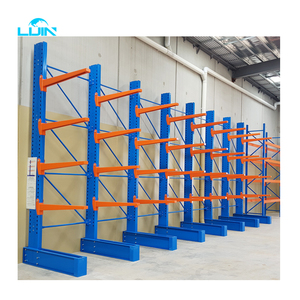
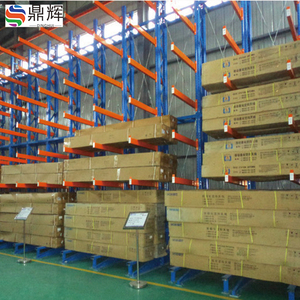
| Heavy-Duty Cantilever Racks | 1,000 – 6,000 kg / arm | 100% Linear Access | High (Long Materials) | Lumber Yards, Steel Pipe & Rebar, Extrusions, Sheet Metal |
| Drive-In / Drive-Thru Racks | Up to 1,500 kg / position | LIFO / FIFO Bulk Lane | 75% – 85% Density | Cold Storage, Beverage Depots, Flour & Agricultural Export |
| Pushback & Shuttle Racking | Up to 2,000 kg / pallet | 2–6 Deep LIFO | 70% – 80% Density | High-Density Food Processing, Fast-Moving SKU Buffers |
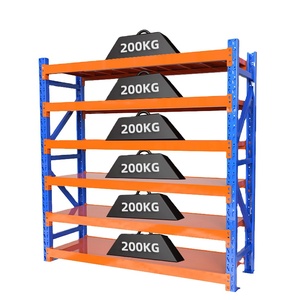
| Adjustable Boltless Shelving | 200 – 800 kg / shelf | 100% Manual Access | 60% Medium Vertical | E-commerce Picking, Automotive Parts, Workshop Cartons |
Future Procurement Trends in Industrial Shelving & Storage (2025–2030)
The global storage equipment manufacturing sector is rapidly evolving. Procurement directors, project engineers, and supply chain managers must stay aligned with next-generation developments shaping industrial storage production and installation worldwide:
1. Automated Storage and Retrieval System (AS/RS) Integration
Traditional manual forklift racking is progressively giving way to AS/RS-ready structural steel frames. Modern factories manufacture uprights with ultra-strict vertical plumb tolerances ($\le 1/1000$) to accommodate automated guided vehicles (AGVs), autonomous mobile robots (AMRs), and high-speed pallet shuttles. Rack structures now double as the primary guidance infrastructure for automated crane systems.
2. Hybrid Steel Racking Assets: Combining New & Inspected Refurbished Systems
Environmental sustainability and capital expenditure optimization are driving the growth of hybrid procurement strategies. Tier-1 enterprise buyers frequently pair custom newly manufactured heavy-duty beams with certified, structurally inspected pre-owned upright frames. Structural steel components that remain free of impact deformation retain their load-bearing capacity for decades, enabling cost savings of 25% to 40% without compromising site safety.
3. Advanced Corrosion Protection for Tropical & Agro-Industrial Climates
With massive warehousing investments expanding across humid coastal zones, ports, and agro-export hubs (such as sugar, coffee, and fruit packaging plants), high-durability surface coatings are essential. Factories are shifting from basic liquid paint to dual-layer electrostatically applied thermosetting powder coatings and hot-dip galvanizing compliant with ISO 1461 standards, protecting rack structures against atmospheric oxidation and aggressive chemical washing routines.
4. Modular "Starter & Adder" Engineering Standardization
To reduce shipping volumes and simplify regional warehouse expansion, factories are standardizing modular bay connections. Unified tear-drop punchings and standardized box beam hooks allow warehouse operators to reconfigure shelf levels in 50mm or 75mm increments without structural welding, shortening assembly timelines by over 30%.
Why Partner With Our Factory & Global Export Network?
With an operational legacy dating back to 1989, our manufacturing and material handling supply network bridges heavy-industrial engineering expertise with global export capabilities. Operating out of a massive 500,000+ sq. ft. inventory and manufacturing backing facility, we specialize in high-capacity selective pallet racks, heavy-duty cantilever systems, drive-in racking, and custom boltless logistics shelving.
Turnkey CAD Layout & Engineering
We provide full structural floor planning, aisle optimization, forklift turning radius validation, and seismic load engineering tailored to your facility height.
Strict Quality & Deflection Compliance
All beams and uprights undergo rigorous quality control, FEA stress modeling, and weight load testing ensuring zero permanent deformation under max rated capacity.
Asset Trade-In & Buyback Programs
Upgrading your facility? We offer comprehensive asset buyback allowances and professional rack dismantling services, turning old rack assets into capital credit.
Industrial Shelving & Storage FAQ
Expert engineering answers to common technical and procurement questions.
What critical parameters are required to generate an engineering quote for pallet racking?
To provide an accurate structural proposal, our engineering team requires: (1) Facility floor CAD plan or dimensional sketch, (2) Clear ceiling height under obstruction, (3) Pallet dimensions ($W \times D \times H$) including maximum load weight per pallet, (4) Forklift mast reach and minimum right-angle aisle stacking width, and (5) Regional seismic site location requirements.
Are standard US tear-drop racking frames compatible with metric 1,000 x 1,200 mm pallets?
Yes. A standard 42-inch (1,067 mm) deep upright frame provides an ideal front and rear pallet overhang (approximately 65 mm per side) for 1,200 mm deep metric pallets. Paired with 96-inch (2,438 mm) or 108-inch (2,743 mm) step beams, each level safely accommodates two metric or GMA pallets with proper side clearances.
What is the difference between cold-rolled steel racking and hot-rolled structural steel racking?
Cold-rolled racking is manufactured by roll-forming sheet steel into high-efficiency profiles (such as teardrop uprights and step beams), offering an excellent balance of cost, strength, and ease of adjustability. Hot-rolled structural racking utilizes thick structural C-channels with bolted beam connections, providing maximum resistance against forklift collisions in heavy industrial, outdoor, or severe seismic environments.
How do factories design industrial racking for high-seismic active zones?
Seismic rack engineering involves calculating dynamic ground acceleration forces using FEA modeling. Key modifications include heavy-duty seismic base plates, oversized wedge anchor bolts, reinforced column protectors, structural heavy-gage bracing, rigid row spacers, and vertical beam connector safety lock pins to prevent dislodgement during seismic movement.
Why are wire mesh decks recommended over timber or solid steel drop-in panels?
Wire mesh decking provides superior fire safety by allowing overhead building sprinkler water to pass through lower rack levels, meeting international NFPA guidelines. Additionally, wire mesh prevents dust accumulation, improves lighting visibility in high-bay aisles, and prevents loose items from falling between beams.
What surface coating option is best for cold storage or humid marine logistics environments?
For high-humidity environments, coastal port warehouses, or sub-zero food freezer storage, hot-dip galvanizing (HDG) or high-durability epoxy-polyester powder coating over an iron-phosphate wash primer is recommended to prevent surface rust and steel degradation.