Engineering Strategic Density: The Push Back Racking Imperative
As commercial industrial real estate costs escalate globally, logistics managers are increasingly forced to maximize volumetric warehouse utilization without sacrificing operational selectivity. Push Back Pallet Racking represents the pinnacle of dynamic Last-In, First-Out (LIFO) storage, achieving up to 90% higher storage density compared to standard selective racking.
Unlike static drive-in rack systems that require forklifts to physically enter the rack matrix—increasing collision risks and slowing cycle times—push back racking relies on a series of nested, inclined carts that ride on sloped structural steel rails. When a pallet is loaded from the front aisle, it pushes the preceding pallet back onto the next cart. During unloading, gravity gently moves the remaining pallets forward to the picking face.
Engineered Heavy-Duty Racking Portfolio
Explore our CE and ISO-certified structural, cantilever, and high-density racking solutions manufactured for rigorous industrial environments and extreme seismic zones.
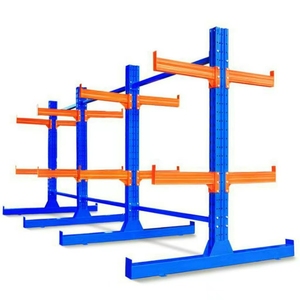
Steel Cantilever Pallet Racking Single Side Heavy Duty Multi-Level Corrosion Protection Garage Use CE Certified 500-3000kg Racks
Single-sided heavy-duty cantilever racks with multi-level anti-corrosion coating, certified for 500–3000kg structural pipe and timber loads.
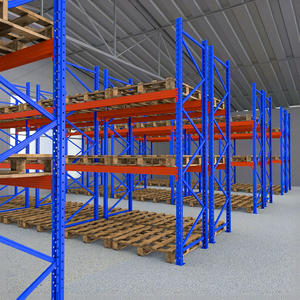
Adjustable Pallet Rack Warehouse Storage Heavy Duty Shelving Pallets Racking for Warehouse Storage
Fully adjustable steel pallet racking engineered with teardrop beam connections for versatile high-capacity pallet storage.
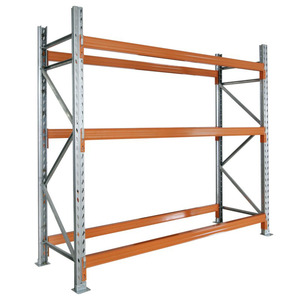
NOVA Full Automatic Warehouse Q235 Steel Boltless Store Heavy Duty Stacking Rack Industrial Storage Pallet Racking System
Q235 grade steel automated racking infrastructure built for high-throughput logistics hubs requiring seamless shuttle integration.
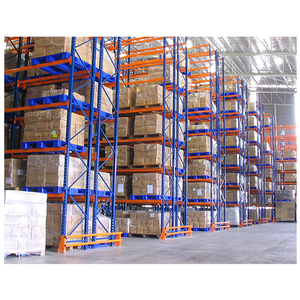
Selective Pallet Racking System Heavy Duty Industrial Warehouse Steel Storage Rack Metal Beam Logistics Multi-Level Solution
Multi-level heavy-duty selective system featuring high-strength metal step beams for 100% direct access to every SKU position.
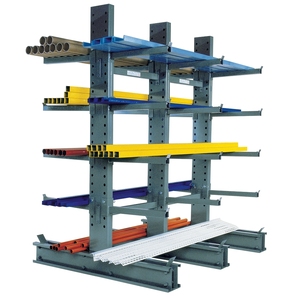
CE / ISO Certified Customized Cantilever Rack Heavy Duty for Industrial Racking From Nanjing Victory
Custom-engineered industrial cantilever systems designed for non-standard, long-profile storage like aluminum extrusions and tubing.
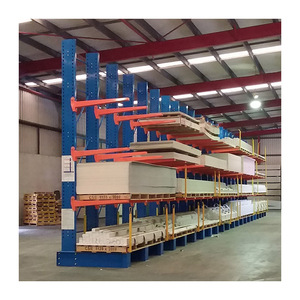
Mracking Adjustable Corrosion Protection Steel Pipe Storage Shelf Custom Warehouse Cantilever Rack System
Corrosion-resistant modular cantilever arms designed specifically for exterior pipe yards and humid tropical warehouse settings.
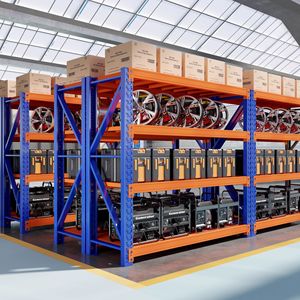
Boltless Adjustable Industrial Heavy Duty Steel Racking System 5 CE Certified Corrosion Protection Warehouse Shelving Storage
Boltless interlock racking system facilitating rapid assembly and height adjustment for dynamic third-party logistics (3PL) centers.
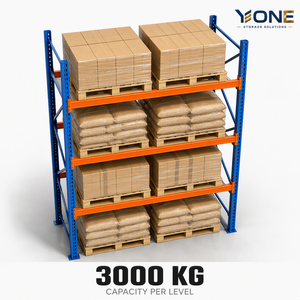
Factory Heavy Duty Steel Pallet Rack 2000kg Capacity Warehouse Storage Rack System Boltless Adjustable
Standard factory-direct 2000kg payload capacity pallet frame systems designed for structural integrity and high impact resistance.
Top 10 Global Push Back Racking Exporters Evaluation Benchmark
Selecting an export partner requires rigorous technical evaluation beyond unit pricing. Below is an engineering comparison matrix of key factors distinguishing top-tier manufacturers from general trade intermediaries.
| Evaluation Parameter | Tier 1 Global Wholesaler / Exporters | Standard Local Manufacturers | Trading Intermediaries |
|---|---|---|---|
| Structural Steel Grade | ASTM A1011 Grade 50 / Q355B High-Yield Steel | Q235 Standard Commercial Steel | Variable / Uncertified Steel |
| Cart Nesting Kinematics | Heavy-duty linked steel wheels with sealed bearings | Basic flanged wheels without dust-seals | Outsourced third-party assemblies |
| Seismic Compliance | RMI ANSI MH16.1, FEM 10.2.02 & AGIES NSE | Basic localized static load compliance | No internal seismic engineering support |
| Surface Finishing | 6-Stage Automated Thermosetting Epoxy-Powder | Standard single-coat spray painting | Air-dried enamel coating |
| Manufacturing Scale | >500,000 sq ft production backing & automated welding | 50,000–100,000 sq ft manual fabrication | No manufacturing facility |
| Export Custom Clearance | DUCA, CAFTA-DR, CE, ISO & Form E Documentation | Basic commercial invoice generation | Limited customs coordination |
Require a Custom Push Back System Engineering Drawing?
Submit your floor plan dimensions, pallet specifications, and forklift specs for a complete 3D CAD layout within 24 hours.
Future Procurement & Product Development Trends (2026–2030)
The industrial material handling sector is undergoing rapid evolution. Procurement directors must align today's capital expenditure with emerging automated technologies.
Hybrid Push-Back & Shuttle Integration
Next-generation systems combine mechanical cart nesting with semi-automated radio shuttles, allowing deeper lane configurations (up to 8-deep) while retaining push-back low maintenance perks.
Cold Storage & High Humidity Optimization
With cold-chain logistics surging globally, exporters are prioritizing pre-galvanized frame uprights and low-temperature synthetic lubricants inside sealed cart bearings operating down to -30°C.
IoT Deflection & Structural Load Monitoring
Smart racking uprights with integrated strain gauges and acoustic sensors provide real-time alerts on beam deflection, forklift impacts, and overload anomalies directly to the WMS platform.
Why Global Supply Chains Rely on Our Manufacturing Capabilities
Established in 1989, Guatemala Industrial Racks S.A. (GT-Racks) has grown from a regional engineering outfit into an international manufacturing powerhouse backed by over 530,000 sq ft of manufacturing facility capability.
Massive Stock Ready to Ship
We maintain an inventory of over 100,000+ pallet rack beams and 15,000+ upright frames in standard teardrop, structural, and cantilever profiles, dramatically shortening lead times for global orders.
Seismic Engineering Authority
Operating in high-seismic regions (fault zones near North American and Caribbean tectonic plates), our structural engineers adhere strictly to AGIES NSE, RMI, and FEM structural dynamic guidelines.
End-to-End Trade & Buyback Programs
Beyond exporting new racking, we offer complete asset recovery, equipment dismantling, and trade-in allowances for legacy material handling systems, delivering unmatched lifecycle value.
Frequently Asked B2B Procurement Questions (FAQ)
Detailed technical guidance for warehouse operations directors, structural engineers, and logistics procurement specialists.
How does Push Back Racking compare to Drive-In Racking in terms of operational efficiency?
Push Back racking offers significantly higher operational throughput than Drive-In systems. In Drive-In racking, forklift drivers must physically navigate inside deep racking channels, creating high collision risks and slow travel speeds. Push Back racking keeps the forklift operating strictly in the main aisle. Pallets are loaded and retrieved at the front picking face. Additionally, Push Back allows individual SKU selectivity per lane level, whereas Drive-In restricts an entire vertical bay to a single SKU.
What is the standard incline gradient for push back rails, and how is pallet speed controlled?
Push back rails are engineered with a precise slope incline of 3 to 5 degrees (approx. 3/8 inch pitch per foot). Gravity flows the nested carts forward smoothly when a pallet is extracted. Pallet descent speed is safely controlled by the forklift operator during extraction and governed by low-friction linked heavy-duty steel wheels mounted inside custom C-channel structural steel rails.
Can push back racking accommodate varying pallet sizes (e.g., US 48x40" and Metric 1000x1200mm)?
Yes. Custom cart nesting frames can be engineered to support dual pallet dimensions. A standard 42-inch (1,067 mm) deep upright frame accommodates both standard US GMA 48"x40" pallets and European/Metric 1,000 x 1,200 mm pallets with controlled overhangs. Heavy-duty full perimeter mesh carts can also be provided to support weak or non-standard pallets.
What maintenance schedules are required for dynamic push back cart mechanisms?
Push back racking is inherently low-maintenance because it relies on simple mechanical gravity rather than electrical motors or hydraulics. Recommended routine maintenance includes bi-annual visual inspection of cart alignment, checking wheel bearings for debris or dust accumulation, and verifying that base frame anchors remain torqued to design standards—especially in seismic zones.
What documentation is provided for international cross-border container shipping?
As experienced exporters, we provide comprehensive shipping documentation including Bill of Lading (BOL), Certificate of Origin (CAFTA-DR / Form E where applicable), DUCA customs declarations, detailed packing lists categorized by bay runs, assembly CAD drawings, and structural capacity certification documents compliant with international import customs regulations.
Should our enterprise select roll-formed or structural steel for push back installations?
For high-throughput distribution centers, cold storage facilities, or high-seismic environments, structural steel channel racking (hot-rolled) is strongly recommended due to its superior resistance to forklift impact and higher torsional rigidity. Roll-formed steel offers a cost-effective alternative for standard light-to-medium payload conditions with controlled forklift traffic.
Ready to Optimize Your Warehouse Volumetric Space?
Consult with our senior SEO growth directors and structural engineering experts today for competitive factory-direct export quotations.