Featured High-Density Industrial Racking Systems
Engineered for high-throughput distribution centers, cold storage units, and heavy industrial logistics operations worldwide.
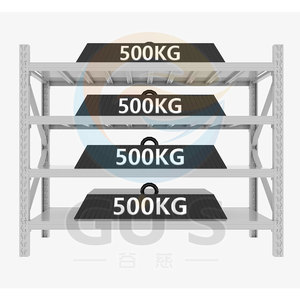
Heavy Duty Industrial Steel Warehouse Storage Rack Metal Racking System
Structural-grade steel storage matrix engineered for heavy pallet loads, offering high-bay vertical integration and seismic compliance.
Get Catalog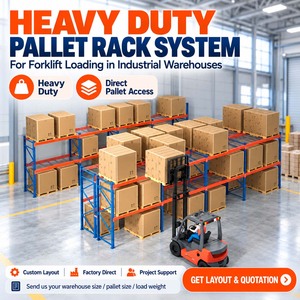
Heavy Duty Pallet Rack System for Forklift Loading in Warehouses
Designed with high-impact upright posts and customized beam levels for rapid counterbalanced and reach forklift throughput.
Get Catalog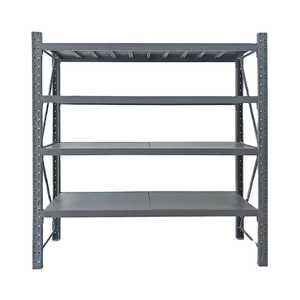
Adjustable Anti-Rust Steel Warehouse Shelves Light Duty Workshop Metal Rack
Versatile modular shelving system featuring anti-corrosion powder coatings for carton picking and light industrial storage.
Get Catalog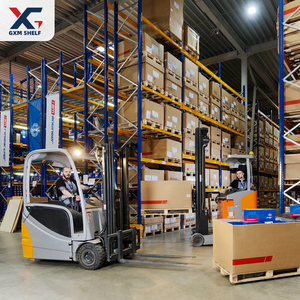
GXM Warehouse Durable Metal Storage Rack Multi-Tier Pallet Heavy Duty System
Multi-tier mezzanine compatible racking framework maximizing vertical cubic volume utilization for order fulfillment hubs.
Get Catalog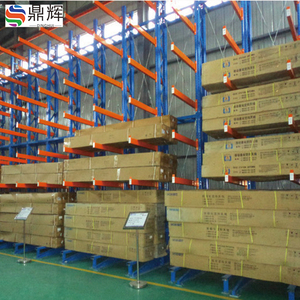
Warehouse Standard Heavy-Duty Sheet Metal Storage Cantilever Frame & Rack
Unobstructed front column profile tailored for long stock, structural timber, steel tubes, sheet metal, and aluminum extrusions.
Get Catalog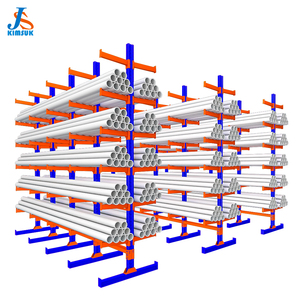
Cantilever Rack Heavy Duty Tyre Rack & Pallet Storage System
Specialized automotive and heavy equipment tire storage system configured for density, stability, and rapid inventory access.
Get Catalog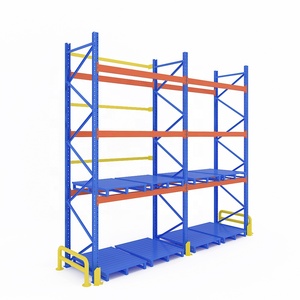
Warehouse Storage Industrial Pallet Rack with Integrated Back Stopper Safety
Safety-focused structural selective rack featuring structural rear beam stops to prevent accidental pallet overrun in high-bay bays.
Get Catalog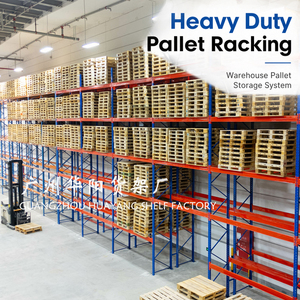
3000KG Per Level Heavy Duty Adjustable Pallet Racking Steel System
Ultra-capacity structural beam and column system certified to support 3,000 kg per shelf level under severe dynamic warehouse conditions.
Get CatalogGlobal Sourcing Whitepaper: The Evolution of High-Density Pushback & Pallet Storage Architectures
In modern industrial logistics, floor area represents one of the highest recurring operational expenditures. As global supply chains face intensifying pressure toward inventory velocity, spatial efficiency, and ESG-compliant carbon footprints, facility planners are shifting away from traditional low-density selective storage toward advanced pushback racking systems (Push Racks) and high-density dynamic storage matrices.
Pushback racking technology operates on an engineered dynamic incline principle, utilizing nested wheel carts riding upon inclined steel structural rails. Functioning on a Last-In, First-Out (LIFO) inventory control dynamic, pushback systems allow warehouses to store pallets from 2 to 6 deep while maintaining single-aisle access. Compared to standard selective rack arrays, a professionally engineered pushback system can increase warehouse capacity by 75% to 100% without expanding building footprint.
Key Information Gain Metric: Operational Spatial Yield
By eliminating multiple forklift access aisles required by selective racking, pushback systems convert up to 75% of total floor area into actual storage positions. This compares to a typical spatial yield of only 35% to 45% in conventional 12-foot aisle layouts.
1. Mechanical Dynamics of Pushback Racks vs. Alternative High-Density Racks
To optimize capital expenditure (CapEx) when sourcing from a global exporter or wholesaler, procurement managers must evaluate the structural mechanics of pushback racks against competing technologies such as Drive-In racking, Gravity Pallet Flow, and Automated Guided Vehicle (AGV) Shuttle systems:
- Pushback Racking (LIFO): Forklifts load the first pallet onto the top nested cart. When the second pallet is inserted, it gently pushes the first pallet back along the inclined track, exposing the second cart. When unloading, gravity feeds remaining pallets forward to the aisle face automatically. Highly effective for medium-variety, high-volume SKUs.
- Drive-In Racks (LIFO): Forklifts physically drive inside the racking structure to place pallets on continuous support rails. While low cost per pallet position, Drive-In systems suffer from high rate of structural collision damage and significantly slower pallet loading cycle times.
- Pallet Flow Racking (FIFO): Pallets travel on full-width roller tracks from the loading aisle to the picking aisle on a First-In, First-Out basis. Highly efficient for perishable goods, though requiring two dedicated aisles (load and unload sides).
2. Comparative Engineering Matrix for Warehouse Storage Architectures
The following performance matrix summarizes operational performance metrics across major heavy-duty warehouse storage systems:
| Racking Architecture | Storage Density | Selectivity | Pallet Depth Limit | Forklift Impact Risk | Estimated ROI Horizon |
|---|---|---|---|---|---|
| Pushback Racking (Nested Carts) | Very High (75%) | 90% (Per Lane Aisle) | 2 to 6 Pallets Deep | Low (Forklift stays in aisle) | 14 – 18 Months |
| Selective Pallet Rack | Low (40%) | 100% (Direct Access) | 1 Pallet Deep | Moderate | Baseline Standard |
| Drive-In / Drive-Thru Rack | High (70%) | Low (Per Tunnel) | 4 to 10 Pallets Deep | High (Driver enters rack) | 18 – 24 Months |
| Gravity Pallet Flow (FIFO) | Very High (80%) | 100% (Dedicated Lanes) | 2 to 20 Pallets Deep | Low | 24 – 36 Months |
| Heavy Duty Cantilever System | Medium (Linear Focus) | 100% (Long Stock) | Continuous Arms | Low-Moderate | 12 – 18 Months |
3. Structural Steel Engineering: Roll-Formed vs. Hot-Rolled Structural Push Racks
When selecting a top push racks manufacturer or exporter, evaluated steel metallurgy directly impacts lifetime durability, seismic resilience, and safety factor compliance under standards such as RMI (Rack Manufacturers Institute) and ANSI MH16.1:
Roll-Formed Cold-Rolled Steel: Manufactured from sheet steel passed through series of rollers at room temperature to create dynamic teardrop or hex-lock column shapes. Ideal for retail distribution hubs, fast-assembly modules, and light-to-medium industrial capacities up to 2,500 kg per beam level.
Hot-Rolled Structural C-Channel Steel: Forged at elevated temperatures, structural steel uprights and beams offer thick, solid cross-sections with exceptional impact resistance against accidental forklift strikes. Structural push racks are heavily mandated in high-risk seismic zones (such as Central America's AGIES NSE seismic zones or US West Coast IBC standards), high-traffic beverage logistics hubs, and sub-zero cold storage facilities.
4. Future Global Sourcing Trends in High-Density Warehousing (2026–2032)
The global industrial storage manufacturing landscape is undergoing rapid modernization driven by four primary industry developments:
- Cold Chain & Sub-Zero Automation Integration: Rapid growth in frozen food export supply chains demands storage systems optimized for sub-zero temperatures (-25°C to -30°C). Pushback carts with specialized low-temperature synthetic wheels and sealed stainless steel bearings prevent dynamic freeze-binding.
- Seismic Resilience Engineering: Exporters are now equipping standard push racks with oversized heavy-gauge baseplates, heavy dual-anchor floor bolts, structural row spacers, and dynamic seismic dampers to comply with regional codes (e.g., AGIES, Eurocode 8, IBC).
- Hybrid Shuttle & Pushback Dynamic Automation: Integrating semi-automated radio shuttle platform vehicles inside heavy-duty push rack channels to achieve 10+ deep storage without forklift entry.
- ESG & Low-Carbon Steel Manufacturing: Procurement teams are emphasizing suppliers utilizing recycled structural steel, low-VOC powder coatings, and eco-designed packaging for sea container shipment.
Enterprise Advantages & Manufacturing Excellence
Backed by over 35 years of engineering leadership, our manufacturing infrastructure delivers uncompromised quality for global distributors.
530,000+ Sq. Ft. Plant
Our expansive production base houses advanced automated robotic welding lines, roll-forming machines, and continuous electrostatic powder-coating ovens.
Custom Engineered Solutions
From 2-deep to 6-deep push racks, specialized cantilever arms, or heavy structural selective bays, we engineer custom systems matching your specific floorplan.
RMI & Seismic Compliance
All load-bearing calculations and upright frame structural profiles adhere rigorously to ANSI MH16.1, RMI, and international seismic engineering standards.
Global Port-Direct Freight
Full export container loading, palletized bay labeling, flatbed freight routing, and complete DUCA / CAFTA-DR customs paperwork support.
Factory Direct Wholesaler Pricing
By eliminating middleman brokers, our direct export model yields significant capital expenditure savings for high-bay warehousing projects.
Full Turnkey Layout Planning
Our layout engineering department builds comprehensive CAD drawings, confirming aisle clearances, forklift turning radii, and sprinkler clearances.
Procurement & Engineering Checklist for International Rack Buyers
Executing an international procurement contract for industrial push racks requires meticulous technical alignment between warehouse engineering teams and the exporting manufacturer. Below is the structural verification protocol recommended prior to issuing a purchase order:
Phase 1: Pallet Profile & Load Dynamics
- Pallet Dimensions (W x D x H): Verify exact physical dimensions, including bottom board orientation. standard 48" x 40" GMA pallets and 1,000 mm x 1,200 mm ISO/Euro pallets require specific frame depth adjustments (e.g., 42" / 1,067 mm depth frame for standard 3" front/rear overhang).
- Maximum Weight per Pallet: Specify uniform load vs. concentrated load. Ensure cart nested wheel assembly and beam deflection tolerances do not exceed L/180 of the clear span.
- Pallet Condition & Bottom Runners: Pushback nested carts require structural bottom runners or solid wood/plastic bases to navigate steel cart frames smoothly without snagging.
Phase 2: Building & Slab Structural Integrity
- Concrete Slab Thickness & PSI Rating: Pushback racks exert dynamic concentrated point loads onto baseplates. Verify slab depth (minimum 6 inches / 150 mm standard) and compressive strength (minimum 3,000 to 4,000 PSI).
- Seismic Zone Categorization: Confirm local building code requirements (e.g., IBC Seismic Design Category A through F). Structural push racks require larger baseplate footprints and dual heavy-duty wedge or epoxy floor anchors per column base.
- Clear Height Under Joist (BSO): Ensure vertical clearance accounts for lift truck mast height, top pallet height plus 6 inches (150 mm) safety lift clearance, and overhead sprinkler pipe buffers.
Procurement & Technical Support FAQ
Expert answers to common engineering, logistics, and installation queries from global warehouse managers.
What is the difference between Pushback Racks and Drive-In Racks?
Pushback racking stores pallets on nested wheel carts riding on inclined rails, allowing forklifts to remain safely in the main aisle while loading pallets 2 to 6 deep (LIFO). Drive-In racking requires the forklift driver to physically drive inside the racking structure along narrow rails. Pushback racking significantly speeds up loading/unloading throughput and drastically reduces rack damage caused by forklift collisions.
Will US-standard rack sizes work with 1,000 mm x 1,200 mm international pallets?
Yes. A standard 42-inch (1,067 mm) deep upright frame accommodates both standard 48" x 40" North American pallets and 1,000 mm x 1,200 mm ISO/European pallets with a standard front and rear overhang of roughly 65 to 75 mm. Beam lengths of 96 inches to 108 inches (2,438 mm to 2,743 mm) comfortably support two pallets per level with required side safety clearances.
Are push racks suitable for sub-zero cold storage facilities?
Absolutely. Pushback racking is one of the most popular high-density systems for cold storage because spatial cubic density directly correlates to refrigeration energy savings. For sub-zero operations, we specify specialized low-temperature synthetic cart wheels, stainless steel axle pins, and low-viscosity synthetic grease to prevent frost-binding.
How do you handle global export shipping and customs documentation?
As a global exporter and wholesaler, we consolidate equipment directly into 40ft High-Cube ocean containers or flatbed truckloads. Beams and uprights are bundled with steel strapping, corner guards, and bay-by-bay identification labels. We prepare all commercial invoices, packing lists, Bills of Lading, Certificate of Origin (including CAFTA-DR / EUR.1 support), and HS code classifications for rapid customs clearance.
What parameters are required to receive an engineered layout and quote?
To provide a CAD layout drawing and factory-direct price quotation, please supply: (1) Warehouse CAD or PDF floor plan showing column locations and ceiling height, (2) Pallet dimensions (W x D x H) and maximum weight per pallet, (3) Forklift model, maximum lift height, and minimum aisle turning radius, and (4) Facility delivery location.
Should I choose structural steel or roll-formed steel for my push rack installation?
Roll-formed steel is cost-effective for standard distribution center operations with low-to-medium forklift speeds and standard loading requirements. Structural C-channel steel is recommended for high-volume, continuous shift operations, high-seismic geographic areas, heavy manufacturing, or high-impact risk areas due to its superior impact resistance and rigid structural load capacity.