Factory-Direct Rack Storage Systems
Engineered to rigorous ANSI MH16.1, FEM 10.2.02, and ISO 9001 standards. Discover our top-tier industrial warehouse racking configurations crafted from high-yield Q235B and Q355B cold-rolled structural steel.
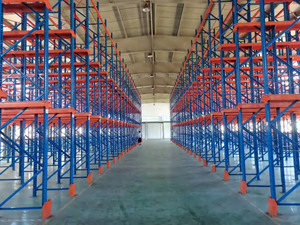
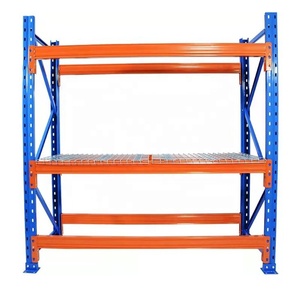
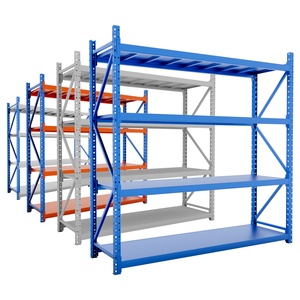
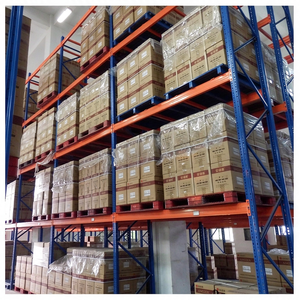
Global Warehouse Rack Storage Industry Evaluation & Sourcing Benchmark
In the current post-pandemic global logistics framework, industrial real estate costs have escalated by over 28% worldwide, compelling logistics managers, supply chain directors, and warehouse architects to re-evaluate structural density, load margins, and capital expenditure (CapEx) efficiencies. Selecting the right supplier from among the world's Top 10 Rack Storage Warehouse Factories and Exporters is no longer merely a purchasing decision—it is a foundational structural engineering commitment.
Industrial steel racking systems act as the primary structural skeleton of modern fulfillment centers, cold storage hubs, and manufacturing facilities. Operating under extreme static and dynamic loads—often supporting up to 4,000 kg per beam level and reaching vertical heights beyond 15 meters—racking infrastructure demands precise steel chemistry, cold-roll forming consistency, certified robotic welding processes, and rigorous quality assurance systems compliant with standard codes like RMI (Rack Manufacturers Institute), FEM 10.2.02, and EN 15512.
Evaluation Criteria for Premier Global Exporters
When vetting international racking manufacturers for large-scale enterprise deployments or regional logistics hubs, procurement teams must scrutinize prospective suppliers across six primary operational verticals:
- Metallurgical Quality & Traceability: Utilization of prime hot-rolled coil (HRC) converted to high-yield Q235B, Q355B, or Grade 50 structural steel, complete with mill test certificates (MTC) verifying yield point and tensile strength.
- Roll-Forming Precision: Advanced continuous multi-pass roll-forming lines ensuring exact column profile cross-sections with tight dimensional tolerances to prevent buckling under severe load.
- Surface Pre-Treatment & Coating: Automated 9-stage iron phosphate or zirconium pre-treatment wash followed by thermosetting electrostatic epoxy-polyester powder coating (60–80 microns) for anti-corrosion protection in high-humidity or cold-chain environments.
- Structural & Seismic Engineering: In-house finite element analysis (FEA) capabilities to simulate earthquake loads, dynamic forklift impacts, and wind pressure on rack-supported buildings (Clad Racking).
- Interchangeability & Standards Compliance: Universal hole pitches (e.g., standard teardrop 2-inch adjustment, or 75mm European pitch) for seamless structural integration into existing warehouse footprints.
- Global Container Export Logistics: Automated bundle packing, protective corner guards, non-standard length flat-rack handling, and optimized container stuffing to maximize cubic freight capacity and prevent transit damage across ocean routes.
Comprehensive Storage Architecture Matrix
Evaluate key structural specifications, volumetric storage efficiency ratios, and operational applications across major industrial rack classes.
| Storage System Type | Volumetric Efficiency | SKU Access Rate | Load Capacity Range | Ideal Industry Application |
|---|---|---|---|---|
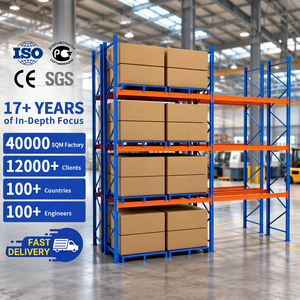
| Selective Pallet Racking | 40% – 50% | 100% Immediate Access | 1,000 – 4,000 kg / layer | FMCG, 3PL Warehousing, General Distribution |
| Drive-In / Drive-Thru Racking | 70% – 85% | Low (LIFO / FIFO Lanes) | 1,000 – 1,500 kg / pallet | Cold Storage, Seasonal Bulk, Agriculture, Beverages |
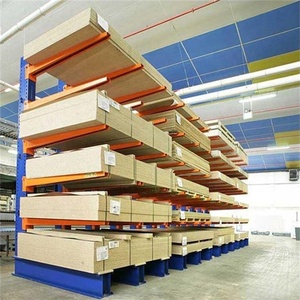
| Cantilever Rack Systems | Variable (Linear) | 100% Surface Access | 500 – 3,000 kg / arm | Lumber, Steel Pipes, Extrusions, Building Materials |
| Push-Back Racking | 60% – 75% | Moderate (2-6 Deep LIFO) | 1,000 – 1,500 kg / cart | Buffer Storage, Food Processing, High-Density Retail |
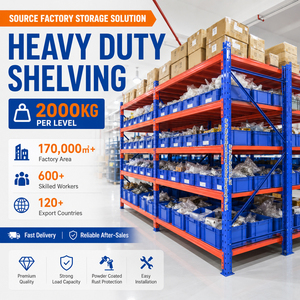
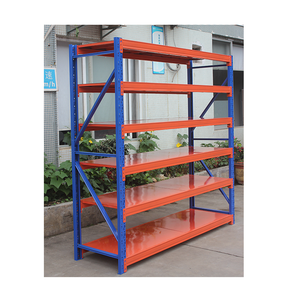
| Heavy Duty Deck Shelving | 55% – 65% | 100% Manual Access | 500 – 2,000 kg / level | Automotive Parts, Heavy Cartons, Industrial Bins |
Core Enterprise Advantages & Engineering Value Proposition
Building upon decades of specialized material handling supply experience since 1989, our backed manufacturing capabilities span over 530,000 square feet of production facility space. We deliver end-to-end storage system manufacturing, tailored seismic layout engineering, used rack buyback programs, and international project execution.
Seismic-Ready Structural Design
Specialized engineering for high-risk seismic zones (compliant with AGIES NSE, US IBC, and European EC8 codes). We incorporate high-ductility baseplates, heavy-duty anchor bolt embedments, horizontal tie braces, and customized structural upright profiles to withstand severe lateral earth displacement.
Hybrid New & Used Inventory Sourcing
Offering unmatched financial flexibility, our organization combines high-grade factory-new structural elements with rigorously load-tested, inspected used components. This hybrid approach slashes capital expenditure up to 40% without compromising structural safety or integrity.
Tropical & Cold-Room Surface Defense
Whether operating in high-humidity coastal ports, tropical manufacturing sites, or deep-freeze cold storage facilities down to -30°C, our specialized anti-corrosive powder finishes and hot-dip galvanizing options eliminate flaking, oxidation, and structural micro-cracking.
Future Procurement Trends in Warehouse Storage Systems
Macroeconomic shifts, automated robotics integration, and ESG compliance are fundamentally altering industrial racking procurement strategies.
1. Nearshoring and Regional Supply Chain Decentralization
Global enterprises are moving away from single-source mega-fulfillment centers toward regionalized hub-and-spoke distribution networks. Sourcing strategies now prioritize modular racking systems that can be rapidly assembled, reconfigured, expanded, or relocated. Multi-standard compatibility (accommodating both standard US 48"x40" pallets and European 1200x800mm Euro-pallets) has become a primary requirement for regional trade gateways across the Americas, Europe, and Southeast Asia.
2. Deep Integration with AS/RS and Autonomous Mobile Robots (AMRs)
Conventional forklift-driven rack systems are rapidly evolving into automated warehouse architectures. Modern heavy-duty pallet racks are engineered with ultra-precise beam deflection tolerances (restricted to L/300 or L/400 for automated crane clearance), integrated guide rails, P&D (Pick and Deposit) stations, and rack-mounted sensor arrays. Procurement managers now demand rack structures capable of seamless retrofitting for Shuttle Systems and top-mounted AMR decks.
3. ESG, Carbon Footprint & Sustainable Steel Sourcing
Environmental, Social, and Governance (ESG) mandates are entering the procurement decision matrix. Enterprise buyers require documentation certifying sustainable steel manufacturing processes, low-VOC (Volatile Organic Compound) electrostatic powder coatings, and Environmental Product Declarations (EPDs). Furthermore, asset recovery through certified used rack buybacks, steel recycling, and re-manufacturing plays a critical role in corporate Scope 3 emissions reduction initiatives.
4. Digital Twins and IoT Structural Load Sensors
The next decade will see the widespread adoption of smart racking systems. Fiber-optic stress sensors and wireless strain gauges embedded inside critical vertical uprights and load beams monitor live weight distribution, detect unseen forklift impacts in real-time, and alert safety managers before structural fatigue or failure occurs. Procurement specifications are rapidly adapting to require pre-drilled cable channels and sensor mounting brackets within standard upright profiles.
Future Industry Development & Material Innovations
The physical science of cold-formed structural steel fabrication is undergoing rapid technological breakthroughs. As steel manufacturers develop higher yield strength micro-alloyed steel formulations (such as high-tensile Q355B and Q460 structural steels), rack designs achieve significantly higher load-carrying capacities using thinner material gauges. This reduction in deadweight translates directly into lower international sea freight costs, lower carbon transport footprint, and reduced steel consumption per pallet position.
Simultaneously, advancements in robotic continuous seam welding, 3D laser tube cutting, and automated roll-forming lines allow factories to produce specialized, highly customized profile geometries. Intricate stiffening ribs incorporated directly into the column face dramatically improve torsional stiffness, flexural strength, and buckling resistance without adding bulk material mass.
Procurement & Engineering FAQ
Direct technical answers to common questions faced by warehouse facility operations and global sourcing directors.
A standard 42-inch (1,067 mm) frame depth perfectly accommodates both 48" x 40" North American pallets and 1,200 mm deep Euro-pallets. This leaves an optimal 3-inch (75 mm) front and rear pallet overhang past the structural load beams, facilitating secure placement and correct weight distribution across beam pairs. Standard 96-inch (2,438 mm) or 108-inch (2,743 mm) beam lengths comfortably hold two pallets per level with necessary side safety clearances.
Our primary structural racking elements utilize high-yield Q235B or Q355B cold-rolled structural steel (equivalent to ASTM A36 / A572 Grade 50). Systems are engineered with a minimum structural safety factor ranging from 1.65 to 1.95 based on ANSI MH16.1 specifications, ensuring the structure safely handles dynamic shock loads and localized stress concentrations during forklift placement.
Seismic rack design replaces standard footplates with enlarged, heavy-duty seismic baseplates featuring multi-anchor bolt hole configurations. Upright column profiles utilize thicker steel gauges, cross-bracing frequency is increased, and dynamic row spacers unite single rows into rigid double-rack structures. Structural calculation reports are validated against local seismic ground acceleration coefficients (such as AGIES NSE in Central America or USGS guidelines in the US).
For high-humidity or sub-zero cold room environments, components undergo an automated 9-stage pre-treatment cleaning process followed by a heavy-duty thermosetting epoxy-polyester powder coating (60–80 microns thick) cured at 200°C. For extreme ambient humidity, hot-dip galvanizing (HDG) coating—which bonds a molten zinc layer to the steel surface—provides lifetime rust protection against condensation and harsh industrial washdowns.
Yes, provided profile pitch dimensions match. Standard Universal Teardrop punch patterns allow seamless interchangeability across major manufacturer lines. Before integrating new components with used uprights, our engineering team inspects the structural integrity, column plumbness, baseplate condition, and punch profile tolerances of the existing frames to ensure certified load compliance.
To produce an accurate CAD layout and structural design estimate, we require: (1) Warehouse building CAD drawings showing clear ceiling height, column grid, and floor slab thickness/PSI strength; (2) Pallet dimensions (W x D x H) including top payload; (3) Maximum unit weight per pallet; (4) Forklift specifications including maximum reach height, turning radius, and aisle requirements; (5) Facility location to assess local seismic and climate requirements.
Columns and beams are bundled using heavy-duty steel strapping, protective cardboard corner guards, and timber dunnage. Components are laid out for weight-balanced loading within 40ft High Cube (40HC) containers. Loose accessories, footplates, safety pins, and bolts are securely packed into heavy-duty wooden crates or steel cages to eliminate transit loss or freight damage over long ocean voyages.
Standard color or stock configurations (uprights, step beams, wire mesh decks) ship within 7 to 10 working days. Custom structural fabrications, specific RAL color powder coatings, or large multi-container enterprise orders typically require a 3 to 4-week production cycle, followed by ocean transit depending on the destination port.
Transform Your Warehouse Volumetric Efficiency Today
Consult with our senior structural storage engineers. Receive a complimentary facility layout plan, load capacity calculation, and factory-direct quotation tailored to your exact operational requirements.
Send an Inquiry