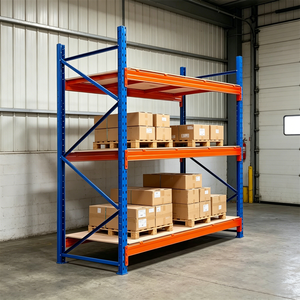
Industrial Excellence
Global Warehouse Storage Manufacturing & Wholesale Capabilities
In modern supply chain architecture, structural storage density and operational throughput directly govern enterprise profitability. As global procurement shifts toward high-density automated systems and resilient structural steel, selecting an established pallet racking exporter is critical for long-term operational success.
35+
Years Industry Authority
530K
Sq. Ft. Manufacturing Base
100K+
Pallet Beams Stocked
15K+
Seismic Uprights Ready
Information Gain Insight: Advanced warehouse storage systems are no longer passive steel frame assemblies. Modern structural pallet racks are engineered dynamic load systems built from cold-rolled Q235B/Q355B structural grade steel, compliant with international RMI (Rack Manufacturers Institute) and FEM 10.2.02 codes, built specifically to withstand high seismic accelerations and intense material handling cycles.
Verified Equipment
Top Recommended Industrial Pallet Racking Systems
Explore our precision-engineered heavy-duty storage configurations designed for commercial distribution centers, cold storage facilities, and high-bay regional fulfillment hubs.
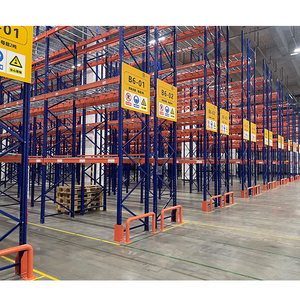
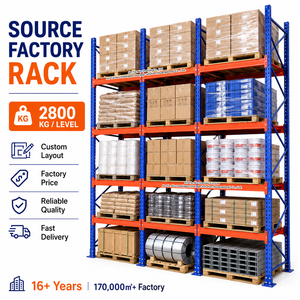
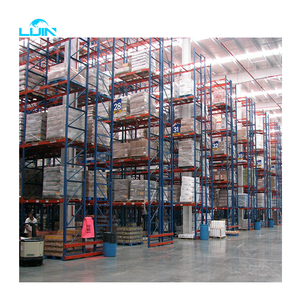
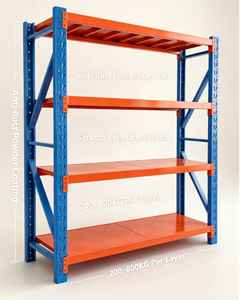
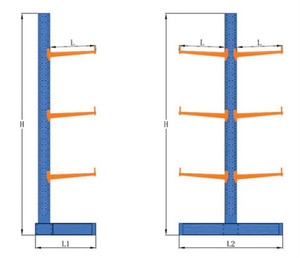
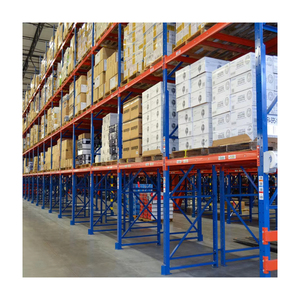
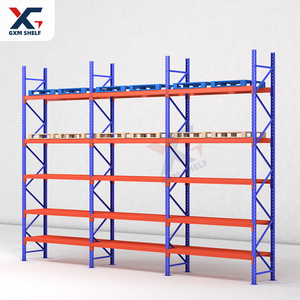
Evaluation Benchmark: Top 10 Global Pallet Storage Exporter Criteria
When evaluating high-volume warehouse storage manufacturers and wholesale exporters, enterprise buyers must look beyond basic per-ton steel pricing. A rigorous assessment of engineering capability, quality assurance, export logistics, and structural safety standards is mandatory.
1. High-Grade Steel Certification
Tier-1 exporters use structural grade Q235B and Q355B cold-rolled steel with certified tensile strength. Structural stability requires rigid structural profiles capable of resisting heavy forklift impact.
2. Seismic & Structural Safety
Compliance with regional seismic building codes (such as AGIES NSE guidelines in Latin America or ANSI/MH16.1 in North America) ensures upright frames and beam connectors withstand seismic acceleration without structural collapse.
3. Surface Finishing & Coating
Electrostatic thermosetting powder coating (60-80 microns thickness) with pre-treatment zinc phosphating guarantees long-term protection against humidity, oxidation, and coastal tropical atmospheric corrosion.
System Selector: Pallet Racking Structural Comparison
| Storage System Type | Pallet Density | Selectivity Rate | Max Load Capacity | Optimal Application |
|---|---|---|---|---|
| Selective Pallet Rack | Standard (60%) | 100% Direct Access | Up to 4,500 kg / level | High SKU diversity, FMCG, Retail Fulfillment |
| Structural Bolt Racking | High (75%) | 100% Direct Access | Up to 6,000 kg / level | Heavy manufacturing, High seismic zones, Rough handling |
| Drive-In / Drive-Thru | Ultra-High (85%) | LIFO / FIFO Bulk | Up to 2,000 kg / position | Cold storage, Beverage bottling, Uniform seasonal goods |
| Push-Back Racking | High (75%) | LIFO (2-6 pallets deep) | Up to 1,500 kg / cart | Medium SKU counts, Staging areas, High-density cold stores |
| Heavy Duty Cantilever | Variable | 100% Linear Access | Up to 10,000 kg / column | Steel pipes, Lumber, Structural profiles, Sheet metal |
Industry 4.0 Transformation
Next-Generation Development Trends in Pallet Storage
As industrial warehousing transitions toward automation and carbon-neutral operations, warehouse racking engineering is undergoing a technological renaissance. Leading exporters are innovating across four critical technical dimensions:
Automation-Integrated Racking (AS/RS & Radio Shuttles)
Traditional static storage is rapidly integrating with Automated Storage and Retrieval Systems (AS/RS) and automated radio shuttle channels. Ultra-precise tolerances (millimetric beam deflection limits) allow high-speed autonomous cranes and AGVs to operate flawlessly at vertical heights exceeding 30 meters.
Advanced Structural High-Yield Alloys
By utilizing micro-alloyed, high-tensile cold-rolled steel, modern rack manufacturers achieve identical structural safety factors while reducing overall frame self-weight by up to 14%. This engineering advancement lowers international container shipping costs and reduces raw material carbon footprints.
Modular Seismic Energy Dissipation Systems
Innovative baseplate design incorporating elastomeric damping pads and articulated anchor bolts allows racking structures to absorb horizontal seismic shear waves. This design prevents beam dislodgement during magnitude 7.0+ earthquake events in active seismic belts.
Eco-Conscious Powder Coating & Circular Lifecycles
Enterprise buyers increasingly demand volatile organic compound (VOC)-free thermosetting powder coatings and heavy-metal-free pre-treatment washes. Furthermore, structural modularity now allows standard racking frames to be easily reconfigured, expanded, or recycled in secondary supply chain markets.
Global Sourcing & Procurement Trends for Enterprise Buyers
Navigating international supply chain dynamics requires a strategic approach to capital expenditure (CapEx), freight optimization, and equipment longevity. Global warehouse operators are adopting structured procurement paradigms to maximize Return on Investment (ROI):
Total Cost of Ownership (TCO) & Freight Optimization
Smart procurement focuses on container cubing efficiency. Factory-direct exporters who pre-bundle upright frames, nest step beams, and supply knockdown (KD) bolted uprights maximize ocean container space (40ft HQ), lowering per-pallet-position freight expense by up to 22%.
Hybrid Sourcing: New Custom Steel & Certified Used Racks
For rapid expansion projects with tight capital constraints, mixing new custom-fabricated structural components with rigorous, factory-inspected pre-owned racking provides immediate inventory expansion while reducing overall facility setup budgets by 30-40%.
International Customs & Regulatory Compliance
Smooth cross-border clearance (e.g., DUCA paperwork in Central America, CAFTA-DR preferential tariffs, and HS Code 7308.90 categorization) depends on your exporter providing accurate mill test certificates, structural CAD stamps, and detailed export packing lists.
Why Partner With Us
Full-Service Manufacturing, Design & Export Authority
Operating over 530,000 square feet of state-of-the-art manufacturing and warehousing space, our organization serves as a single-source exporter and structural consultant for global distribution operations.
End-to-End CAD Layout Engineering
Our certified structural engineers provide complimentary 2D/3D CAD warehouse layout designs optimized for forklift turning radii, clear building height, sprinkler clearance, and maximum pallet density.
Custom Fabrication & OEM Sizing
Whether your logistics facility requires standard teardrop frames, heavy-duty structural C-channel beams, or custom cantilever arms for long profiles, our automated robotic welding lines ensure exact dimensional accuracy.
Global Door-to-Port Export Logistics
We coordinate full container loading (FCL), sea freight customs documentation, bay-by-bay labeling, and export-compliant wooden crate packaging for smooth transport to any global destination port.
Buyer Knowledge Base
Warehouse Pallet Racking Procurement FAQ
Expert answers to common engineering, regulatory, and purchasing questions faced by warehouse managers and logistics directors.
Q How do I determine the correct frame depth and beam length for my pallets?
Frame depth is calculated based on pallet length minus 6 inches (150 mm) to allow a safe 3-inch (75 mm) overhang at both front and rear. For standard 48" D x 40" W US pallets or 1,200 mm x 1,000 mm ISO pallets, a 42-inch (1,067 mm) deep upright frame is standard. Beam length is determined by adding the width of stored pallets plus a minimum 3-to-4 inch side clearance between pallets and frame uprights to prevent forklift impacts.
Q What is the difference between Roll-Formed teardrop rack and Structural steel rack?
Roll-formed teardrop racking is manufactured from gauge sheet steel with rivet-lock connectors, offering fast tool-free assembly and lower initial capital cost. Structural steel racking is manufactured from hot-rolled C-channel steel with heavy bolted connections. Structural racking provides superior resistance to severe forklift impacts, higher load capacities, and is recommended for cold storage, high-seismic zones, and heavy industrial use.
Q Are exported pallet racks compliant with international seismic safety standards?
Yes. Premium exporters design structural systems compliant with RMI (ANSI MH16.1), FEM 10.2.02, and regional codes such as AGIES NSE in Latin America. Seismic-ready configurations feature oversized footplates, dual floor anchors per post, heavy-duty horizontal bracing, and certified steel yield strength certificates validated by structural engineers.
Q Why should wire mesh decking be used on pallet rack beam levels?
Wire mesh decking fits into step beams to create a solid, open-grid platform. It prevents undersized or damaged pallets from falling through beam levels, supports hand-stacked cartons, increases overhead sprinkler water penetration for fire compliance, and significantly improves overall workplace safety.
Q What technical information is required to get an accurate racking quote?
To receive an engineered quote and layout, submit: (1) Warehouse floor plan drawing with ceiling clear height, column locations, and door positions; (2) Pallet dimensions (L x W x H) including goods; (3) Maximum weight per loaded pallet; (4) Forklift model, maximum lift height, and minimum aisle turning radius requirement; (5) Delivery location or destination port.
Q Can custom colors or special protective finishes be manufactured for harsh environments?
Absolutely. Advanced powder coating lines apply customized RAL color schemes for corporate branding or safety zoning. For high-humidity environments, outdoor agricultural storage, or sub-zero food processing freezers, hot-dip galvanizing (HDG) or zinc-rich powder pre-coatings are applied to prevent rust and surface corrosion.
Accelerate Your Warehouse Capacity & Storage Efficiency
Connect directly with our senior structural engineers and global export sales teams. Receive CAD layout designs, structural load calculations, and competitive factory-direct pricing for your warehouse expansion project.