Wholesale Factory-Direct Industrial Storage Racks
Explore our flagship heavy-duty storage racking systems, engineered for maximum load efficiency, safety compliance, and robust spatial optimization across global warehousing operations.
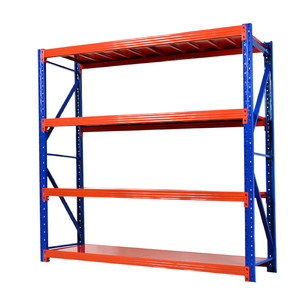
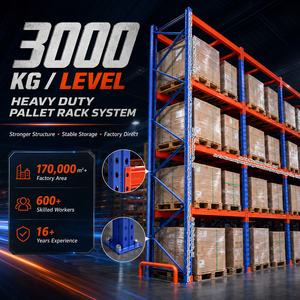
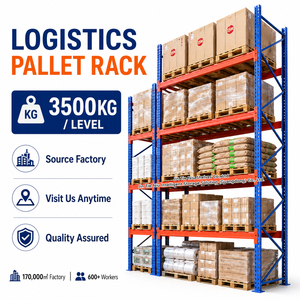
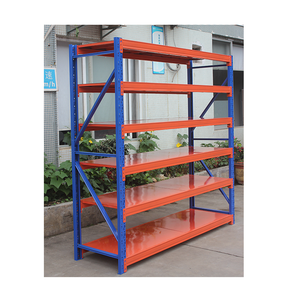
Executive Overview: The Strategic Imperative of Partnering with Leading Chinese Industrial Storage Rack Wholesalers
In modern global logistics and high-density material handling, procurement teams face unprecedented pressure to balance structural safety, volumetric storage efficiency, and capital expenditure optimization. As supply chains transition toward rapid throughput, automated material handling, and stringent regional building codes (such as AGIES NSE in seismic zones or FEM/RMI structural standards), selecting a qualified China industrial storage racks wholesaler is no longer merely a transactional purchasing decision—it is a critical structural engineering partnership.
China's industrial racking manufacturing ecosystem leads global output, driven by advanced steel metallurgical processing, fully automated roll-forming production lines, and economies of scale. However, navigating the wholesale landscape requires deep technical insight into steel grades (e.g., Q235B vs. Q355B cold-rolled structural steel), structural deflection limits, seismic anchorage engineering, and surface treatment resilience against aggressive coastal or humid microclimates.
With an engineering heritage dating back to 1989 and a state-of-the-art manufacturing footprint spanning over 530,000 square feet, our enterprise serves as a benchmark source factory. We bridge the gap between heavy industrial manufacturing precision and global enterprise logistics requirements, supplying custom-engineered pallet racking, push-back dynamic systems, cantilever frames, and stackable manuracks directly to international procurement directors, 3PL providers, and industrial facility developers.
Comprehensive Industrial Storage Racks Structural & Technical Matrix
To evaluate structural racking systems for your warehouse layout, review the comparative technical matrix below. This data framework matches load profiles, volumetric efficiency, and operational mechanics against industrial application requirements.
| Racking System Type | Primary Steel Grade | Load Capacity (Per Level) | Storage Density | Access Selectivity | Primary Industrial Application |
|---|---|---|---|---|---|
| Selective Pallet Racking | Q235B / Q355B Cold Rolled | 1,000 kg – 3,500 kg | Standard (40-50%) | 100% Direct Access | FMCG Distribution, Retail Warehouses, General 3PL Logistics |
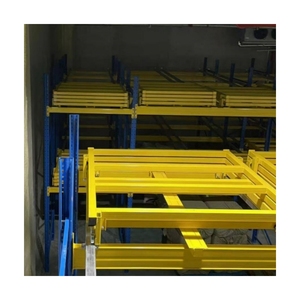
| Push Back Pallet Racking | Structural Steel Channel | 1,500 kg – 3,000 kg | High (LIFO 2-6 Deep) | Filtered by Lane | Cold Storage, Food & Beverage Depots, High-Value Batch Goods |
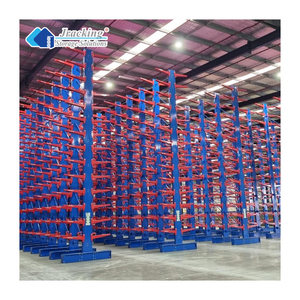
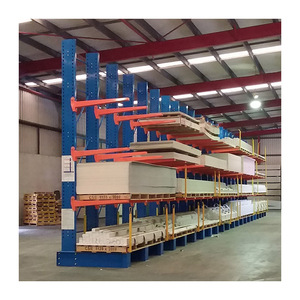
| Heavy-Duty Cantilever Racks | Hot-Rolled H-Beam / Structural | 500 kg – 5,000 kg / Arm | High for Long Loads | 100% Direct Column Access | Aluminum Profiles, Steel Pipes, Timber & Construction Materials |
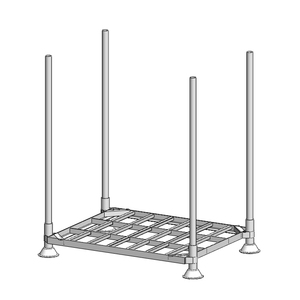
| Stackable Steel Post Pallets (Manuracks) | Q235 Heavy Wall Tubing | 1,000 kg – 2,000 kg | Flexible Vertical Stacking | Modular / Dynamic Layout | Fabric Rolls, Automotive Stampings, Seasonal Buffer Inventory |
| Drive-In / Drive-Thru Systems | Q235B Structural Uprights | 1,000 kg – 2,500 kg | Ultra-High (75-85%) | LIFO / FIFO Bulk Lane | Raw Material Bulk Storage, Agricultural Grain & Sugar Depots |
Engineering Insights & Technical Standards (Information Gain Analysis)
Procuring wholesale industrial storage racks directly from Chinese manufacturers demands rigorous verification of structural load dynamics. Cheap structural racking often suffers from unverified steel thickness, poor beam end-connector welds, and insufficient lateral stability. Below are the key engineering metrics our structural engineers evaluate during manufacturing:
1. Deflection Limits and Structural Safety Coefficients
According to ANSI/MH16.1 (RMI standards) and European FEM 10.2.02 regulations, horizontal pallet rack beams must adhere to a maximum allowable vertical deflection calculation of:
Deflection (\delta) \le \frac{L}{180}
where L represents the clear span beam length between upright columns. Furthermore, all structural components are engineered with a minimum ultimate yield safety factor of 1.5 to 1.95, ensuring structural stability under dynamic forklift impact, asymmetrical pallet loading, and localized seismic tremors.
2. Advanced Surface Treatment & Corrosion Resistance
Industrial storage systems operating in tropical port regions, high-humidity processing facilities, or sub-zero cold storage environments require specialized surface passivation. Our manufacturing process incorporates an automated 7-stage pre-treatment wash (degreasing, phosphating, micro-etching) followed by electrostatically applied thermosetting epoxy-polyester powder coating (60–90 μm thickness). This surface barrier survives over 500 hours of continuous salt spray testing under ASTM B117 standards without blistering or sub-film corrosion.
3. Seismic Baseplate & Anchor Engineering
For installations in active seismic zones (such as Central America or the Pacific Rim), standard roll-formed baseplates are replaced with heavy-gauge structural baseplates equipped with dual expanding wedge anchors. Lateral diagonal bracing profiles are reinforced using gusset plates to transfer horizontal shear forces directly into the concrete floor slab, preventing catastrophic racking rack collapse during seismic disturbances.
Enterprise Manufacturing Strengths & Direct Wholesale Advantages
As a leading Chinese industrial storage racking wholesaler, our integrated operational structure provides global buyers with distinct competitive advantages over typical trading intermediaries.
530,000+ Sq. Ft. Source Facility
Our expansive manufacturing footprint houses automated CNC roll-forming lines, robotic continuous welding cells, and dynamic powder coating systems, enabling continuous production capacity exceeding 5,000 tons per month.
Seismic & Structural Compliance
All customized warehouse layout CAD plans are vetted against international building standards, including AGIES NSE guidelines, FEM 10.2.02, and ANSI MH16.1, safeguarding facility operators against liability and structural failures.
Hybrid New & Reconditioned Solutions
We offer global enterprise clients a flexible supply mix—combining certified factory-new heavy-duty structural steel racking with systematically inspected, high-grade reconditioned components to dramatically lower total capital expenditure.
Turnkey CAD & Layout Engineering
Submit your building dimensions, clear stack height, and forklift turning radius specifications; our engineering department generates complete 3D layout drawings and structural calculation reports free of charge within 48 hours.
Optimized Ocean Freight Packing
Steel profiles are bundled with high-tensile steel banding, wrapped in protective moisture barrier film, and stacked on customized steel skids to maximize container cube utilization (40ft HQ) while preventing transit scuffing.
Custom OEM/ODM Steel Fabrication
From special post pallet sizes for textile rolls to heavy H-beam cantilever arms engineered for non-standard aluminum extrusions, our OEM division customizes hole pitches, gauge thicknesses, and system colors.
Future Global Procurement Trends in Industrial Storage Racking (2025–2030)
Procurement directors and supply chain strategists must look beyond immediate equipment pricing to align infrastructure investments with broader industry trends. The global industrial storage market is undergoing rapid technological and structural evolution driven by four key macro dynamics:
1. Rapid Convergence of Static Racking with Automated Shuttle Systems (ASRS)
Standard static selective racking is increasingly being retrofitted or initially designed with high-density automated shuttle channels. Future-proof procurement requires selecting racking uprights engineered with tight dimensional tolerances (±0.5 mm) to support radio shuttle rails, automated guided vehicles (AGVs), and stacker cranes without structural deflection jamming the automation sensors.
2. Supply Chain Decarbonization and Low-Carbon "Green Steel" Sourcing
Multinational corporations adhering to Scope 3 carbon reduction mandates are scrutinizing the embodied carbon footprint of steel infrastructure. Chinese storage rack manufacturers are transitioning toward electric arc furnace (EAF) recycled steel billets and green hydrogen-reduced iron. Procurement contracts will increasingly require Environmental Product Declarations (EPDs) certifying low carbon intensity per metric ton of rack installed.
3. Modular Modularization & Asset Circularity
Dynamic market demand cycles require flexible warehouse layouts. Fixed welded racking is rapidly giving way to modular teardrop or keyhole adjustable bolted structures. Facilities are adopting circular procurement models—purchasing high-durability core upright frames while leasing or reconfiguring beams, post pallets, and wire mesh decks to accommodate fluctuating SKU profiles.
Product Innovation & Technological Development Trends
Wholesale industrial racking design is undergoing constant refinement to improve worker safety, operational longevity, and spatial efficiency. Key technological innovations emerging from Chinese manufacturing R&D centers include:
- Smart IoT Structural Health Monitoring: Integration of fiber-optic strain gauges and wireless micro-impact sensors into critical rack columns. These sensors stream real-time deflection and impact data to warehouse management systems (WMS), alerting safety managers immediately if a forklift strike compromises structural integrity.
- High-Yield Cold-Rolled Sectional Geometries: Transitioning from traditional 3-fold profile posts to complex 11-fold and 13-fold cold-rolled upright columns. These multi-faceted geometric folds distribute axial compression forces more efficiently, allowing thinner steel gauges to deliver higher load-bearing capacities while reducing overall steel shipping weight.
- Self-Locking Safety Connector Hooks: Next-generation beam end connectors featuring automatic spring-activated safety locks. Unlike traditional loose drop-pins that can be lost or omitted during rapid installation, integrated automatic locks snap into place upon beam seating, preventing accidental forklift dislodgement.
- Anti-Bacterial & Cold-Chain Specialized Coatings: Advanced powder coatings embedded with silver-ion antimicrobial agents for pharmaceutical and cleanroom food cold storage environments, preventing mold growth and micro-bacterial proliferation in zero-degree facilities.
Frequently Asked Questions: Wholesale Procurement & Technical Implementation
Our manufacturing facility produces both fully standardized international profiles and regional custom configurations. For the North American market, we manufacture true 2-inch pitch teardrop pattern uprights compatible with all major US brand components. For European and Latin American markets, we manufacture 50mm and 75mm pitch bolted systems engineered to support standard EUR-pallets (800x1200mm) and ISO metric pallets (1000x1200mm) with optimal front and rear overhang safety clearances.
To provide an accurate engineering proposal, our design team requires: (1) Warehouse architectural floor plan indicating clear building height under trusses; (2) Pallet dimensions including payload height and total gross weight per pallet; (3) Forklift model, maximum lift height, and minimum aisle turning radius; (4) Local seismic acceleration parameters or geographical location; and (5) Desired ambient storage temperature (e.g., standard warehouse, humid coastal, or sub-zero freezer).
Steel industrial racking is heavy and volumetric. We utilize specialized 3D container packing software to engineer every shipment bundle. Upright frames are either shipped knock-down (KD) for assembly on-site—maximizing 40ft High Cube container payload capacity up to the 26–28 metric ton limit—or pre-assembled where installation speed takes priority. Beams are nested face-to-face with custom plastic separators to eliminate paint scratching and maximize freight efficiency.
Bolted upright frames offer significant strategic advantages for international buyers: (1) Freight cost reduction—KD bolted frames pack flat, taking up less than one-third of the shipping volume of welded frames; (2) Rapid localized maintenance—if a forklift damages a single lower diagonal brace or column post, that individual component can be unbolted and replaced without discarding the entire 10-meter frame; and (3) Superior dynamic stress dispersion under seismic vibration.
Yes. As a true source factory manufacturer, we offer full RAL color matching services (standard safety orange, cobalt blue, signal yellow, textured charcoal, and galvanized finishes). For regional racking distributors, equipment dealers, and system integrators, we provide custom OEM stamping, private-label branding, customized load capacity labels, and specialized carton packaging to support your local brand identity.
Conclusion & Strategic Procurement Action
Selecting the optimal China industrial storage racks wholesaler is a pivotal step in establishing a scalable, resilient, and cost-effective logistical infrastructure. By integrating high-grade Q235B/Q355B structural steel, rigorous FEM/RMI structural engineering calculations, advanced anti-corrosion powder coatings, and turnkey ocean freight logistics, our manufacturing enterprise empowers global businesses to maximize space utilization while safeguarding operational safety.
Whether you are outfitting a high-bay distribution center, upgrading a cold-storage warehouse, or expanding your regional equipment dealership inventory, our team delivers uncompromised manufacturing quality backed by over three decades of engineering authority. Contact our technical engineering division today to initiate your customized storage rack project.