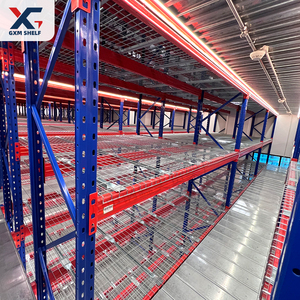
Heavy Duty Three-Dimensional Warehouse Storage Rack System
High-bay automated and manual selective racking designed for maximum spatial density and multi-tier structural integration.
High-yield, structural, and selective warehouse racking components manufactured to ISO 9001 and ANSI MH16.1 international engineering standards.
High-bay automated and manual selective racking designed for maximum spatial density and multi-tier structural integration.
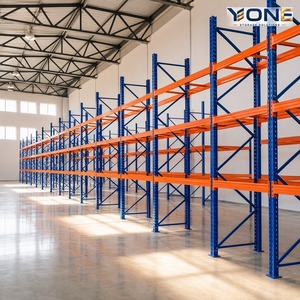
Cold-rolled structural Q235B steel racking engineered for 100% SKU selectivity and variable beam pitch adjustments.
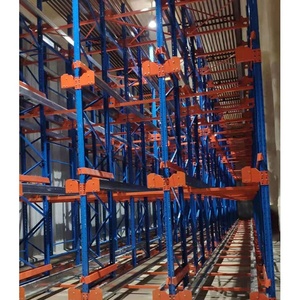
Semi-automated radio shuttle pallet systems designed for high-density FIFO/LIFO deep-lane cold storage and logistics hubs.
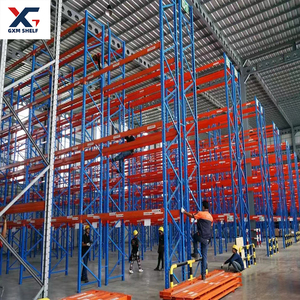
Interlocking boltless beam connection technology providing seamless assembly and robust structural stability per level.
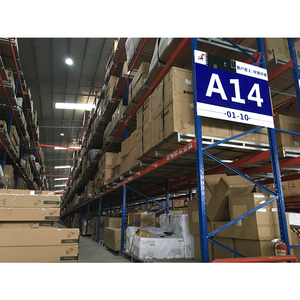
Optimized frame and beam profiles engineered to handle dynamic heavy loading in intense fulfillment operations.
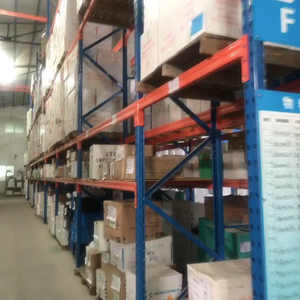
End-to-end engineered storage solution combining CAD layout planning, custom fabrication, and certified field installation.
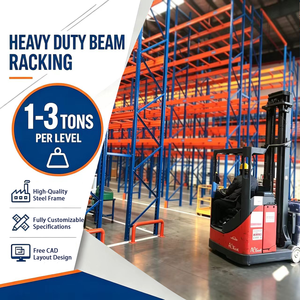
Tailor-made upright height and beam depth configurations optimized for non-standard unit loads and specialized materials.
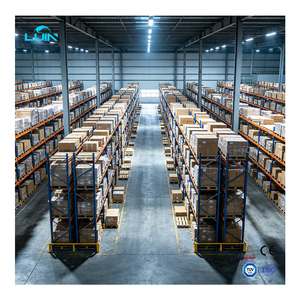
Maximizes volumetric storage efficiency and minimizes freight logistics costs for global industrial enterprise deployment.
Our manufacturing infrastructure combines advanced metallurgy, finite element structural testing, and automated robotic welding to guarantee long-term asset security.
We utilize certified cold-rolled and hot-rolled structural steel profiles that deliver up to 25% higher yield strength than standard commercial steel grades.
Calculated according to ANSI/RMI MH16.1 standards and AGIES NSE seismic guidelines, featuring heavy-duty baseplates and reinforced column protectors.
Surface pre-treated with multi-stage phosphate washing and finished with thermo-cured epoxy coating for superior scratch resistance and anti-corrosion protection in high-humidity climates.
Our in-house logistics engineering team provides precise 2D floor plans and 3D volumetric CAD rendering to maximize cubic space utilization and optimize forklift turning radii.
Direct container loading, custom bundle framing, and full export compliance documentation (DUCA, CAFTA-DR, CO) for smooth customs clearance worldwide.
The global industrial warehouse racking market is undergoing a seismic paradigm shift. Driven by supply chain volatility, nearshoring strategies, rapid e-commerce expansion, and the rise of automated material handling systems (AMHS), procurement officers can no longer evaluate industrial racking purely as static steel frames. Modern storage systems represent the structural bedrock of high-efficiency fulfillment ecosystems.
As enterprise operations strive for maximum spatial yield and lower Total Cost of Ownership (TCO), five macro trends are defining the future of industrial storage procurement:
| Evaluation Parameter | Cold-Rolled Selective Racking (Q235B) | Structural Steel Racking (Q355 / C-Channel) |
|---|---|---|
| Manufacturing Process | Roll-formed sheet steel with teardrop/slot connectors | Hot-rolled structural steel channels with bolted structural plates |
| Forklift Impact Resistance | Moderate (Requires external post guards/protectors) | Extreme (Highly resistant to severe forklift impact) |
| Load Capacity Per Level | Up to 1,000 kg – 3,000 kg (Standard heavy duty) | Up to 5,000+ kg (Ultra heavy duty industrial) |
| Seismic Seismic Compliance | Standard RMI seismic design zones 1–3 | High seismic zone performance (Zone 4 / High risk) |
| Optimal Application | General logistics, FMCG, retail distribution, e-commerce | Heavy industrial, food processing, freezer/cold storage, high-impact yards |
To deliver measurable Information Gain and operational advantage, warehouse rack engineering has evolved far beyond passive storage. Modern engineering integrates metallurgical innovation with intelligent monitoring platforms to protect multi-million-dollar inventory assets.
High-density drive-in racking is rapidly being superseded by automated Pallet Shuttle Systems. By placing self-propelled battery-powered shuttle cars on specialized racking rails, operators eliminate the need for forklifts to drive inside the rack structure. This innovation reduces structural rack damage by over 80% while accelerating pallet load and retrieval speeds by up to 50% compared to traditional drive-in layouts.
Leading industrial racking suppliers leverage computer-aided Finite Element Analysis (FEA) to simulate complex stress vectors, torsional moments, and seismic ground accelerations. Through FEA, steel thickness can be strategically optimized—reinforcing critical stress points on upright posts while minimizing unnecessary material weight, ensuring an optimal balance of structural strength and cost-efficiency.
Next-generation smart racking setups integrate strain-gauge sensors and IoT microcontrollers directly into critical upright columns. These sensors continuously monitor structural deflection, column tilt, and localized overload events, transmitting real-time alerts to facility management systems before structural failure occurs.
For sub-zero cold-chain environments (-30°C) and agro-chemical storage facilities, conventional coatings can degrade. Modern industrial racking utilizes continuous hot-dip galvanization (HDG) or zinc-rich primer pre-treatments, creating a sacrificial protective barrier that prevents moisture ingress, rust formation, and chemical oxidation for over 25 years of continuous operational service.
Critical engineering, safety, and sourcing answers for logistics directors, plant managers, and structural engineers.
To design an engineered, code-compliant storage rack layout, our structural team requires five essential operational data points:
1. Building CAD layout or dimensions showing clear ceiling height, column locations, utility drops, and slab thickness.
2. Pallet dimensions & profile (Width × Depth × Height, including cargo overhang).
3. Maximum unit load weight per pallet level.
4. Forklift specification (Type, turning radius, minimum right-angle stack aisle width, and maximum reach height).
5. Environmental / Facility conditions (Ambient, cold storage, humidity, outdoor exposure, and seismic location classification).
Beam capacities are calculated based on evenly distributed loads (UDL) in full accordance with RMI (Rack Manufacturers Institute) and ANSI MH16.1 specifications. The maximum allowable vertical beam deflection must not exceed L/180 (Beam length divided by 180). For example, a standard 96-inch (2,438 mm) step beam has a maximum deflection limit of 0.53 inches (13.5 mm) under full design loading.
Yes, provided the structural frame is specifically designed for the site's ground acceleration factors. Seismic-ready cold-rolled racking incorporates oversized baseplates, dynamic row spacers, structural floor anchors (such as wedge or concrete screw anchors), and heavy-duty diagonal frame bracing. For severe seismic zones (e.g., fault-line regions), heavy structural C-channel steel racking is recommended for maximum energy absorption.
A standard 42-inch (1,067 mm) deep upright frame is globally recognized as the optimal depth for both standard US pallets (48" W × 40" D) and standard metric / EURO pallets (1,000 mm × 1,200 mm). This depth provides a safe 3-inch (75 mm) front and rear pallet overhang over the step beams, allowing for proper beam seating and easy forklift placement.
Wire mesh decking offers four distinct advantages:
1. Fire Safety Compliance: Allows overhead sprinkler water to pass through rack levels in accordance with NFPA 13 standards.
2. Debris & Dust Accumulation Prevention: Open mesh design eliminates dust build-up, maintaining clean warehouse conditions.
3. Illumination Penetration: Improves overhead lighting visibility for forklift drivers down lower bay levels.
4. Versatility: Supports undersized or damaged pallets without sacrificing structural load integrity.
Yes. Our engineering shop fabricates custom teardrop, slotted, structural bolted, and structural hook connectors compatible with major global rack profiles. We match original beam profiles, slot pitches, and gauge thicknesses to ensure full structural cohesion and load compliance when expanding existing systems.
Partner with a trusted global industrial racking supplier. Contact our engineering team for custom CAD layouts, seismic load analysis, and competitive factory-direct pricing.
Send an Inquiry