Enterprise Product Portfolio
Industrial Warehouse Storage & Racking Systems
Explore our certified heavy-duty pallet racking systems, precision-engineered structural frames, and customizable industrial storage solutions tailored for high-density distribution centers worldwide.
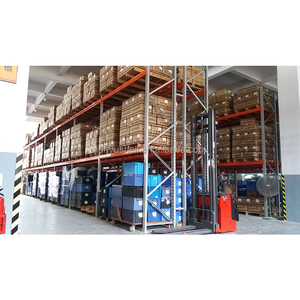
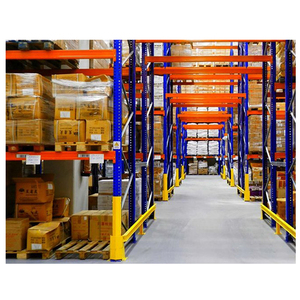
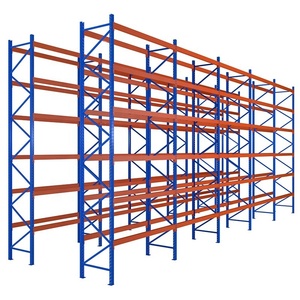
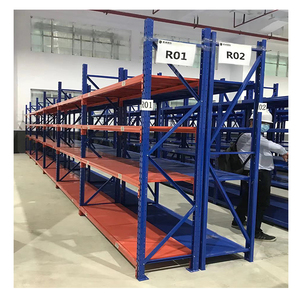
1989
Established Engineering Track Record
100,000+
Step Beams & Profiles in Stock
15,000+
Seismic Upright Frames Ready
530,000
Sq Ft Manufacturing Footprint
Industry Whitepaper & Technical Overview
Engineering Principles of Modern Pallet Rack Systems: Optimization, Structural Safety & Supply Chain Integration
In the rapidly evolving landscape of global material handling, modern logistics facilities require sophisticated storage infrastructure capable of handling extreme structural stress, dynamic forklift impacts, and strict seismic load metrics. As a premier Pallet Rack Systems Supplier & Wholesalers operating since 1989, our engineering mandate centers on optimizing cube utilization while upholding stringent Rack Manufacturers Institute (RMI MH16.1) and FEM 10.2.02 design standards.
Selecting an industrial pallet storage framework requires evaluating structural steel yield strength, beam deflection formulas, column upright geometry, and warehouse flooring load capacities. Whether equipping high-bay cold storage facilities in humid coastal logistics ports or multi-tier distribution networks handling standard Euro (1,000 × 1,200 mm) and US GMA (48" × 40") pallets, engineering integrity dictates operational safety and long-term capital efficiency.
1. Cold-Rolled Roll-Formed Steel vs. Hot-Rolled Structural Racking
Warehouse procurement engineers primarily decide between cold-rolled roll-formed racking and hot-rolled structural C-channel steel racking. Understanding the mechanics of each material guarantees that facility managers select the appropriate racking architecture for their operational intensity:
Roll-Formed Teardrop Systems
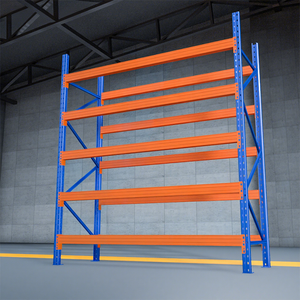
Utilizes high-tensile coil steel (Q235B to Q355B grades) rolled into teardrop profiles. Features boltless rivet connection beams, allowing effortless vertical beam adjustments in 2-inch increments. Ideal for retail, 3PL, consumer electronics, and fast-moving FMCG distribution hubs where rack reconfigurations occur frequently.
Structural C-Channel Racking
Fabricated from hot-rolled structural channel steel with heavy-duty bolted beam-to-frame connections. Offers superior resistance to forklift impacts, massive load capacities per beam level (exceeding 4,000 kg), and exceptional performance in freezer warehouses and rugged manufacturing environments.
Hybrid Storage Frameworks
Engineered solutions combining structural C-channel upright frames with roll-formed step beams. This strategic hybrid architecture maximizes impact protection in high-traffic forklift aisles while minimizing capital expenditure across upper rack storage elevations.
2. Seismic Engineering & Environmental Coating Technologies
Global installation sites require location-specific engineering validation. In seismically active regions (such as Central America and the Pacific Rim, regulated under local AGIES NSE guidelines and International Building Code IBC standards), rack design must incorporate enlarged seismic baseplates, heavy-duty floor anchor bolts, specialized K-bracing, and row spacers to absorb horizontal force shears.
Furthermore, protection against environmental degradation is vital. High-humidity tropical zones, agricultural export hubs (handling sugar, coffee, and produce), and sub-zero cold storage facilities demand specialized surface treatments:
- Thermosetting Powder Coating: Applied electrostatically at 60–80 microns thickness and cured at 200°C, providing robust abrasion resistance against fork-tine scrapes.
- Hot-Dip Galvanization (ISO 1461): Complete zinc-immersion treatment protecting structural steel internally and externally against severe oxidation in coastal, chemical, or high-condensation washdown applications.
Strategic Insights
Future Procurement Trends in Pallet Racking Architecture
As supply chains embrace Industry 4.0 automation, physical storage infrastructure must adapt to autonomous material handling, IoT tracking, and circular economic principles.
Automated Systems & AMR Integration
Traditional selective racks are transitioning toward high-density automated shuttle systems, AS/RS (Automated Storage and Retrieval Systems), and Autonomous Mobile Robot (AMR) compatibility. Modern beam profiles now feature high-precision tolerances to allow optical sensor navigation and robotic fork insertion.
Sustainable Steel & Lifecycle Circularity
Corporate ESG mandates are driving demand for green-certified structural steel produced via Electric Arc Furnaces (EAF) with recycled scrap content. Certified re-certification, frame refurbishment, and structural repurposing allow warehouse operations to significantly cut embodied carbon footprints.
IoT Structural Integrity Monitoring
Next-generation racking installations incorporate embedded strain-gauge sensors and IoT impact monitors along bottom aisle uprights. These smart nodes instantly alert facility safety managers to forklift collisions or overloading events, preventing catastrophic collapse risks.
Procurement Matrix
Pallet Rack System Selection & Capability Comparison
Use this comparative structural decision matrix to evaluate storage density, SKU selectivity, and application suitability prior to layout drafting.
| Racking System Type | Storage Density | SKU Selectivity | Primary Load Profile | Ideal Industry Application |
|---|---|---|---|---|
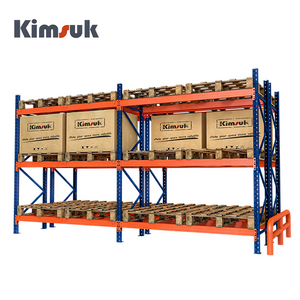
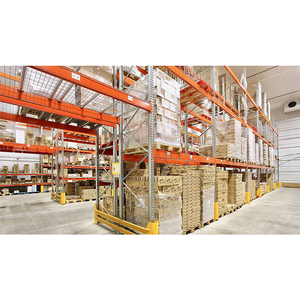
| Selective Pallet Racking | Moderate (30-40%) | 100% Direct Access | Mixed SKUs, Palletized Goods | 3PL, E-commerce, Retail Distribution |
| Structural Cantilever Racking | High (Linear) | 100% Open Horizontal | Long, Bulky, Irregular Goods | Lumber, Steel Beams, PVC Pipe, Tubing |
| Drive-In / Drive-Thru Racks | Maximum (75-85%) | Low (LIFO / FIFO Lanes) | Homogeneous High-Volume Items | Cold Storage, Beverage Depots, Sugar/Flour |
| Pushback Racking | High (50-60%) | Moderate (2-6 Deep) | Medium SKU Diversity | Food Processing, Bulk Packaging Plants |
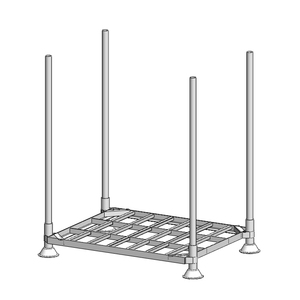
| Stackable Post Pallets / Manuracks | Flexible Vertical | Unit Load Modular | Rolls, Coils, Seasonal Stock | Textile Mills, Fabric Roll Warehouses, Tires |
| EU / US Heavy-Duty Selective | Optimized Core | 100% Direct Access | Heavy Standard Pallets | High-Bay Industrial Plants, Export Hubs |
Enterprise Wholesale Infrastructure
Why Logistics Leaders Partner with Our Wholesale Network
With a manufacturing footprint exceeding 530,000 square feet and an active inventory of over 100,000 pallet rack step beams and 15,000 upright frames, our organization serves as a premier single-source supplier for global engineering projects, warehouse integrators, and equipment dealers.
Factory-Direct Wholesale Pricing
By eliminating intermediary distributors, we pass significant raw material savings directly to warehouse developers and high-volume procurement contracts worldwide.
Turnkey Layout & CAD Engineering
Our structural engineering team provides custom AutoCAD facility layouts, verifying flue space, aisle dimensions, forklift turning radiuses, and seismic anchor points.
Global Ocean & Land Logistics
We coordinate containerized freight loading, ocean shipping, and custom export documentation (including DUCA, CAFTA-DR, and EU certifications) directly to destination ports.
Technical Knowledgebase
Frequently Asked Questions: Pallet Rack Systems
Expert answers to common engineering, procurement, and installation questions regarding heavy-duty industrial storage racks.
How do I determine the correct beam size and frame depth for my warehouse pallets?
To select frame depth, measure your pallet length and subtract 4 inches (100 mm) to allow a 2-inch (50 mm) front and rear overhang for safe forklift placement. For standard 48" deep US GMA pallets, a 42" deep frame is standard. For Euro 1,200 mm pallets, 1,000 mm frames are typical. Beam length depends on pallet width plus side clearances: two standard 40" wide pallets on a beam require a 96" (8-foot) beam length to ensure a 3" clearance between pallets and upright frames.
What design factors ensure pallet racking compliance in seismic zones?
Seismic racking design requires compliance with RMI MH16.1, IBC, and local building standards (such as AGIES NSE). Structural criteria include utilizing heavy-duty seismic baseplates with multiple anchor holes, increasing anchor bolt embedment depth, incorporating heavy-gauge horizontal and diagonal frame bracing, installing double-sided row spacers, and obtaining certified structural calculations approved by a licensed professional engineer.
What is the structural difference between step beams and box beams?
Step beams feature an L-shaped internal ledge (typically 1-5/8 inches) along the top inner edge designed to hold wire mesh decking, drop-in pallet support bars, or timber panels flush with the beam top. Box beams consist of two cold-formed C-sections welded together to create a smooth, closed rectangular tube, offering high torsional rigidity for heavy roll-formed or structural applications without secondary decking decks.
Can US teardrop components integrate with European standard selective racking?
While both systems serve identical storage purposes, structural connector geometry differs. US teardrop systems utilize punch-hole patterns compatible with standard teardrop beam rivets across North America. European standard systems frequently utilize 50 mm or 75 mm metric hook-and-slot configurations. For international expansions, our engineering team supplies custom transitional connector brackets or matched standard systems.
When should a warehouse choose structural steel racking over roll-formed steel?
Structural steel racking is highly recommended for facilities operating under severe environmental conditions, such as high-traffic freezer rooms, heavy manufacturing plants handling metal dies or raw lumber, outdoor storage yards, and earthquake-prone locations. Hot-rolled structural C-channels absorb heavy forklift impacts with minimal damage, drastically reducing ongoing repair costs and downtime.
What information is required to receive a turnkey pallet rack engineering quote?
To generate an engineered quote and layout, please provide: (1) Warehouse building floor plan with clear ceiling heights and column locations, (2) Pallet dimensions (Width x Depth x Height including cargo), (3) Maximum load weight per pallet, (4) Forklift truck specifications (maximum lift height, turning radius, and aisle width requirement), and (5) Facility geographic location for seismic load verification.
Optimize Your Warehouse Capacity & Safety Today
Contact our structural engineering team for customized warehouse layout planning, factory-direct wholesale pricing, and rapid container shipping schedules worldwide.