Featured Heavy-Duty Warehouse Storage Systems
Explore our factory-direct industrial racking inventory. Engineered with high-tensile Q235B and Q355B structural steel, our products deliver maximum load integrity, compliance with international safety standards, and optimal space utilization for high-bay logistics centers.
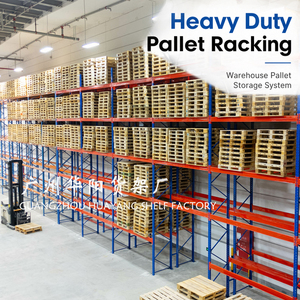
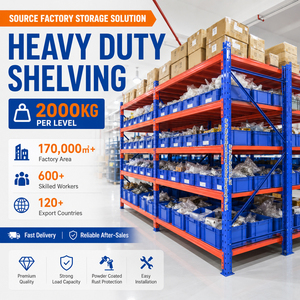
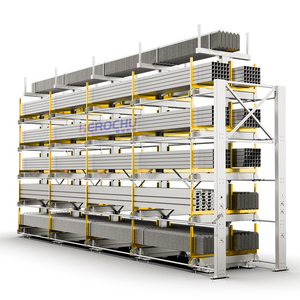
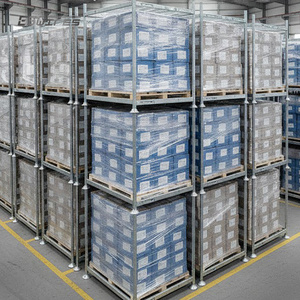

Engineering Excellence in Push Back Racking Systems
Push Back Pallet Racking represents the apex of high-density dynamic storage engineering. Operating on a Last-In, First-Out (LIFO) inventory control framework, push back systems utilize a series of nested, telescoping carts riding on inclined structural steel rails. When a pallet is loaded from the aisle face, it smoothly pushes the back-adjacent pallet deeper into the bay. Upon retrieval, gravity seamlessly glides the remaining pallets forward to the pick position, eliminating the need for forklifts to enter the racking matrix.
Mechanical Kinematics & Structural Dynamics
Our push back systems are fabricated using high-yield structural steel channels (Q235B and Q355B grades) configured on a precise pitch gradient—typically 3/8 inch per foot (approx. 3.5% slope). Precision-sealed heavy-duty steel bearings housed inside forged wheels ensure low-coefficient friction, permitting smooth cart motion even under extreme structural loads of up to 3,000 KG (6,600 lbs) per pallet position.
High-Density Storage System Benchmark Matrix
| Racking Technology | Storage Density | Pallet Access (LIFO/FIFO) | Forklift Risk Level | Selectivity Rate | Ideal Industry Application |
|---|---|---|---|---|---|
| Push Back Racking (2-6 Deep) | High (75-90%) | LIFO (per lane) | Ultra-Low (External) | Medium-High | Cold Storage, Food & Beverage, Pharma |
| Selective Pallet Racking | Low (40-50%) | 100% Selective | Medium | 100% (High SKUs) | E-Commerce, 3PL Fulfillment |
| Drive-In Racking | Very High (85-95%) | Strict LIFO | High (Internal Driving) | Low (Bulk SKUs) | Bulk Seasonal Grain, Commodity Exporters |
| Pallet Flow (Gravity Flow) | Maximum (90-95%) | Strict FIFO | Ultra-Low (External) | Medium | Perishable Goods, High-Turnover Retail |
Why Partner With Our Manufacturing Infrastructure?
Established over three decades ago, our company has evolved from a localized structural fabricator into an internationally certified material handling equipment conglomerate. Operating from a state-of-the-art 530,000 square foot industrial complex, we combine automated robotic welding, automated powder-coating lines, and rigorous finite element analysis (FEA) to engineer world-class warehouse storage systems.
Structural Integrity & Quality Steel
We exclusively utilize certified prime cold-rolled coil and hot-rolled structural beam steel. Our upright frames undergo rigorous yield testing under dynamic load conditions to guarantee safety against accidental MHE strikes.
Seismic Compliance & Certification
Engineered for global deployment, our racking systems comply with RMI (Rack Manufacturers Institute), FEM 10.2.02, and AGIES NSE standards, ensuring absolute stability in severe seismic zones across North and Central America.
Turnkey CAD & Layout Engineering
Our in-house structural engineers offer complimentary warehouse spatial optimization plans. We simulate forklift aisle radius, clear stacking height, and fire-sprinkler clearances to unlock maximum cubic capacity.
Future Product Development Trends in Push Back Racking
As global logistics rapidly shifts toward automated warehousing, high-density push back technology is undergoing unprecedented technological evolution. The integration of digital tracking, advanced metallurgy, and robotic handling is transforming traditional mechanical racking into intelligent material handling assets.
1. Autonomous Mobile Robot (AMR) & AGV Hybrid Interfacing
Next-generation push back systems are moving beyond standard forklift operation. Modern cart profiles are engineered with optical reflectors and laser-guided alignment stops, permitting Autonomous Mobile Robots (AMRs) and Automated Guided Vehicles (AGVs) to execute high-speed pallet pushing and staging without human intervention. This hybrid approach delivers the cost-efficiency of push back racking paired with the operational speed of full automation.
2. Sensorized Smart Carts & Embedded IoT Telemetry
Industry 4.0 has introduced IoT-enabled dynamic load monitoring directly into push back nested carts. Wireless load cells and optical proximity sensors embedded within the wheel tracks transmit real-time telemetry to Warehouse Management Systems (WMS). Facility operators can remotely verify lane occupancy, detect stuck or misaligned pallets, and instantly audit live inventory weight without manual cycle counting.
3. Low-Profile Telescoping Cart Design for Maximum Vertical Cube
Traditional multi-lane push back carts consume valuable vertical space due to stacked nesting height. Advanced metallurgy—specifically ultra-high-strength micro-alloyed steel—enables ultra-thin, low-profile cart frames that save up to 4 inches per vertical bay. Over a 6-tier high-bay facility, this engineering breakthrough allows for an entire additional tier of storage within the same clear height building envelope.
Global Procurement & Strategic Sourcing Trends
Industrial procurement managers and enterprise supply chain directors are fundamentally changing how warehouse infrastructure is sourced, evaluated, and deployed. Navigating raw material volatility and strict ESG compliance targets requires an evolution in enterprise purchasing strategies.
Factory-Direct Wholesaling & Disintermediation
Enterprise buyers are rapidly shifting away from localized middleman distributors in favor of direct manufacturer-to-site procurement. Sourcing directly from verified OEM manufacturers reduces capital expenditure (CapEx) by 20% to 35%, unlocks custom beam engineering, and ensures direct access to mill test certificates (MTC).
Decarbonized Steel & Sustainable ESG Sourcing
Corporate sustainability mandates require lower scope 3 embedded carbon footprints. Future procurement tenders prioritize manufacturers utilizing Electric Arc Furnace (EAF) recycled steel production powered by renewable energy, alongside zero-VOC powder coating technologies that align with green building standards (LEED).
Modular Reconfigurability & Circular Lifecycles
Supply chain agility demands adaptable rack architecture. Modern procurement contracts stipulate universal teardrop compatibility and standardized boltless structural connections, allowing warehouse systems to be effortlessly dismantled, expanded, or relocated to match shifting SKU profiles.
Frequently Asked Technical & Procurement Questions
Answers to critical technical, structural, and logistics questions compiled by our senior storage engineering team.
What is the maximum depth available for Push Back Pallet Racking systems?
Standard push back systems are engineered from 2-deep up to 6-deep pallet configurations. A 6-deep system allows up to 6 pallets to be stored per lane on nested carts. For depths beyond 6 pallets, we recommend transitioning to automated Pallet Shuttle systems or dynamic Gravity Flow solutions to maintain ergonomic push force limits for standard forklifts.
What forklift push force is required to operate a heavy-duty push back lane?
Due to precision-machined steel wheels and low-friction sealed bearings, the force required to push back loaded carts is approximately 4% to 5% of the total accumulated load weight. For example, pushing four 1,000 KG pallets requires a modest forklift push resistance of only 160-200 KG, well within the rated hydraulic pushing power of standard counterbalanced and reach trucks.
Are push back racks suitable for cold storage and freezer applications?
Yes. Push back racking is extremely popular in cold storage and blast freezers operating down to -30°C (-22°F). High warehouse square-footage costs in refrigerated space make high-density storage critical. Our cold-storage push back systems utilize low-temperature synthetic greases, stainless steel cart wheels, and specialized impact-resistant structural powder coating to prevent freeze-binding.
How do push back racks accommodate non-standard or damaged pallets?
Nested push back carts act as solid structural trays underneath each pallet. Unlike selective racking where a damaged pallet wood runner can fall between beams, the push back cart supports the entire bottom surface of the pallet. This design minimizes product spills, accommodates variable GMA, Euro, or plastic pallets, and dramatically improves structural safety.
What structural maintenance is required for long-term operational safety?
Because forklifts remain in the outer aisle and never enter the rack structure, maintenance requirements are minimal. Semi-annual inspections should focus on verifying beam safety lock pins, cleaning debris or stretch-wrap out of the cart wheel tracks, inspecting base-plate floor anchors for seismic tightness, and checking cart alignment stops.
How does direct-factory shipping and customs handling work for international orders?
We provide complete factory-direct FOB, CIF, or DDP shipping services. Systems are securely bundled, labeled by bay numbers, and containerized for global maritime shipping to major ports (e.g., Puerto Quetzal, Manzanillo, Long Beach, Hamburg). Complete commercial invoices, packing lists, Mill Test Certificates, and Bill of Lading documentation are supplied for seamless customs clearance.
Transform Your Warehouse Floor Plan Today
Maximize your volumetric storage space, reduce operational bottlenecking, and secure competitive direct-from-manufacturer wholesale pricing. Contact our senior storage design team for a free CAD layout and comprehensive cost quote.
Get a Quote