Factory-Direct Heavy-Duty Racking Portfolio
Precision-engineered, heavy-duty industrial storage racks designed for maximum spatial optimization, strict structural compliance, and high ROI global deployment.
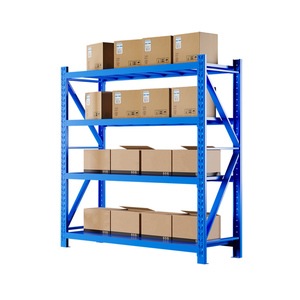
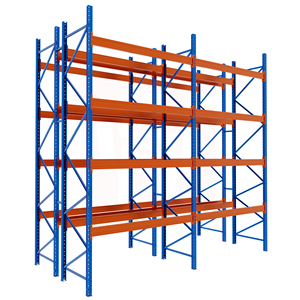
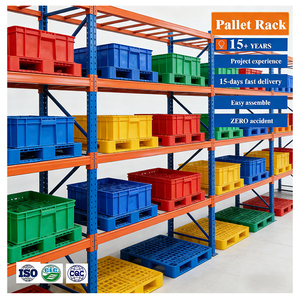
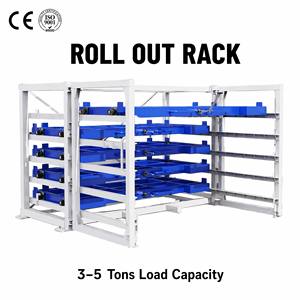
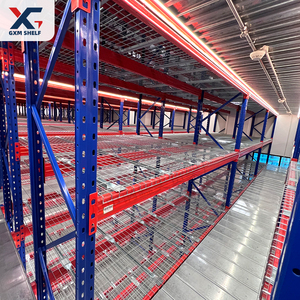
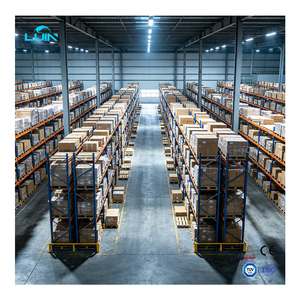
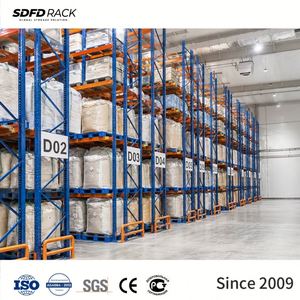
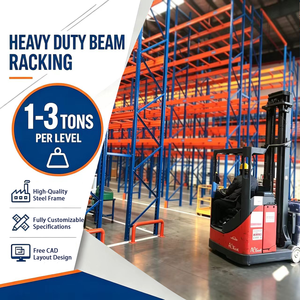
Global Scale, Uncompromised Structural Engineering
Founded in 1989, our enterprise has grown from a specialized 3,500 sq. ft. storage supplier into a global industrial racking power with over 530,000 sq. ft. of manufacturing and logistics infrastructure. As a premier exporter and wholesaler, we deliver end-to-end material handling solutions—ranging from selective teardrop pallet racks and heavy-duty cantilever systems to high-density drive-in racking and AS 4084-2023 compliant structural frameworks.
Engineering Excellence & Export Infrastructure
Why leading global enterprise logistics hubs, 3PL providers, and industrial distributors rely on our heavy-duty steel rack manufacturing.
High-Yield Cold-Rolled Q235B/Q355B Steel
We source certified structural steel with exceptional yield strengths. Advanced cold-roll forming ensures optimal strength-to-weight ratios and tight profile tolerances across high-bay installations.
Seismic Engineering & FEA Modeling
Our structural engineering team uses Finite Element Analysis (FEA) to verify stress distribution, frame buckling safety factors, and dynamic shear capacity in high seismic zones under full payload conditions.
Container Load Optimization
Export orders are engineered for maximum ocean shipping container cube utilization. Custom bundling, rack column alignment, and protective strapping prevent transit abrasion and minimize freight costs.
Hybrid New & Refurbished Supply
To optimize capital expenditure, we offer integrated supply strategies combining custom-manufactured new components with rigorously inspected, certified pre-owned racking inventory.
Corrosion Protection Coatings
Advanced electrostatic thermosetting powder coating and hot-dip galvanizing options deliver exceptional wear resistance, ideal for cold storage, tropical humidity, and open-air agro-industrial sheds.
Strict Standards Compliance
Fully compliant with international racking codes including RMI (ANSI MH16.1), FEM 10.2.02, AS 4084-2023, and regional seismic guidelines such as AGIES NSE in Central America.
Storage System Selection Matrix
Technical evaluation matrix comparing core industrial racking architecture based on density, selectivity, load profile, and optimal enterprise application.
| Racking Architecture | Storage Density | SKU Selectivity | Max Unit Payload | Optimal Handling Equipment | Best-Fit Industry Application |
|---|---|---|---|---|---|
| Selective Pallet Racks | Medium (30-40% Floor Space) | 100% Direct Access | Up to 3,500 kg / level | Standard Counterbalance, Reach Trucks | FMCG, Retail Distribution, General Warehousing |
| Structural Steel Racks | Medium to High | 100% Direct Access | Up to 4,500 kg / level | Heavy Counterbalance, Rough Terrain | Heavy Manufacturing, High-Seismic Sites, Cold Stores |
| Cantilever Racks | High for Linear Goods | 100% Linear Access | 1,000–5,000 kg / arm | Side-loaders, Multi-directional Forklifts | Lumber, Steel Pipes, Structural Profiles, Plastics |
| Drive-In / Drive-Thru | Very High (60-75%) | Low (FILO / FIFO Lanes) | Up to 2,000 kg / position | Narrow Reach Trucks, Counterbalance | Beverage Bottling, Cold Storage, Bulk Agro-Exports |
| Pushback / Radio Shuttle | Ultra-High (70-85%) | Medium (Lane Level) | Up to 1,500 kg / shuttle | Automated Shuttle Vehicles, Standard Lift | High-Throughput E-Commerce, Food Processing |
1. The Engineering & Technical Evolution of Industrial Storage Racking
In modern enterprise supply chains, warehouse storage racking is no longer viewed merely as passive steel shelving. It serves as an active structural infrastructure component engineered to maximize spatial efficiency, withstand dynamic impact forces, and ensure operational safety. The transition from light-gauge rolled profiles to heavy-duty high-yield cold-rolled structural steel (Q235B and Q355B grades) has revolutionized load-bearing capacities and seismic stability worldwide.
As global logistics hubs handle heavier palletized loads under rigorous throughput demands, structural rack design relies heavily on Finite Element Analysis (FEA) software. FEA modeling simulates flexural stress under maximum distributed loading, column buckling vulnerabilities, and torsional stiffness at beam-to-column connector locks. For procurement managers and facility engineers, selecting an established exporter and manufacturer with in-house structural engineering capabilities is paramount to guaranteeing structural longevity and regulatory compliance.
1.1 Cold-Rolled vs. Structural Steel Profiles
Understanding the mechanical distinctions between cold-rolled teardrop pallet racking and hot-rolled structural steel racking allows procurement directors to align structural specs with specific operational hazards:
- Cold-Rolled Teardrop Racking: Fabricated by roll-forming sheet steel at ambient temperatures into teardrop column shapes. Ideal for versatile commercial warehouses, consumer goods distribution, and standard pallet payloads (1,000 kg to 2,000 kg per beam level). Provides easy adjustment in 2-inch or 50mm increments.
- Hot-Rolled Structural Steel Racking: Manufactured from structural channel steel with thick web walls and heavy bolted beam connections. Highly resistant to repeated forklift abuse, aggressive ambient vibration, and severe lateral loads. Recommended for heavy industrial manufacturing, outdoor yard storage, and high-bay installations subject to strict seismic parameters.
2. Future Procurement Trends in Industrial Racking & Material Handling
The global industrial storage market is undergoing rapid transformation driven by labor shortages, urban land scarcity, nearshoring manufacturing shifts, and stringent corporate safety mandates. Strategic B2B buyers must anticipate several micro- and macro-economic trends when executing procurement contracts over the next decade.
2.1 Acceleration of Automated Storage & Retrieval Systems (AS/RS) Integration
As labor costs rise, warehouses are migrating toward high-bay automated racking systems reaching heights of 25 to 40 meters. These systems require extreme precision manufacturing tolerances—often within ±1.5 mm per upright frame—to accommodate automated stacker cranes and Pallet Shuttle vehicles. Future-proof rack procurement demands strict vertical plumbness standards and integration of guide rails, sensor brackets, and busbar power mounts.
2.2 The Rise of Nearshoring & Regional Distribution Hubs
To mitigate global ocean shipping disruptions, multinational corporations are shifting from centralized mega-warehouses to distributed regional fulfillment nodes across North America, Latin America, Europe, and Southeast Asia. Demand for modular, rapidly shippable, and easy-to-assemble selective pallet rack kits has escalated. Exporters who provide pre-engineered starter-and-adder configurations with standardized container bundling deliver a significant time-to-market advantage.
2.3 Life-Cycle Assessment (LCA) and Sustainable Steel Sourcing
Environmental, Social, and Governance (ESG) frameworks now influence industrial equipment acquisition. Leading facility managers demand environmental product declarations (EPDs) for steel rack systems. Sustainable procurement strategies favor closed-loop manufacturing, volatile organic compound (VOC)-free thermosetting powder coatings, and the integration of refurbished pre-owned racking alongside newly fabricated components to reduce lifetime carbon footprints.
3. Product Development & Engineering Innovations
To meet rising global safety standards, rack engineering focuses on structural resilience, modularity, and corrosion resistance. Key technological developments include:
3.1 Advanced Anti-Seismic Column Baseplates & Anchoring Systems
Seismic activity poses catastrophic risk to warehouse personnel and inventory integrity. Modern export racking incorporates engineered heavy-duty footplates with multi-hole anchor patterns designed to absorb dynamic shear energy during ground acceleration events. Compliance with regional codes—such as AGIES NSE in Central America, AS 4084-2023 in Australasia, and RMI ANSI MH16.1 in the United States—ensures that beam-column moment frames dissipate seismic shock forces safely.
3.2 Smart Collision Protection & Modular Guarding
Forklift impacts remain the leading cause of structural racking degradation. Innovative manufacturers are embedding high-impact polymer column guards, heavy-gauge steel aisle end protectors, and structural base anchors. Furthermore, smart IoT vibration sensors attached to key uprights can monitor structural stress spikes and alert maintenance teams in real-time if a safety-critical impact occurs.
3.3 Specialized Surface Treatments for Extreme Climates
Storage environments ranging from sub-zero cold storage facilities (-30°C) to coastal agro-industrial export sheds demand specialized surface protection. Epoxy-polyester powder coatings with micro-textured anti-abrasion additives, continuous pre-galvanized zinc steel sheeting, and post-welding hot-dip galvanizing prevent rust creep and mechanical paint flaking under severe thermal cycling and high humidity.
Frequently Asked Questions for Global Procurement
Expert engineering and commercial answers to address technical, regulatory, and logistics queries from logistics directors and site planning managers.
How do I accurately calculate beam load capacities for heavy pallet storage?
Beam load capacity calculations must account for uniformly distributed loads (UDL) across a pair of beams. The formula takes into account the total weight of the pallets per level, including packaging materials, multiplied by a minimum safety factor of 1.65 under ANSI/RMI MH16.1 or FEM 10.2.02 codes. Maximum allowable beam deflection is typically restricted to L/180 (length divided by 180). For heavy-duty applications requiring 3,000 kg per level, box beams with stepped profiles or heavy structural C-channel sections are specified alongside heavy-duty safety locking pins.
What international structural certifications should a trusted rack exporter possess?
A reputable export manufacturer should certify compliance with regional and global standards: RMI (Rack Manufacturers Institute / ANSI MH16.1) for North America, FEM 10.2.02 for European Union markets, AS 4084-2023 for Australia and New Zealand, and ISO 9001:2015 for quality management systems. Furthermore, raw steel test certificates (MTCs) verifying yield strength (e.g., Q235B, Q355B or structural grade steel) should accompany factory export shipments.
How does pallet racking compatibility work between US inch sizes and ISO metric pallets?
Global supply chains routinely handle both standard US 48" x 40" pallets and metric ISO pallets (e.g., 1,000 mm x 1,200 mm or Euro pallets 800 mm x 1,200 mm). A standard 42-inch (1,067 mm) deep upright frame is globally recognized as the ideal depth. It allows a safe 3-inch (75 mm) overhang at both front and back for 1,200 mm deep pallets, ensuring full support across both front and rear step beams while maintaining structural stability.
Why choose a hybrid model of new custom beams and pre-owned upright frames?
A hybrid procurement strategy combines pre-inspected, certified pre-owned upright frames with brand-new, custom-length step beams. Because structural steel frames experience negligible metallurgical wear when free from impact damage, pre-owned uprights deliver identical structural integrity at 30-50% reduced CAPEX. Pairing them with newly fabricated beams ensures exact beam lengths, custom load capacities, and fresh locking hardware tailored to your specific forklift aisle plan.
What are the sea freight logistics and packing protocols for international containerized shipping?
Export logistics require specialized wooden skidding, heavy steel banding, and plastic shrink-wrapping to eliminate movement inside ocean containers. Upright frames are nested efficiently to minimize cubic void space, while step beams are packed in bundle quantities tied with corner protectors. Complete commercial export documentation—including Packing Lists with bay-by-bay component coding, Certificates of Origin (e.g., DUCA, CAFTA-DR, RCEP), and Bills of Lading—is provided to streamline port customs processing.
How are racking systems engineered for high-seismic geographical locations?
High-seismic engineering incorporates structural steel components, larger seismic baseplates anchored with epoxy structural bolts, heavy-duty row spacers connecting back-to-back rack runs, and reinforced diagonal frame bracing. Structural engineers perform site-specific calculations factoring in ground acceleration parameters ($S_s, S_1$), soil classification, and total building height to verify dynamic frame stability against catastrophic shear collapse.
Transform Your Storage Infrastructure Today
Speak directly with our senior structural engineers and global export logistics specialists. Receive a free CAD warehouse layout design, structural payload calculation, and factory-direct price quotation.
Inquire Now