Featured Industrial Racking & Flow Systems
Explore our CE-certified structural and heavy-duty storage equipment engineered for optimal warehouse volume utilization, fast pallet turnover, and heavy load security.
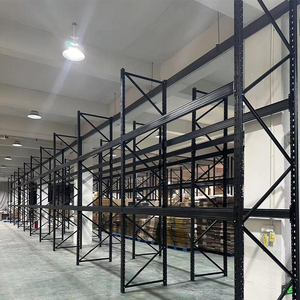
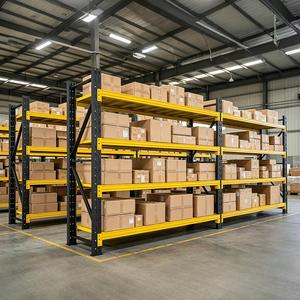
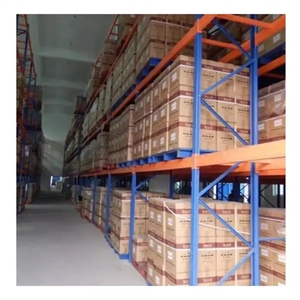
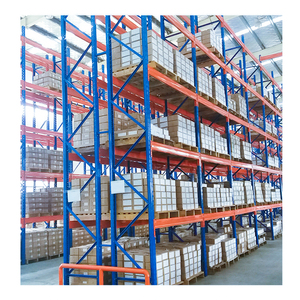
1. Technical Overview: CE Certified Flow Through Racking Architecture
In modern industrial logistics, optimizing warehouse space while guaranteeing rapid, error-free product rotation is a fundamental driver of profitability. As international supply chains face mounting pressures for rapid order fulfillment, standard static pallet racking systems often fail to maximize vertical clearance and footprint usage. Flow Through Racking Systems—commonly categorized as Pallet Flow Racks and Carton Live Flow Racks—represent the peak of dynamic high-density storage technology. Operating on a purely gravitational principle, flow through racking utilizes inclined wheel or roller tracks integrated into rigid structural steel frameworks. This design establishes an automated First-In, First-Out (FIFO) inventory control loop without requiring internal electrical automated guided vehicles (AGVs) or complex robotics inside the rack aisles.
When pallets or cartons are loaded from the dedicated loading aisle (the elevated rear entry point), gravity propels the load forward down a precisely engineered pitch gradient (typically calibrated between 2.5% and 3.5% incline). The load glides smoothly toward the unloading face at the front aisle. Speed-controller magnetic braking rollers integrated into the track beds maintain a controlled, safe terminal velocity (typically capped at 0.3 m/s), preventing runaway acceleration regardless of load mass variation. Upon reaching the discharge face, heavy-duty dynamic end-stops hold the lead pallet securely in place. Integrated pallet separators disengage the second pallet in line, relieving back-pressure so forklift operators can extract the front pallet safely without binding or drag.
For industrial wholesalers, exporters, and logistics managers operating in high-density commercial markets, acquiring CE-marked flow racking provides verifiable proof of material quality, structural load calculations, and safety factor compliance (safety factors exceeding 1.65 under design ultimate loads). By segregating forklift loading and picking operations into dedicated, non-overlapping aisles, flow through racking eliminates aisle congestion, boosts picking speeds by up to 45%, and reduces forklift fuel consumption and driver hazards dramatically.
2. Demand Drivers & Industrial Applications in the Totonicapán Market
Totonicapán, positioned strategically in the Western Highlands (Altiplano Occidental) of Guatemala, represents one of the nation's most active regions for commercial trade, regional wholesale distribution, artisanal manufacturing, and agricultural consolidation. Flanked by major transport arteries connecting Quetzaltenango (Xela), Huehuetenango, and the Central Highway corridor (CA-1 West), Totonicapán functions as a vital logistics node for goods moving throughout the department's eight municipalities—including San Cristóbal Totonicapán, Momostenango, and San Francisco El Alto.
The commercial topography of Totonicapán exhibits distinct operational requirements that make CE Certified Flow Through Racking an ideal technological match:
San Francisco El Alto Wholesale Hubs
As home to Central America’s largest open-air wholesale market, San Francisco El Alto generates immense volume movement in textiles, apparel, and hardware. Wholesalers operating regional distribution centers require high-density carton live flow racking to manage high-SKU inventory turnover and rapid order picking.
Textile & Artisan Manufacturing
Industrial textile mills in Momostenango and San Cristóbal Totonicapán process massive quantities of raw wool, synthetic yarn, finished garments, and traditional woven goods. Pallet flow racking allows manufacturers to store dense raw materials under strict FIFO rotation, preventing material degradation.
Agro-Industrial Produce Cold Storage
Totonicapán’s agricultural sector produces high volumes of potatoes, maize, vegetables, and fruit destined for domestic distribution and export. Pallet flow systems inside cold-storage rooms maximize thermal efficiency by packing up to 80% more pallets into expensive refrigerated volumes.
Operating in Totonicapán presents unique geographic and environmental considerations that imported structural systems must satisfy. Situated at high altitude (exceeding 2,400 meters above sea level), the department experiences sharp diurnal temperature swings and high ambient humidity during the rainy season. Furthermore, Totonicapán lies in a high seismic risk zone along the North American-Caribbean tectonic boundary. Consequently, static and dynamic storage systems must be designed to withstand severe lateral earth accelerations in compliance with Guatemala’s AGIES NSE (Normas de Seguridad Estructural) building regulations.
3. Structural & Engineering Specifications Matrix
To evaluate how CE Certified Flow Through Racking compares against traditional warehouse storage configurations used across Guatemalan logistics hubs, examine the comparative engineering data below:
| Racking System Type | Inventory Rotation | Floor Utilization | Picking Efficiency | Forklift Aisle Demand | AGIES Seismic Suitability |
|---|---|---|---|---|---|
| CE Flow Through (Pallet Flow) | Strict FIFO (First-In, First-Out) | 85% – 90% (Ultra High) | Very High (Dedicated Aisles) | 2 Aisles Only (Entry & Exit) | Excellent (Structural Bolted Frame) |
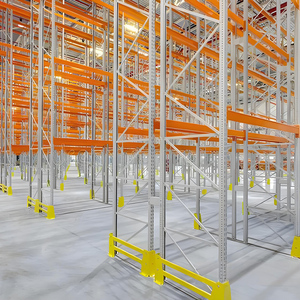
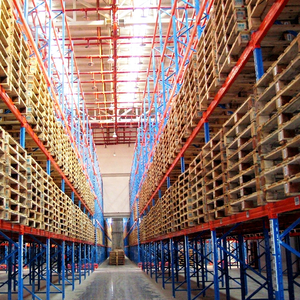
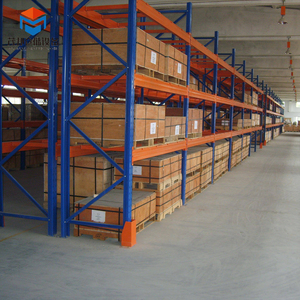
| Selective Pallet Racking | Random Access / LIFO or FIFO | 40% – 50% (Standard) | Moderate (Aisle Travel Time) | High (Aisle between every rack) | Good (Standard Base Plates) |
| Drive-In Racking | Strict LIFO (Last-In, First-Out) | 70% – 80% (High) | Low (Forklift enters rack) | 1 Main Access Aisle | Moderate (Requires top bracing) |
| Push-Back Racking | LIFO (Last-In, First-Out) | 75% – 80% (High) | Moderate-High | 1 Front Aisle Only | Good (Nested Cart System) |
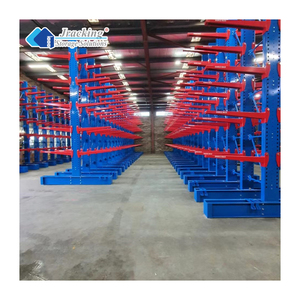
| Heavy Cantilever Racks | Direct Access (Long Goods) | 60% – 70% (Specialized) | High for Long Items | Standard Aisle Width | High (Heavy Column Sections) |
The technical parameters of our CE Certified Flow Through Racking systems exported to Totonicapán include:
- Structural Steel Grades: Hot-rolled structural steel profiles (S355JR / S235JR) or high-tensile cold-formed steel satisfying EN 10025 and ASTM A1011 standards.
- Track Roller Configurations: Polypropylene wheels on steel axles for standard loads; full-width galvanized steel rollers with precision ball bearings for loads exceeding 1,200 kg per pallet.
- Braking & Speed Control: Direct-drive and indirect magnetic braking rollers spaced at precise intervals (calculated based on lane length, weight range, and slope gradient).
- Surface Protection: Electrostatic thermosetting epoxy-polyester powder coating (70–90 microns thickness) or hot-dip galvanization (EN ISO 1461) for high-moisture/refrigerated environments.
- Pallet Size Versatility: Engineered to support standard US 48" x 40" pallets, GMA pallets, and European 1,200 mm x 1,000 mm / 1,200 mm x 800 mm wooden and plastic pallets.
4. Why Guatemala Industrial Racks S.A. is the Premier Supply Partner
Navigating complex warehouse modernizations in Guatemala requires more than ordering generic steel racks from an offshore broker. It demands a dedicated engineering partner with proven field experience, deep local regulatory knowledge, and complete factory support. Guatemala Industrial Racks S.A. (GT-Racks) brings over 35 years of specialized expertise in designing, manufacturing, exporting, and installing material handling infrastructure across Central America.
530,000 Sq Ft Manufacturing Strength
Backed by a massive 530,000 sq ft production and inventory facility holding over 100,000 beams and 15,000 upright frames, we execute large-scale rollouts without shipping bottlenecks or component shortages.
Rigorous CE & AGIES Compliance
Every flow rack module shipped to Totonicapán undergoes rigorous quality audits. Uprights feature oversized seismic footplates, heavy-duty floor anchors, and structural cross-bracing certified against seismic forces.
Hybrids: New & Inspected Equipment
To optimize capital investment for Totonicapán businesses, we provide unique hybrid project configurations—combining custom-fabricated new CE flow tracks with fully inspected, high-capacity structural uprights.
5. End-to-End Implementation & Logistics Framework
Exporting heavy warehouse machinery into Totonicapán requires smooth coordination across international shipping channels, customs clearance, land transportation, and on-site assembly. Guatemala Industrial Racks S.A. manages a seamless five-step implementation workflow:
Cadastral & Layout Engineering
Our design team analyzes your warehouse CAD floor plans, clear stack height, floor slab load limits (PSI/MPa), pallet specifications, and forklift turn-radius parameters to engineer an optimized lane flow layout.
Custom Fabrication & CE Quality Audit
Flow tracks, speed-control brake rollers, entry guides, and heavy-duty structural frames are manufactured under ISO 9001 and CE EN 1090 standards. Every lane configuration undergoes factory drop-testing.
Port Delivery & Customs Processing
Consolidated container shipments land at Puerto Quetzal (Pacific coast) or Santo Tomás de Castilla (Atlantic coast). All DUCA (Declaración Única Centroamericana) customs documentation is pre-processed for zero delay.
Highland Transit via CA-1 Corridor
Flatbed heavy haulers transport the pre-assembled rack components up the CA-1 Western Highway directly into Totonicapán, San Cristóbal, or San Francisco El Alto warehouse sites.
Anchoring, Testing & Sign-off
Structural installers anchor uprights with seismic expansion bolts into concrete slabs, calibrate track pitch, conduct live pallet drop testing, and deliver stamped capacity plaques.
Lifecycle Maintenance & Buyback
We provide annual structural inspection protocols, spare roller supplies, and asset buyback guarantees should your operational footprint shift or expand in the future.
6. Frequently Asked Questions (FAQ) – Totonicapán Procurement
Why is CE Certification essential for Flow Through Racking in Guatemala?
CE Certification guarantees that the dynamic racking system has been designed, tested, and manufactured in accordance with strict European structural safety standards (such as EN 15512 and EN 15620). Dynamic systems like pallet flow racking experience continuous impact kinetic forces from moving pallets. CE-certified systems verify steel yield strength, beam-to-column lock reliability, and speed controller performance, protecting warehouse personnel and stock from dynamic collapse hazards.
How does flow racking handle seismic risks in the Totonicapán region?
Totonicapán sits in a seismically active zone (Western Highlands). Our racking designs for this market integrate heavy-gauge structural baseplates, dual floor anchor bolts per post, structural horizontal/diagonal frame bracing, and anti-bounce retaining clips on flow tracks. Furthermore, design calculations can be coordinated with licensed Guatemalan structural engineers to verify compliance with local AGIES NSE guidelines.
What pallet sizes and weight capacities can these flow tracks support?
Our systems are fully customizable. Standard flow lanes accommodate 1,000 mm x 1,200 mm standard Latin American/European pallets as well as 48" x 40" GMA pallets. Heavy-duty pallet flow lanes are rated for pallet weights ranging from 500 kg up to 1,800 kg per pallet position, utilizing magnetic braking rollers to regulate velocity regardless of load variations.
Can flow through racking be installed inside cold storage or freezer facilities?
Yes. Flow through racking is exceptionally popular in refrigerated and frozen food storage across Guatemala. By eliminating inner service aisles, freezer volume utilization increases by up to 80%, reducing refrigeration energy costs per stored pallet. For cold environments down to -30°C, we supply specialized low-temperature synthetic lubricants, galvanized steel rollers, and cold-resistant brake mechanisms.
What is the typical shipping lead time from order placement to site delivery in Totonicapán?
Standard components (uprights, step beams, standard gravity rollers) are held in stock for immediate container loading. Custom-engineered dynamic flow projects typically require 4 to 6 weeks for fabrication, CE quality certification, ocean freight transit to Puerto Quetzal or Santo Tomás de Castilla, and final flatbed haulage via the CA-1 West corridor directly into Totonicapán.
Does your company offer buyback or upgrade allowances for existing racking?
Yes. Guatemala Industrial Racks S.A. operates a comprehensive material handling equipment buyback and trade-in program. If you are upgrading an older selective rack setup in Totonicapán to a high-density CE flow through system, we can evaluate your existing undamaged steel uprights and beams for trade-in credit against your new investment.
Transform Your Totonicapán Logistics Operations Today
Contact our senior structural racking engineers to request a complimentary warehouse CAD layout design, structural seismic evaluation, or complete technical product catalog.