Industrial Storage Catalog
CE-Compliant High-Density Warehouse Racking Systems
Direct manufacturer supply engineered to EN 15512, FEM 10.2.02, and ISO 9001 global standards.
1. Executive Summary & Structural Compliance Engineering
Modern global logistics networks demand warehouse infrastructure that optimizes cubic space, guarantees zero-failure operational safety, and conforms strictly to international safety directives. As leading CE Certified Warehouse Storage Racks Exporters & Wholesalers, our structural engineering team builds systems that exceed simple material holding. We engineer high-density, cold-rolled and hot-rolled structural steel storage configurations tailored to international supply chain demands.
Information Gain Key Metric: CE certification for industrial racking is not merely a label; it requires rigorous verification against European Standard EN 15512 (Structural steel rack testing and design), FEM 10.2.02 guidelines, and structural steel execution standard EN 1090-1 / EN 1090-2 (EXC2). Our certified racking systems maintain a minimum safety factor of 1.5 to 1.95 on structural yield points under full static load conditions.
Evaluating warehouse storage systems requires a complete analysis of structural yield limits ($f_y$), profile flexural strength, dynamic impact resistance, floor anchor shear capability, and environmental resilience against corrosion. B2B procurement managers and EPC warehouse contractors must ensure supplier engineering eliminates operational risks such as progressive rack collapse, beam deflection exceeding $L/200$, or floor anchor detachment during seismic events.
2. Enterprise Manufacturing Infrastructure & Technical Strengths
Tracing operational expertise back to 1989, our enterprise manufacturing footprint spans over 530,000 square feet of automated production space. We specialize in custom steel profile rolling, continuous robotic laser welding, automated powder coating, and structural engineering layouts for high-bay fulfillment hubs, cold storage facilities, and heavy industrial yards.
Q235B & Q355B Steel Certification
We source prime structural steel coil from certified mills. Uprights and beams are cold-formed or hot-rolled to exact metallurgical tolerances, backed by EN 10204 3.1 Material Test Reports.
Dynamic Seismic Load Design
Engineered for high-risk seismic zones (compliant with AGIES NSE, IBC, and Eurocode 8). Features oversized base plates, floor expansion anchors, and heavy-duty frame cross-bracing.
Electrostatic Epoxy Coating
Automatic 60-80 micron epoxy-polyester powder coating cured at 200°C. Standardized 500-hour salt spray corrosion resistance for high humidity or ambient chemical environments.
Hybrid New & Reconfigured Solutions
With over 100,000 beams and 15,000 upright frames maintained in ready-ship inventory, we offer hybrid engineering that combines new fabrication with inspected components for maximum ROI.
3. B2B Engineering Decision & Technical Specification Matrix
Selecting the optimal storage system depends on your SKU diversity, pallet turnover rate, forklift aisle constraints, and target storage density per square meter.
| Racking System Type | Structural Steel Profile | Max Unit Load / Level | SKU Selectivity vs Density | CE & Standard Compliance | Primary Industrial Use Case |
|---|---|---|---|---|---|
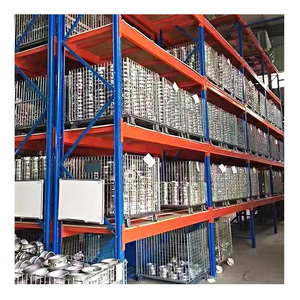
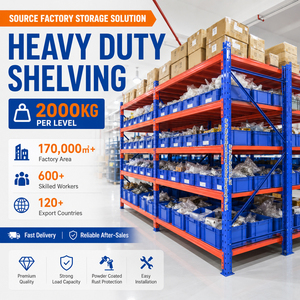
| Selective Pallet Racking | Cold-rolled Step Beam / C-Beam | 1,000 kg – 4,500 kg | 100% Selectivity / Moderate Density | EN 15512, FEM 10.2.02, RMI | FMCG, General Merchandise, 3PL Warehousing |
| Push Back & Live Gravity Rack | Nested Carts / Flow Rollers on Slope | 1,500 kg / pallet position | High Density (LIFO / FIFO) | CE Machinery Directive (Flow) | Cold Storage, Food & Beverage Depots |
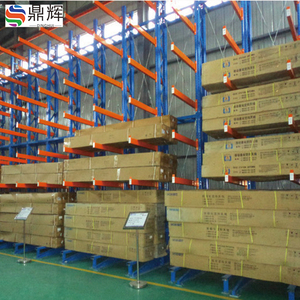
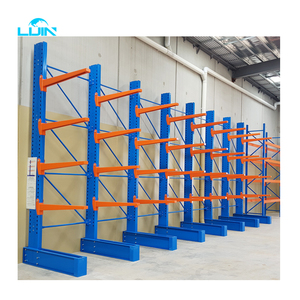
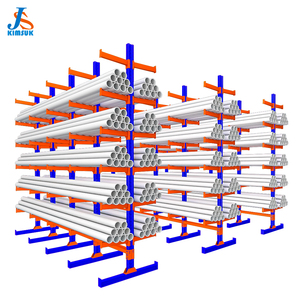
| Heavy-Duty Cantilever Rack | Hot-Rolled I-Beam (IPE / H-Section) | 500 kg – 6,000 kg per arm | Unrestricted Length Access | EN 1993-1-1 (Eurocode 3) | Lumber, Steel Pipes, Aluminum Extrusions |
| VNA (Very Narrow Aisle) Rack | High-Precision Upright 1.8-2.0mm+ | Up to 3,000 kg (Height to 16m) | 100% Selectivity / Ultra-High Density | EN 15620 (Tolerance Class 300) | Pharmaceutical, High-Bay E-Commerce |
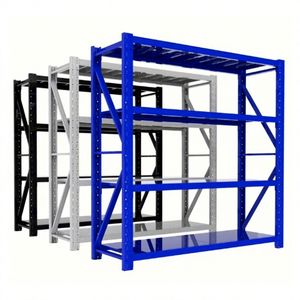
| Boltless Industrial Shelving | Cold-Formed Rivet & Steel Deck | 200 kg – 800 kg / shelf level | Manual Pick Access | CE Light Industrial Standard | Spare Parts, Retail Backroom, Hardware |
4. Strategic Sourcing & Future Trends in Industrial Storage (2025–2035)
The global warehousing landscape is undergoing a structural transition driven by automated material handling, carbon-neutral supply mandates, and high land acquisition costs. Procurement directors sourcing CE certified warehouse storage racks should evaluate these key technological trends:
A. Automation Readiness and ASRS Integration
Standard static selective racking is increasingly giving way to Automation-Ready Frameworks. Modern CE certified racks must meet strict structural deflection limits (such as EN 15620 Class 100/200) to support Autonomous Mobile Robots (AMRs), Automated Guided Vehicles (AGVs), and Radio Shuttle channels. Structural uprights must feature high torsional stiffness to handle repetitive robot acceleration forces without structural fatigue.
B. Low-Carbon "Green Steel" Procurement
Global enterprises operating in Europe, North America, and APAC now enforce scope 3 carbon accounting. Future procurement requires manufacturers to supply racks fabricated using Electric Arc Furnace (EAF) low-emission steel, finished with VOC-free powder coats. CE certification documentation is increasingly paired with Environmental Product Declarations (EPD) verifying full lifecycle carbon metrics.
C. Seismic Resilience and Structural Health Monitoring (SHM)
As logistics hubs expand into seismically active regions, storage systems are incorporating IoT strain-gauge sensors and dynamic seismic dampers. These IoT-enabled racking components provide real-time alerts on frame deflection, forklift impact force, and structural overload, allowing preventive maintenance before structural failure occurs.
5. Advanced Manufacturing & Engineering Quality Assurance
Building high-capacity warehouse racks requires precision engineering. Every beam, connector, and upright section undergoes structured testing to ensure compliance with global structural building codes:
- Structural Connection Locks: Double or triple-prong steel connector hooks with automatic safety locks to prevent accidental beam displacement caused by upward forklift strikes.
- Column Protector Integration: Reinforced floor-anchored steel column guards and corner guards engineered to absorb low-speed forklift impacts without transferring kinetic energy directly into main uprights.
- Wire Mesh & Steel Deck Safety: CE compliant galvanized mesh decks designed with under-welded channel supports to prevent single-box fall-through while allowing 100% sprinkler water flow for NFPA fire protection compliance.
Buyer Knowledge Base
Frequently Asked Procurement & Engineering FAQs
Expert answers covering certifications, structural limits, shipping logistics, and custom fabrication.
What does CE Certification mean for industrial warehouse storage racks?
CE certification confirms that the storage racking system meets essential European health, safety, and environmental protection standards. For industrial steel racks, this requires compliance with European standards EN 15512 (steel static storage systems), EN 15620 (tolerances and clearances), and EN 1090-1 / EN 1090-2 structural steel manufacturing execution standards. It guarantees structural load capacity through certified physical testing rather than unverified theoretical calculations.
How do I determine the correct rack profile and load capacity for my facility?
Load requirements depend on maximum pallet weight, pallet dimensions (e.g., 1200x1000mm ISO or 48"x40" GMA), beam clear length, clear ceiling height, and forklift lift height. Our engineering team calculates beam section profiles (80mm to 160mm step/box beams) and upright column thickness (1.8mm to 2.5mm+) to achieve your required load rating per level (e.g., 1,000kg to 4,500kg) with a built-in structural safety factor.
Will US teardrop pitch racks connect with European or metric pitch systems?
Standard US teardrop systems use a 2-inch punch pitch, whereas European systems typically utilize a 50mm or 75mm modular pitch. While they are not directly interchangeable on the same upright frame, we manufacture both 2-inch teardrop profiles for Western Hemisphere logistics standards and 50mm/75mm metric pitch profiles for global projects, ensuring seamless expansion of existing setups.
Are cold-rolled steel racks sufficient, or do I need hot-rolled structural steel?
Cold-rolled steel racks (Q235B/Q355B) offer exceptional strength-to-weight ratios and are ideal for standard ambient selective racking, high-bay VNA, push back, and pallet flow installations. Hot-rolled structural steel (I-beams/channels) is recommended for high-impact environments, heavy industrial cantilever systems, outdoor yards, and facilities subject to frequent forklift impacts or extreme load requirements (>5,000kg/level).
How are racking products packed for international ocean freight containers?
Upright frames and beams are bundled using steel strapping, protective corner guards, and heavy plastic wrap to prevent transit scratching. Small components (base plates, safety pins, bolts, row spacers) are packed in heavy-duty wooden crates or steel-reinforced cartons. Bundle dimensions are optimized for maximum CBU load density in 40ft High Cube (40HC) containers, reducing ocean freight costs per pallet position.
What documentation and engineering support is provided for custom projects?
For every project, we supply comprehensive CAD layout drawings, structural loading capacity charts, installation assembly manuals, material mill test reports (EN 10204 3.1), and CE compliance certificates. Upon request, we also provide seismic calculation reports matching localized building codes (AGIES, IBC, Eurocode 8).