Engineered Wholesale Racking Solutions
Direct factory supply of certified heavy-duty storage racks optimized for industrial logistics hubs, cold storage, and high-bay distribution centers.
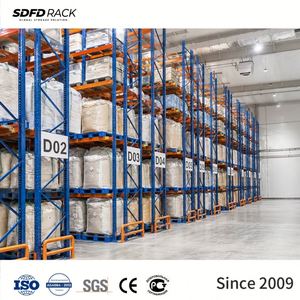
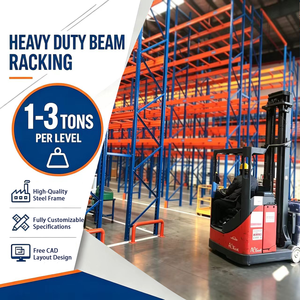
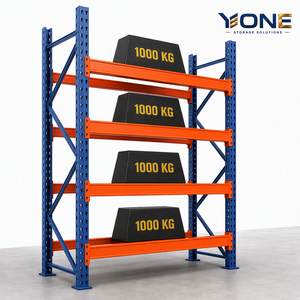
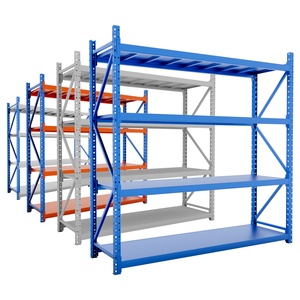
Comprehensive Technical Analysis: Structural Mechanics of Chinese Wholesale Pallet Racking Systems
Modern global supply chain networks place unprecedented stress on industrial material handling infrastructure. Sourcing heavy-duty storage racking from top-tier Chinese manufacturers is no longer merely a cost-reduction strategy; it is a strategic capital investment in precision-engineered logistics infrastructure. China's manufacturing ecosystem combines advanced metallurgy, robotic roll-forming technology, automated powder coating, and rigorous quality assurance protocols to engineer systems that meet or exceed international regulatory frameworks, including RMI (ANSI MH16.1), AS4084-2023 (Australia), FEM 10.2.02 (Europe), and ISO 9001:2015.
At the structural core of high-load industrial racking is high-tensile cold-rolled steel (predominantly Q235B and structural grade Q355B). The yield strength ($f_y$) and ultimate tensile strength ($f_u$) of these material grades dictate the safety factor and deflection performance under static, dynamic, and seismic forces. Chinese manufacturers utilize continuous multi-station cold roll-forming mills to fabricate upright columns featuring complex cross-sectional geometries with multiple stiffening ribs. This intricate profile design significantly boosts the section modulus ($Z$) and torsional rigidity, effectively preventing local buckling under extreme longitudinal and transverse loading conditions.
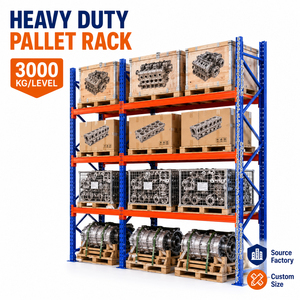
Engineering Insight: High-density pallet racking systems must account for both beam live loads and column axial compression. By applying Finite Element Analysis (FEA) dynamic load simulation, top Chinese suppliers optimize upright geometry to achieve load capacities exceeding 3,000 kg (6,600 lbs) per beam level and frame capacities up to 24,000 kg (52,800 lbs).
Surface Metallurgy and Corrosion Protection Technologies
Longevity in harsh industrial environments—ranging from sub-zero cold storage facilities to humid coastal port warehouses (such as Puerto Quetzal, Santo Tomás de Castilla, or Southeast Asian maritime hubs)—depends on surface pretreatment and coating chemistry. Quality export suppliers employ automated 9-stage surface treatment lines incorporating non-chromate chemical degreasing, acid rust removal, micro-crystalline zinc phosphate conversion coating, and DI water rinses.
The secondary coating stage uses thermosetting electrostatic epoxy-polyester resin powder applied at a uniform film thickness of 70 to 90 microns ($\mu\text{m}$). The components undergo high-temperature curing in tunnel ovens at $180^\circ\text{C}$ to $200^\circ\text{C}$ for 20 minutes, cross-linking the polymer matrix to deliver exceptional impact resistance, chemical neutrality, scratch toughness, and ISO 9227 salt spray corrosion resistance exceeding 500 hours without red rust formation.
Manufacturing Capabilities & Structural Innovations
Providing global procurement managers and structural engineers with full customization and verified compliance.
Precision Cold Roll-Forming
Multi-stage automated rolling mills craft profile geometry with tight dimensional tolerances ($\pm 0.5\text{mm}$), eliminating internal material stress and maximizing structural load limits.
Seismic Engineering & AGIES Compliance
Custom structural baseplates, heavy-duty floor anchors, and moment-resisting beam connections engineered specifically for Zone 4 seismic activity and high-risk geographical fault lines.
Automated Robotic Welding
Robotic MIG/MAG welding stations execute continuous, defect-free welds on beam connectors and load-bearing brackets, ensuring 100% structural join consistency across mass production runs.
Engineering Selection Matrix: Racking Architecture vs Operational Metrics
Selecting the optimal warehouse racking configuration requires balancing floor space utilization, SKU selectivity, inventory turnover dynamics (FIFO vs LIFO), and capital expenditure per pallet position. Below is an engineering evaluation matrix comparing core heavy-duty systems manufactured in China:
| Racking Architecture | Space Utilization | SKU Selectivity | Handling Equipment Required | Max Load / Level | Ideal Logistics Application |
|---|---|---|---|---|---|
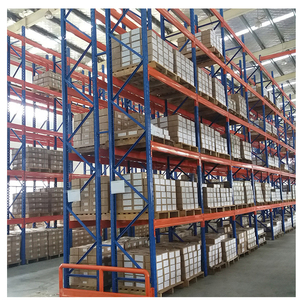
| Selective Pallet Racking | 35% - 40% | 100% Direct Access | Standard Counterbalance / Reach Truck | Up to 4,500 kg | High SKU variety, fast-moving consumer goods (FMCG), 3PL logistics hubs |
| Structural Bolt-Together Rack | 40% - 45% | 100% Direct Access | Heavy Industrial Forklifts | 5,000+ kg | Heavy manufacturing, auto parts, high-impact rough environment operations |
| Drive-In / Drive-Thru System | 65% - 80% | Low (LIFO / FIFO) | Counterbalance Forklift (Narrow Body) | 1,500 kg / pallet | Cold storage, beverage bottling, bulk single-SKU agricultural export |
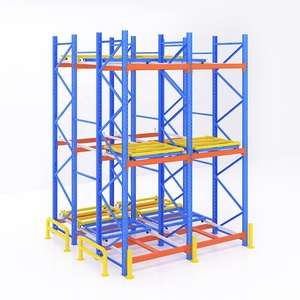
| Push-Back Racking (Cart System) | 55% - 65% | Medium (LIFO) | Standard Reach Truck | 1,500 kg / cart | Medium SKU density, seasonal food processing, buffer storage zones |
| Pallet Live Flow Racks | 70% - 85% | High (Strict FIFO) | Standard Loading & Unloading Forklifts | 1,200 kg / pallet | Perishable food, pharmaceuticals, high-speed order fulfillment lines |
| Cantilever Racks | 45% - 55% | 100% Long Material Access | Side Loader / Multi-directional Forklift | Up to 6,000 kg / arm | Steel pipes, timber, PVC conduit, aluminum profiles, construction ferreterías |
Global Procurement Trends & Future Development in Warehouse Racking (2025–2030)
The global industrial storage landscape is undergoing a structural transition driven by supply chain digitalization, labor automation, and stringent ESG (Environmental, Social, and Governance) targets. Global enterprise buyers sourcing racking systems from Chinese manufacturers are positioning themselves to take advantage of key technological advancements:
1. AS/RS Integration and Automated Shuttle Compatibility
Standard selective pallet racks are increasingly evolving into structural frameworks for Automated Storage and Retrieval Systems (AS/RS) and 4-Way Radio Shuttle systems. Future-proof Chinese rack designs integrate micro-tolerance beam deflection profiles ($\le L/300$ or even $L/500$), laser-guided rack alignment, and embedded sensor tracks. This precision manufacturing allows automated cranes and autonomous mobile robots (AMRs) to operate seamlessly at speeds exceeding $4\text{ m/s}$ without operational jams.
2. Sustainable Green Steel Sourcing and Decarbonization
As carbon boundary adjustment mechanisms (CBAM) take effect in international trade, Chinese steel mills and racking manufacturers are rapidly adopting green steel produced via Electric Arc Furnaces (EAF) powered by renewable energy. Furthermore, solvent-free powder coatings that produce zero Volatile Organic Compounds (VOCs) are now standard across certified manufacturing lines, reducing the total carbon footprint of global warehouse developments.
3. IoT Structural Health Monitoring and Smart Racks
High-bay racking installations reaching 20 to 40 meters in height now incorporate IoT strain gauges, vibration sensors, and tilt detectors within the upright columns. Connected to cloud-based Warehouse Management Systems (WMS), these sensors transmit real-time data regarding structural overload, forklift impact events, dynamic seismic oscillations, and bolt torque loss—preventing catastrophic rack collapses and facilitating predictive maintenance schedules.
4. Container Load Optimization and Knock-Down Modular Design
With international ocean freight volatility, Chinese export suppliers have engineered advanced knock-down modular components. Upright frames feature bolted diagonal and horizontal bracing rather than welded designs, allowing up to 26–28 metric tons of high-density steel components to fit into a single 40ft High Cube (40HC) container. This optimizes ocean freight efficiency by up to 35% compared to pre-welded rigid structures.
Enterprise Sourcing Superiority: Why Partner with Top-Tier Chinese Manufacturers
Rooted in over 35 years of engineering experience (established in 1989), our manufacturing network operates out of state-of-the-art facilities spanning over 530,000 square feet of production floor space. We combine unmatched production scale with bespoke design engineering, allowing us to serve diverse global markets from North America and Europe to Central America (Guatemala, Mexico, Costa Rica) and Southeast Asia.
Whether you require standard 48" x 40" teardrop frame configurations, metric 1,000 mm x 1,200 mm pallet configurations, or specialized Australian AS4084-2023 compliant speedlock beams with 5-hook connectors, our technical team executes full CAD design layout, finite element stress analysis, and comprehensive export documentation (DUCA, CAFTA-DR, Certificate of Origin, Bill of Lading, and ISO testing certificates).
Frequently Asked Questions (FAQ)
Technical insights for procurement directors, logistics engineers, and facility managers.
Q1: How do Chinese rack manufacturers guarantee structural compliance with Australian AS4084-2023 or US RMI standards?
Leading manufacturers utilize certified structural steel batches (Q235B/Q355B) verified via third-party mill test certificates (MTC). Profiles undergo rigorous destructive load testing, beam-to-column joint stiffness testing, and floor-anchor shear evaluation in certified laboratories (such as SGS or TÜV Rheinland) to mathematically validate compliance with RMI MH16.1 and AS4084-2023 specifications.
Q2: What design considerations are necessary for installing racking in high seismic zones?
For seismically active regions (e.g., Central America, Japan, West Coast Americas), racking design incorporates oversized structural baseplates, heavy-duty Hilti floor anchors, seismic diagonal bracing towers, and upgraded Q355B steel profiles. The layout undergoes dynamic response spectrum analysis against AGIES NSE or IBC seismic standards.
Q3: Can standard 42-inch deep frames accommodate both US 48"x40" pallets and metric Euro/ISO pallets?
Yes. A 42-inch (1,067 mm) deep upright frame is universally optimized for both 48"x40" (1,219 mm x 1,016 mm) standard pallets and 1,200 mm x 1,000 mm metric pallets. It allows a safe, standardized front and rear pallet overhang of approximately 3 inches (75 mm), facilitating correct beam loading without slipping.
Q4: How are shipping container loads optimized to prevent freight damage during ocean transit?
Components are packed using customized steel strapping, heavy-duty wooden skids, and moisture-proof plastic wrap. Beams are nested back-to-back, upright frames are shipped in knock-down (KD) format for high packing density, and corner protectors prevent powder coating abrasion inside 20ft and 40HC containers.
Q5: What is the typical lead time for custom OEM wholesale orders from China?
Standard raw material preparation, precision roll-forming, robotic welding, surface powder coating, and quality inspection require approximately 15 to 25 business days. Transit time varies depending on the destination port (e.g., 18-22 days to US West Coast, 28-35 days to Central American ports like Puerto Quetzal).
Q6: Should facility owners select new custom-manufactured racking or inspected used racks?
While inspected used racks offer quick availability for low-bay, basic selective applications, new custom-manufactured racking is critical for high-bay projects, seismic zones, cold storage, automated shuttle facilities, or when exact certified beam load ratings and long-term warranties are mandatory for regulatory compliance.
Optimize Your Warehouse Infrastructure Today
Contact our senior structural design team for complimentary CAD layout design, technical structural calculations, and direct factory pricing on your next container shipment.
Get a Quote