Featured Industrial Racking & Push Back Systems
Inspected heavy-duty warehouse racking solutions engineered for high load capacities, structural safety, and optimized space utilization.
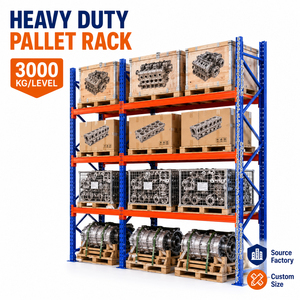
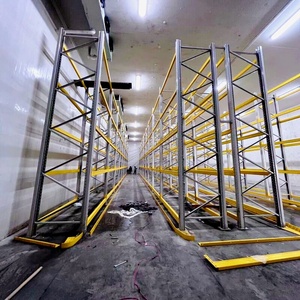
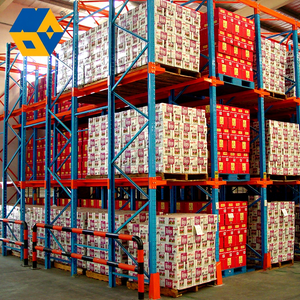
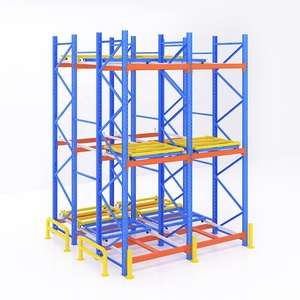
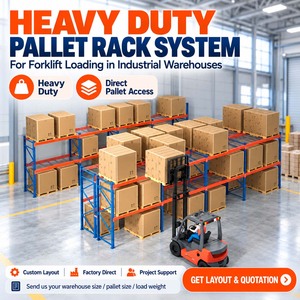
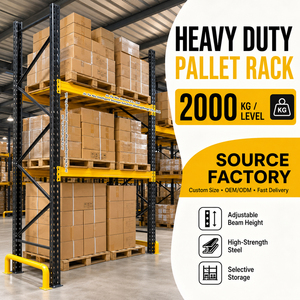
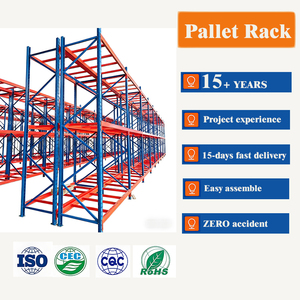
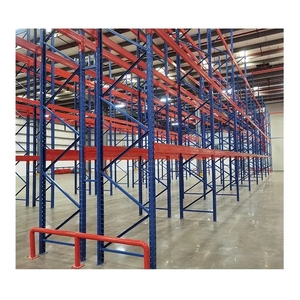
Why Leading Global Logistics Hubs Trust Our Push Back Racks
Integrating 35+ years of steel structural engineering expertise, direct factory supply chains, and stringent international compliance standards.
Structural Steel Integrity (Q235B / Q355B)
We utilize certified cold-rolled and hot-rolled structural steel profiles. All components pass automated tensile testing to prevent sagging or mechanical fatigue under continuous high-capacity loads.
Seismic & Safety Code Compliance
Engineered according to RMI, ANSI MH16.1, and AGIES NSE seismic guidelines. Custom base plates, row spacers, and structural anchors guarantee stability even in active earthquake zones.
Full-Chain Export & Port Logistics
Seamless container consolidation in 40ft HQ containers. We handle complete documentation including CAFTA-DR, DUCA customs clearance, and palletized bay-labeling for fast destination assembly.
High-Density Push Back Racking Engineering Physics & Structural Analysis
In modern industrial logistics, maximizing storage density without sacrificing operational selectivity represents a primary architectural challenge. Push Back Racking Systems provide a dynamic high-density storage solution operating on a Last-In, First-Out (LIFO) inventory management framework. Unlike traditional drive-in systems that require forklifts to physically enter the rack structure, push back systems utilize inclined nested carts resting on inclined structural rails (typically angled at 1.5° to 2.0° pitch).
1. Kinematic Principles & Cart-Nested Dynamics
When a pallet is loaded into a push back bay, the forklift operator places the first pallet onto the top nested cart. As the second pallet is introduced, the forklift gently pushes the first pallet backward, exposing the underlying second cart. This process repeats up to six pallets deep. Upon unloading, gravity smoothly moves the remaining pallets forward to the aisle face at a controlled kinetic velocity.
Our engineering team designs telescoping steel carts using precision-sealed bearing wheels and heavy-duty steel channels. This minimizes friction differentials and eliminates binding, even when operating in extreme cold storage environments (-30°C) or high-humidity tropical coastal zones.
2. Structural Steel vs. Roll-Formed System Selection
A critical consideration during B2B procurement is selecting between roll-formed steel components and heavy-duty structural steel profiles:
- Roll-Formed Steel Racking: Offers cost-effective versatility for standard commercial loads. Manufactured using cold-rolled sheet steel with teardrop connector configurations for rapid height adjustment.
- Structural Steel Racking (C-Channel): Hot-rolled structural channels secured with high-tensile structural bolts. Engineered specifically for high-impact distribution hubs, heavy beverage manufacturing facilities, and high-risk seismic environments.
3. Operational Safety Features & Anti-Pinch Systems
As a leading exporter from China, our push back systems integrate key safety enhancements:
- Physical Cart Stops: Heavy-gauge end stops prevent front-pallet overrun during rapid unloading cycles.
- Low-Profile Cart Assemblies: Compact nested design maximizes net vertical clear height, allowing additional beam levels within limited building ceiling spans.
- Flow Controllers & Hydraulic Brakes: For deep lanes (5 to 6 pallets deep), specialized speed controllers regulate gravitational descent, protecting sensitive cargo against impact damage.
High-Density Warehouse System Comparison Matrix
Evaluating total cost of ownership, floor space efficiency, SKU diversity, and forklift productivity across standard industrial storage frameworks:
| Storage System | Storage Density | Pallet Access (Selectivity) | Forklift Travel Time | SKU Flexibility | Optimal Warehouse Application |
|---|---|---|---|---|---|
| Push Back Racking | High (75% floor use) | LIFO (50% direct access) | Fast (No rack entry) | Medium to High | Cold storage, food/beverage, bulk distribution |
| Selective Racking | Low (35% floor use) | 100% Immediate Access | Standard | Maximum SKU diversity | E-commerce fulfillment, 3PL hubs, spare parts |
| Drive-In Racking | Very High (85% floor use) | LIFO (Low selectivity) | Slow (Forklift enters rack) | Low (High volume single SKU) | Seasonal produce, agricultural exports, flour/sugar |
| Radio Shuttle Racking | Maximum (90% floor use) | Automated LIFO/FIFO | Very Fast (Automated) | Medium | Automated distribution centers, high-bay cold storage |
Future Procurement Trends in Global Racking Systems
How global supply chain leaders are upgrading high-density racking assets to support automation, sustainability, and dynamic inventory tracking.
01. AGV & AMR Autonomous Integration
Traditional push back systems are evolving to integrate seamlessly with Autonomous Mobile Robots (AMRs) and Automated Guided Vehicles (AGVs). Modern push back cart entry guides are precisely machined with laser-guided positioning targets. This allows automated forklifts to align pallets within millimeter tolerances, reducing manual operator errors and virtually eliminating forklift frame collisions.
02. Eco-Friendly Powder Coatings & Surface Resilience
As international buyers enforce strict ESG metrics, top Chinese manufacturers are transitioning to zero-VOC electrostatic powder coating processes. Advanced multi-stage zinc-phosphate pretreatment coupled with epoxy-polyester thermosetting coatings yields high corrosion resistance (tested up to 500 hours salt-spray exposure), making racks suitable for humid tropical regions and chemical environments.
03. Modular Hybrid-Density Configurations
Modern distribution centers no longer rely on single-system layouts. Procurement managers are increasingly requesting hybrid racking architectures—combining lower-level selective picking lanes with upper-level push back dynamic storage. This maximizes vertical cubic volume while supporting high-speed single-item order picking.
04. IoT Weight & Deflection Sensor Embedded Systems
Next-generation smart racking structures incorporate embedded load sensors along key upright frames and beam spans. These IoT nodes transmit real-time deflection and stress data to warehouse management software (WMS), alerting facility directors to accidental structural overloads or forklift impact damage before material failure occurs.
Push Back Racking Procurement FAQ
Answers to common structural, engineering, shipping, and installation inquiries from international wholesale buyers.
Why choose a Push Back Racking System over a traditional Drive-In Rack?
While drive-in racking provides high storage density, it requires forklift operators to drive inside the rack structure, resulting in slower handling speeds and higher potential for forklift impact damage. Push back racking keeps the forklift in the main aisle, loading and unloading pallets at the aisle face. This accelerates throughput by up to 50% and significantly improves facility safety.
What pallet weight capacities can your push back systems support?
Our push back systems are custom-engineered to handle pallet loads ranging from 500 kg to 1,500 kg (1,100 lbs to 3,300 lbs) per pallet position. Standard cart configurations support 2-deep, 3-deep, 4-deep, 5-deep, and 6-deep options using heavy-duty sealed bearing wheels and structural steel nested carts.
Can standard North American (48"x40") and Euro (1200x800mm) pallets fit the same system?
Yes. We custom design cart frames to accommodate both standard GMA (48" x 40") wooden pallets, plastic pallets, and metric Euro pallets. We ask clients to provide exact pallet footprint specifications, minimum quality grades, and bottom runner orientations during the initial CAD design phase.
How does China manufacturing export quality compare with local suppliers?
As an established OEM/ODM exporter, our manufacturing plants utilize high-precision automated roll-forming mills, robotic welding arms, and mill-certified Q235B/Q355B steel. Our systems meet or exceed international engineering standards (RMI, FEM, ANSI) at a factory-direct wholesale cost structure that offers up to 30-40% capital savings.
What shipping consolidation options do you offer for export orders?
We bundle and pack upright frames, step beams, nested carts, and guide rails into 40ft High Cube (40HQ) containers. Components are tightly steel-strapped with protective wooden dunnage to prevent transport friction. Each package is color-coded and bay-labeled for fast site unpacking and assembly.
How do I request a custom CAD layout plan and factory quotation?
Simply click the "Send an Inquiry" button below or send your floor plan drawings, clear ceiling height, forklift mast reach, and average pallet weights to our engineering team. We typically deliver a full CAD layout design and structural quote within 24 hours.
Ready to Optimize Your Warehouse Storage Space?
Partner directly with China's premier push back racking exporter. Contact our structural engineering team today for a free warehouse CAD layout drawing and factory-direct price quotation.