Heavy-Duty Pallet Racking & Industrial Shelving Systems
Explore our export-grade, structural storage solutions engineered for maximum load capacity, seismic endurance, and space optimization.
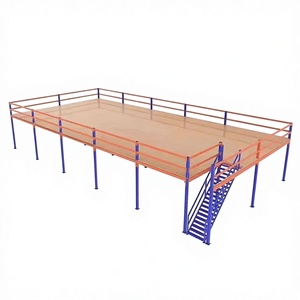
Factory Customized Heavy-duty Mezzanine Rack, Warehouse Mezzanine Platform, Custom Attic Storage System
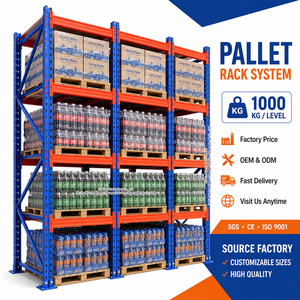
Heavy Duty Pallet Rack System for Beverage Storage Food Warehouse and Pallet Goods Racking
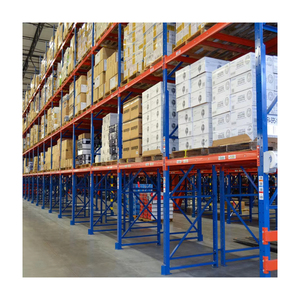
Wholesale Price Heavy Duty Storage Racks Warehouse Stacking Racks Selective Steel Pallet Rack Heavy-Duty Racking for Sale
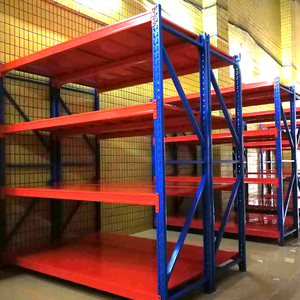
Heavy Duty Mobile Adjustable Pallet Rack with Cold-Rolled Steel 2m Beam 300kg Load 5 Layer for ECommerce Small Inventory
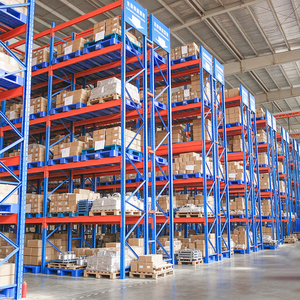
Heavy Duty Pallet Rack 1000-5000KG Load Capacity Industrial Storage Racking System for Warehouse Rack
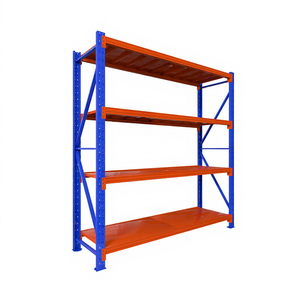
Racking Adjustable Metal Boltless Shelf and Racks Warehouse Storage Medium Duty Metal Rack Shelf
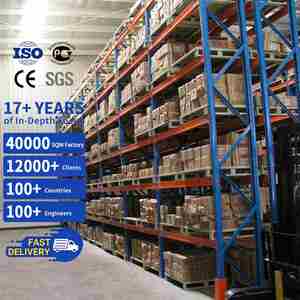
Hot Selling High Load Adjustable Pallet Racking Steel Heavy-Duty Warehouse Storage Pallet Rack System for Industrial Auto Parts
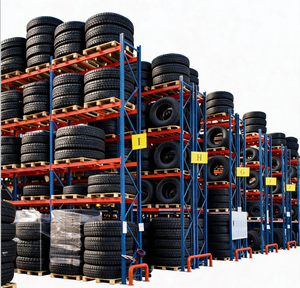
Custom Heavy Duty Industrial Pallet Racking Load Capacity Warehouse Pallet Shelving Q235 Steel Beam Type Adjustable Powder Rack
1. Engineering Superiority & Global OEM/ODM Manufacturing Infrastructure
Modern warehouse intralogistics requires storage architectures that seamlessly balance high volumetric density, structural safety, and operational efficiency. As a premier global pallet racking supplier and international exporter, our manufacturing operation operates over 530,000 square feet of state-of-the-art production space. We specialize in precision cold-roll forming, automated continuous welding, and high-durability electrostatic powder coating processes engineered to yield superior structural longevity.
Our structural engineering design team utilizes advanced Finite Element Analysis (FEA) software to model stress distribution across upright columns, connector locks, and horizontal box beams. By adhering strictly to ANSI MH16.1 (Rack Manufacturers Institute - RMI), European FEM 10.2.02, and Australian AS4084 standards, every rack configuration shipped from our facilities guarantees compliance with global safety codes.
Key Enterprise Advantages & Technical Capabilities:
High-Grade Q235B & Q355B Steel
We source prime hot-rolled coil steel certified for tensile strength and yield stress consistency. Yield strength metrics ($f_y = 235 \text{ MPa}$ to $355 \text{ MPa}$) guarantee dynamic load resilience under extreme industrial environments.
Seismic Zone Structural Certification
Custom engineering for installations in active seismic zones (such as AGIES NSE standards in Central America or US West Coast codes). Includes heavy-duty baseplates, floor anchors, and cross-bracing frameworks.
Automated Surface Pretreatment & Coating
Multi-stage chemical washing followed by thermocured electrostatic epoxy-polyester powder coating (60–80 μm thickness), delivering high abrasion resistance and passing 500-hour salt-spray corrosion tests.
2. Comprehensive Pallet Racking & Shelving System Architecture
Selecting the optimal warehouse racking system requires matching dynamic operational workflows (FIFO vs. LIFO) with aisle width constraints, forklift reach heights, and pallet specifications. Below is an engineering comparison matrix designed to assist logistics engineers and procurement directors in technical decision-making.
| Racking Architecture | Access Workflow | Storage Density | Floor Space Efficiency | Typical Industrial Application |
|---|---|---|---|---|
| Selective Pallet Racking | 100% Immediate (FIFO) | Moderate (35–40%) | Standard Aisle (3.0–3.8m) | FMCG, General Distribution, High-SKU Logistics |
| Drive-In / Drive-Thru | LIFO / FIFO Lanes | Very High (65–75%) | Dedicated Forklift Lanes | Cold Storage, Beverage Depots, Bulk Homogeneous Goods |
| Structural Heavy-Duty | 100% Selective | High Structural Load | Heavy Machinery / Dies | Automotive Manufacturing, Steel & Foundry Logistics |
| Mezzanine Platform Systems | Multi-Level Manual Access | Maximizes Vertical Volume | Footprint Doubling / Tripling | E-commerce Picking, Spare Parts, Industrial Workspaces |
| Mobile Automated Racking | Selective via Motorized Aisles | Maximum (80–85%) | Single Moving Aisle | High-cost Floor Space, Freezer & Pharmaceutical Vaults |
| Boltless Medium-Duty Shelving | Hand-Load / Manual Pick | High Pick Surface Area | Narrow Manual Walkways | Archive Storage, Retail Backroom, Small Parts Picking |
Each structural system represents unique trade-offs between initial capital expenditure (CapEx) and long-term operational expenditure (OpEx). For instance, while Selective Pallet Racking maintains low initial equipment cost, high-density systems like Drive-In or Push-Back Racking radically lower cost-per-pallet position in high-value temperature-controlled real estate.
3. Future Sourcing & Procurement Trends in Industrial Storage (2025–2030)
The global industrial storage market is transitioning from static steel structures toward dynamic, data-integrated intralogistics nodes. Supply chain executives must align their procurement strategies with four critical macro trends:
Trend 1: Integration with AS/RS & Autonomous Mobile Robots (AMRs)
Modern fulfillment hubs are rapidly retrofitting traditional rack structures to interface with Autonomous Mobile Robots (AMRs) and Automated Storage and Retrieval Systems (AS/RS). Future-proof racking requires ultra-tight dimensional tolerances (up to $\pm 1.5\text{ mm}$ beam squareness) and specialized guide rails to accommodate shuttle carts and robotic lifters. Sourcing racking with standardized modular attachment interfaces ensures seamless future automation upgrades without whole-system replacement.
Trend 2: Dynamic Load-Sensing & IoT Smart Racking Diagnostics
Leading logistics operations are incorporating fiber-optic strain gauges and Wireless Sensor Networks (WSN) directly within high-bay racking uprights. These embedded sensors monitor real-time beam deflection, structural tilt, structural fatigue, and unintended forklift impact force. Smart racking systems alert safety managers before catastrophic structural collapse occurs, transforming passive maintenance into predictive engineering management.
Trend 3: Low-Carbon Steel Metallurgy & Green Supply Chain Audits
In accordance with global Scope 3 carbon emission targets, international buyers are prioritizing suppliers utilizing green-steel manufacturing (EAF - Electric Arc Furnace processing) and zero-VOC powder coating formulations. Procuring racking certified with Environmental Product Declarations (EPD) simplifies carbon tax compliance and meets corporate sustainability mandates.
Trend 4: Nearshoring Logistics & Regional Modular Standardization
Volatile global ocean freight tariffs have underscored the value of modular, flat-pack racking systems designed for optimal container utilization. Export-oriented suppliers now design nested beam profiles and knock-down upright frames that maximize container cube fill rates by up to 35%, drastically lowering unit transport costs and lead times.
4. Technological Trajectories: Metallurgy, Structural Dynamics & Cold-Chain Resilience
Engineering advancements in pallet racking are driven by demanding storage environments—specifically deep-freeze cold chains and high-bay distribution centers exceeding 15 meters in height.
1. Advanced Profile Geometry & High-Yield Steel Selection
Traditional structural channels are increasingly supplemented by high-strength cold-rolled profiles featuring complex multi-rib upright bends (up to 12-fold cold-bending profiles). These geometry enhancements significantly increase section modulus ($Z_x$) and moment of inertia ($I_x$), allowing lighter gauge Q355B steel to outperform thicker, heavier low-grade profiles.
2. Thermal Bridge Mitigation in Cold Storage Racking
In $-25^\circ\text{C}$ sub-zero refrigerated facilities, standard carbon steel undergoes ductile-to-brittle transition, increasing susceptibility to impact fracture. Advanced cold-chain racking incorporates micro-alloyed steels enriched with Manganese (Mn) and Vanadium (V), combined with thermal isolation shims between baseplates and concrete subfloors to mitigate thermal bridging and structural embrittlement.
5. Enterprise-Grade Sourcing & Technical FAQ
Direct technical answers addressing procurement, compliance, structural compatibility, and logistics questions.
Request a Custom Warehouse Layout & Engineering Quotation
Partner with an established industrial racking manufacturer. Our engineering team provides complimentary CAD warehouse layout optimization, seismic structural calculations, and direct factory-direct pricing for international projects.